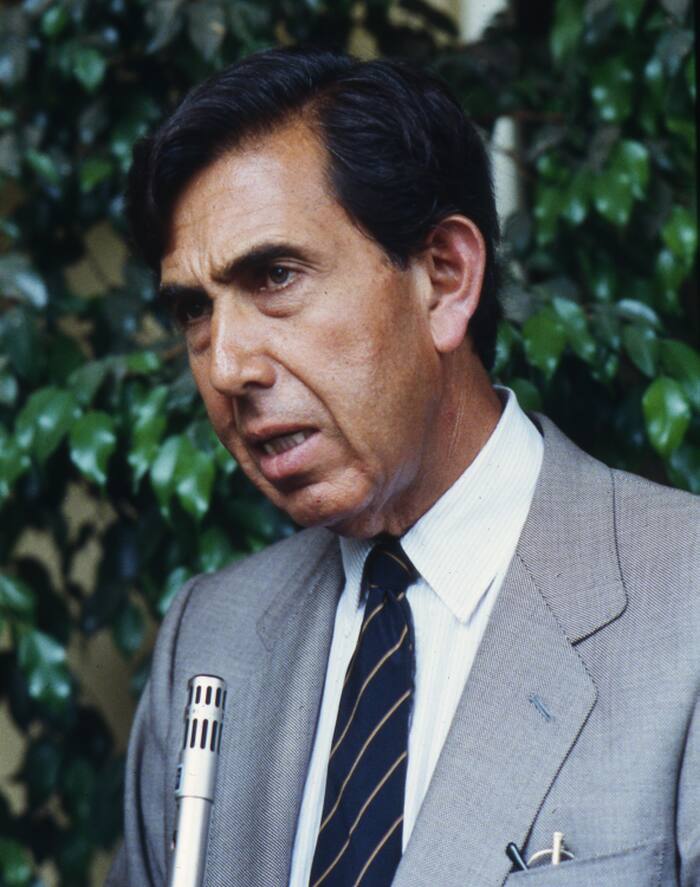
Cuauhtémoc Cárdenas, the three-time presidential candidate and moral architect of Mexico’s modern democratic transition, has died at 92. Born on May 1, 1934, into the highest echelon of Mexican political royalty, he spent the second half of his life dismantling the very one-party apparatus his father helped consolidate. His death closes the final chapter on a twentieth-century political lineage that defined Mexico’s institutional stability, its nationalist economic identity, and its agonizingly slow march toward electoral pluralism.
To understand the weight of his passing, you have to look past the standard obituary bullet points. Cárdenas was never president. He never held a federal cabinet post during the peak of his influence. Yet few figures in modern Latin American history altered the trajectory of a nation more decisively from the outside looking in.
The Weight of the Name
In Mexico, the surname Cárdenas is not merely political; it is foundational. His father, Lázaro Cárdenas, served as president from 1934 to 1940 and remains a near-mythic figure in the national consciousness. Lázaro expropriated the foreign-owned oil industry in 1938, redistributed tens of millions of acres of land to peasant farmers, and cemented the corporate structure of the Institutional Revolutionary Party—the PRI.
Growing up in Los Pinos, the presidential residence, Cuauhtémoc was groomed to inherit that institutional mantle. He trained as a civil engineer at the National Autonomous University of Mexico (UNAM) before pursuing postgraduate studies in France and Germany. He entered public service the traditional way, rising through state infrastructure commissions and eventually winning the governorship of his home state, Michoacán, in 1980.
For decades, he was an insider. He understood the mechanics of the PRI from the inside out—how patronage flowed downward, how loyalty was rewarded, and how dissent was quietly absorbed or crushed. That insider fluency is precisely what made his eventual defection so lethal to the regime.
The 1988 Rupture
By the mid-1980s, Mexico was buckling under a severe debt crisis, hyperinflation, and the structural shock of neoliberal economic reforms. President Miguel de la Madrid and his successor-designate, Carlos Salinas de Gortari, were steering the PRI away from its traditional revolutionary nationalism toward privatization, deregulation, and free-market integration with the United States.
Cárdenas refused to go along. Alongside Porfirio Muñoz Ledo and Ifigenia Martínez, he formed the Democratic Current within the PRI, demanding internal party democracy and an end to the dedazo—the unwritten tradition whereby the outgoing president handpicked his successor.
The party apparatus expelled them. In 1987, Cárdenas launched an independent presidential bid, rallying a fractured coalition of leftist parties, labor unions, and disillusioned PRI loyalists under the National Democratic Front.
The 1988 election was a political earthquake. Millions of Mexicans poured into the streets, sensing for the first time in nearly sixty years that the PRI’s monopoly on power could be broken at the ballot box. On the night of July 6, 1988, early returns showed Cárdenas surging ahead. Then, infamously, the Interior Ministry’s computerized vote-tabulation system suffered what officials called a caída del sistema—a "system crash."
When the computers came back online days later, Carlos Salinas was declared the winner with 50.4 percent of the vote to Cárdenas’s 31.1 percent.
The Restraint That Shaped a Nation
History often judges politicians by the battles they escalate. Cárdenas earned his enduring moral authority by the battle he chose not to fight.
Supporters urged him to call for a national uprising. The fraud was blatant; decades later, former officials—including de la Madrid himself in his memoirs—acknowledged that the government had manipulated the results to prevent a Cárdenas victory. Had Cárdenas given the word, Mexico could easily have descended into widespread civil bloodshed.
He chose institutional resistance instead. He refused to legitimize Salinas’s presidency, famously remarking that he would not negotiate away the popular will, yet he insisted that his movement remain strictly peaceful and legal. Out of that crucible, he founded the Party of the Democratic Revolution (PRD) in 1989.
That decision carried a steep personal cost. During the Salinas administration, hundreds of PRD activists were assassinated across rural Mexico, particularly in Michoacán and Guerrero. Cárdenas endured relentless state media smears, surveillance, and political isolation, yet he never abandoned the electoral path.
Governing the Capital and The 1994 Setback
His persistence eventually forced the regime to concede ground. Mounting domestic pressure and the 1994 Zapatista uprising in Chiapas compelled the government to enact major electoral reforms, creating an autonomous Federal Electoral Institute (IFE) independent of the Interior Ministry.
Cárdenas ran for president a second time in 1994, finishing third behind the PRI’s Ernesto Zedillo and the conservative National Action Party’s (PAN) Diego Fernández de Cevallos. Many analysts wrote off his political career.
They underestimated him. In 1997, following reforms that allowed residents of Mexico City to elect their own head of government for the first time, Cárdenas ran for mayor of the capital. He won in a landslide, taking nearly 48 percent of the vote.
As Head of Government of the Federal District, he faced an administrative nightmare. Decades of PRI rule had left the city’s finances opaque, its police force deeply corrupt, and its infrastructure strained. Cárdenas’s tenure from 1997 to 1999 was steady rather than flashy. He stabilized municipal accounts, expanded social programs, and proved that the democratic left could govern a massive metropolis without triggering the economic collapse his critics had predicted.
The Paradox of 2000
In 2000, Cárdenas mounted his third and final presidential campaign. By then, however, the political terrain had shifted beneath his feet.
Vicente Fox, the charismatic, boot-wearing candidate of the conservative PAN, successfully framed himself as the most viable vehicle to finally oust the PRI after 71 years of uninterrupted rule. Millions of progressive voters cast a voto útil—a tactical vote—for Fox, reasoning that ideological purity mattered less than ending the PRI’s hegemonic grip.
Cárdenas finished a distant third with less than 17 percent of the vote. Fox won, bringing an end to the one-party state.
It was a profound historical irony. The democratic opening that allowed Vicente Fox to walk into Los Pinos existed largely because Cuauhtémoc Cárdenas had spent thirteen years absorbing the regime’s blows, forcing electoral reforms, and dismantling the aura of PRI invincibility. Cárdenas cleared the forest; someone else harvested the timber.
The Break With AMLO and the PRD
In his later years, Cárdenas watched the movement he built fracture under the weight of its own ambitions. His relationship with Andrés Manuel López Obrador (AMLO)—whom Cárdenas had supported in his rise through the PRD and who succeeded him as mayor of Mexico City in 2000—gradually soured into a cool, strategic distance.
The two men shared nationalist instincts, yet their political temperaments were fundamentally incompatible. Cárdenas was an institutionalist who believed in collective party structures, ideological debate, and constitutional checks and balances. López Obrador was a populist caudillo who favored direct, personalistic authority and viewed autonomous institutions with deep suspicion.
By 2014, Cárdenas made a painful decision. Seeing the PRD consumed by internal clientelism, corruption scandals—most notably the disappearance of 43 students in Iguala, Guerrero, under a PRD mayor—and political opportunism, he resigned from the party he had founded a quarter-century earlier.
He never joined López Obrador’s Morena party, either. When AMLO finally won the presidency in 2018 and began dismantling autonomous regulatory bodies and centralizing executive power, Cárdenas frequently voiced quiet but pointed concerns about the erosion of institutional counterweights and the militarization of public security.
An Unfinished Legacy
Evaluating Cuauhtémoc Cárdenas requires separating electoral outcomes from structural transformation. Measured strictly by trophies, he lost three presidential races and walked away from two major political parties. Measured by historical impact, he shifted the center of gravity in Mexican politics permanently.
He was never a natural orator. His speeches were deliberate, methodical, and occasionally dry—the delivery of a civil engineer laying out blueprints rather than a demagogue working a crowd. Yet that very sobriety gave him an incorruptible presence in a political culture notorious for theatrical cynicism and self-enrichment.
Critics on the right argued that his economic vision remained trapped in the state-led statism of the 1930s, ill-suited for a globalized North American economy. Critics on the hard left faulted him for being too cautious in 1988, arguing that his refusal to confront the regime in the streets allowed the PRI to survive for another twelve years and entrench neoliberal policies.
Both critiques contain grains of truth. Cárdenas was a man caught between two eras—shaped by the revolutionary nationalism of his father’s generation, yet determined to build a modern, liberal democracy governed by the rule of law.
He lived long enough to see the PRI collapse into a minor parliamentary force, to watch his former protégé resurrect a dominant-party presidency under a different banner, and to witness Mexico’s young democratic institutions come under renewed strain. Until the end, he remained a solitary benchmark of civic integrity, proving that in politics, losing with principle can reshape a country far more deeply than winning at any cost.