Mr. Chen runs a small noodle shop in Taipei’s Datong District. Every morning at 5:00 AM, the hiss of boiling water and the aroma of pork broth fill his narrow stall. He does not think much about Washington or Mar-a-Lago while he chops green onions. But Washington thinks about him. Or rather, Washington thinks about the microscopic silicon chips made just a few miles down the road—chips that power the phone in Chen’s pocket, the satellites overhead, and the global economy.
For decades, people like Chen have lived under a specific kind of weather forecast. It is a state of permanent, vibrating uncertainty. They call it the status quo. It is a fragile agreement to disagree, a diplomatic fiction that keeps the peace. But recently, a rhetorical storm rolled in from across the Pacific, and it left Taiwan’s leadership holding a soaking wet umbrella that might no longer open.
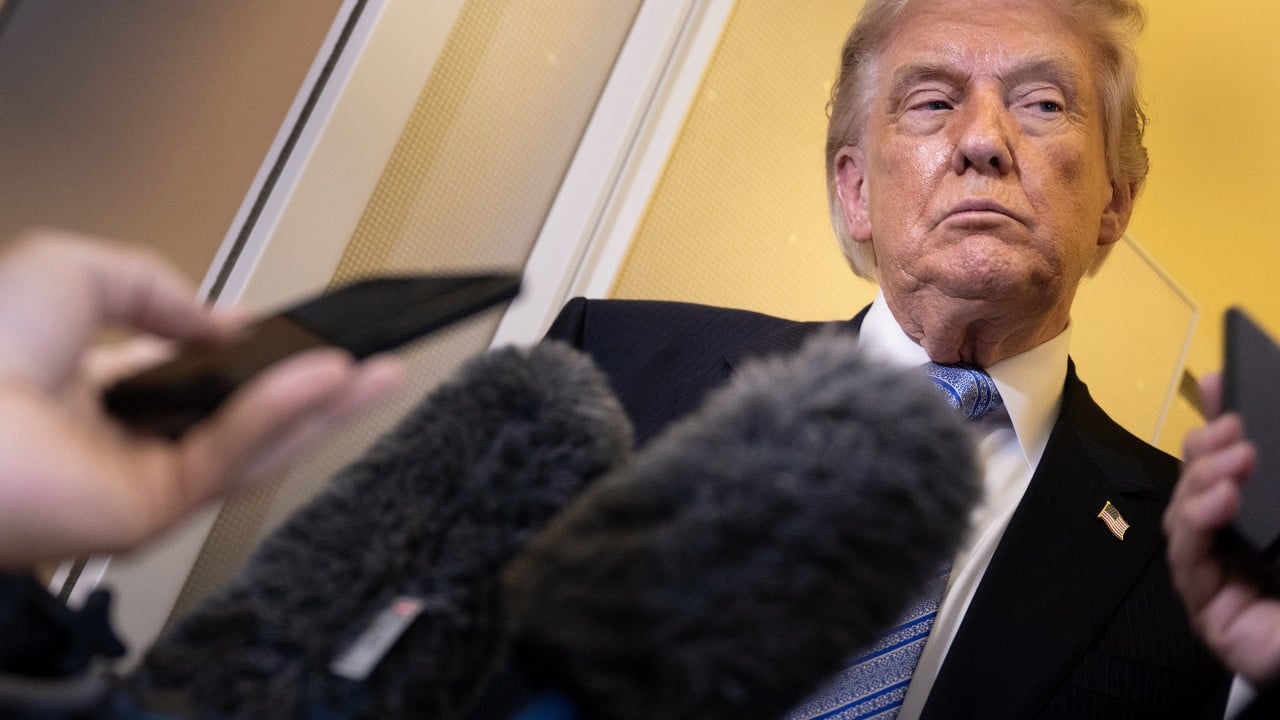
When Donald Trump mused aloud to reporters about Taiwan’s geographic distance and its economic dominance in semiconductors, he did not just drop a soundbite. He dropped a heavy stone into a very still, very tense pond. He suggested that Taiwan should pay for its own defense. He noted that the island is 9,500 miles away from the United States, and only 68 miles from Beijing.
To a casual observer, it sounded like standard transactional politics. To Taiwan’s newly inaugurated President, William Lai, and the ruling Democratic Progressive Party (DPP), it felt like the ground shifting beneath their feet.
The Geography of Anxiety
Consider the map. Eighty-eight miles of water separate the coast of Fujian province from the beaches of Taiwan. That stretch of ocean is called the Taiwan Strait. It is one of the most heavily monitored, dangerous strips of water on earth.
For eight years under the previous administration, and continuing now under President Lai, the DPP has built its entire house on a single foundation: the unwritten promise of American protection. They call it strategic ambiguity. The idea is simple. Washington stays vague enough about whether it would deploy troops to defend Taiwan to prevent Beijing from invading, but supportive enough to keep Taipei from panicking.
It is a delicate dance. It requires everyone to speak in code.
When a dominant global figure abruptly breaks that code, the music stops. Trump’s blunt assessment did not just question the value of the alliance; it framed Taiwan not as a democratic beacon to be shielded, but as a business competitor that stole America’s microchip industry.
The emotional fallout in Taipei was immediate. Walking through the tech corridors of Hsinchu Science Park, where engineers work in sterile cleanrooms under yellow light, the conversation changed. These engineers are not politicians. They are specialists who manipulate matter at the molecular level to build the brains of modern civilization.
One engineer, speaking on the condition of anonymity, described the feeling as a sudden realization that you are on your own. "We thought our technology was a shield," he said. "Now we worry it is a target."
The Myth of the Silicon Shield
For years, Taiwanese politicians have comforted the public with the concept of the "Silicon Shield." The logic goes like this: Taiwan Semiconductor Manufacturing Company (TSMC) produces over 90% of the world’s most advanced microchips. If Beijing invades, the global economy collapses. Therefore, the world will never let Taiwan fall.
It is a beautiful theory. It is also an incredibly heavy burden for a single island to bear.
The flaw in the Silicon Shield theory is that it assumes the shield is universally loved. In Washington, that same shield looks a lot like a vulnerability. Politicians on both sides of the aisle look at Taiwan’s monopoly on advanced manufacturing and feel a deep sense of panic. They do not want to rely on an island sitting on a fault line—both tectonic and geopolitical—for the components that run their military hardware.
When Trump vocalized this frustration, he exposed a growing bipartisan sentiment. The United States wants those factories on American soil. The CHIPS Act poured billions into building foundries in Arizona and Ohio. The goal is to make the Silicon Shield redundant.
If the shield is moved to Arizona, what happens to the people left in Taipei?
This is the invisible stake that William Lai must now navigate. His political opponents, the Kuomintang (KMT), waste no time pointing out the crack in the armor. They have long argued that the DPP’s pro-independence stance is reckless, a provocation that drags the island toward a conflict it cannot win alone. Trump’s comments gave the KMT a powerful new talking point: The Americans will not save you. They want your factories, not your fate.
The Weight of Words in a Room with No Air
To understand why a single interview caused such a tremor, you have to understand the specific pressure cooking inside Taiwan’s domestic politics.
William Lai won the presidency, but his party lost its majority in the parliament. He is a leader with a mandate, but without a consensus. He walks a tightrope every day. On one side is a predatory neighbor that views his presidency as an existential threat. On the other side is a divided public, terrified of war but deeply proud of their democracy.
Beijing watches every shift in American rhetoric with microscopic precision. Every time a Western leader hesitates, Beijing tests the perimeter. Following the remarks, Chinese state media did not miss the opportunity to broadcast a clear message to the Taiwanese public: You are a chess piece. And chess pieces are eventually discarded.
This is psychological warfare at its most potent. It does not require a single missile to be fired. It relies entirely on erosion. It erodes trust. It erodes confidence. It makes the businessman hesitate before investing in a Taipei office. It makes the young graduate look at emigration options in Singapore or Vancouver.
The real blow to the DPP is not that Washington has changed its official policy. The State Department quickly issued standard reassurances about the "rock-solid" relationship. The blow is that the illusion of absolute certainty has been permanently pierced.
The Noodle Shop at the End of the World
Back in Datong District, the lunch rush arrives. Office workers queue up for beef noodles, their faces illuminated by the glow of their smartphones. They are reading the same headlines, debating the same anxieties.
Taiwanese society has developed a strange, admirable psychological defense mechanism against this constant existential dread. They ignore it. They eat noodles. They buy apartments. They plan for the future. You cannot live your life in a state of perpetual panic when the emergency has lasted for seventy years.
But beneath the surface of the ordinary, the calculus is changing.
The relationship between a superpower and a small partner is never equal. It is always a story of interests disguised as values. For decades, Taiwan believed its democratic values were the primary reason for American affection. The harsh truth of modern geopolitics is that interests usually win the day.
If the interest shifts from defending a democracy to securing a supply chain, the entire strategy of the DPP requires a radical rewrite. They can no longer simply point to Washington and tell their voters, "We are safe." They have to find a way to make Taiwan indispensable for reasons that cannot be shipped to an assembly line in Phoenix.
The rain starts to fall again over Taipei, a sudden, heavy summer downpour that turns the streets into rivers of neon reflection. Passersby duck under awnings, pulling their jackets tight.
Mr. Chen wipes down a table, looking out at the gray sky. He does not know if the umbrella held by his government will keep him dry if the real storm hits. Nobody does. But as he turns back to his kitchen, the water keeps boiling, the noodles keep moving, and an entire island continues to live in the space between a promise and a price tag.