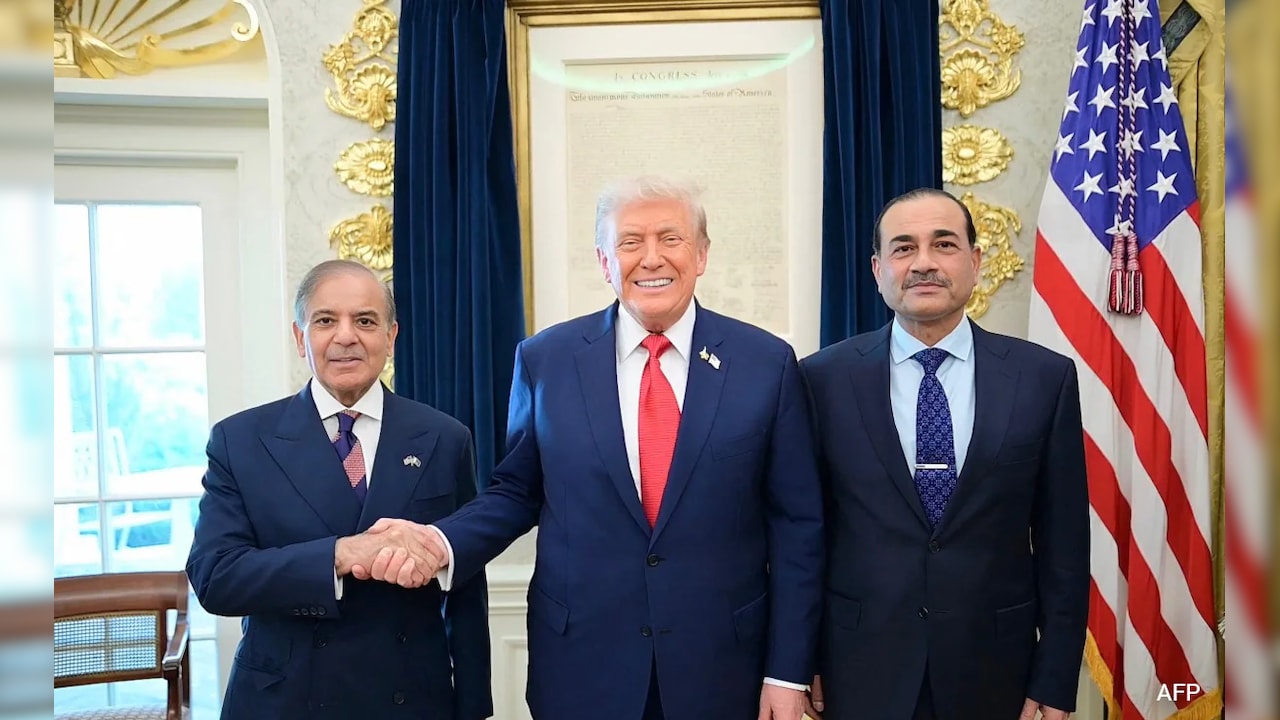
The strategic architecture of South Asian diplomacy is undergoing an involuntary structural realignment. Pakistan's sudden ascension as the central intermediary between the United States and Iran—marked by high-stakes ceasefire negotiations in Islamabad—presents a high-risk operational environment for Pakistani policymakers. While the initial diplomatic yields include public commendations from Washington and a temporary elevation of Islamabad’s geopolitical utility, the transactional nature of the current U.S. executive branch introduces severe institutional exposure. The primary risk profile for Pakistan is not diplomatic isolation, but rather the highly volatile structural cost of Washington’s transactional focus.
Evaluating this exposure requires moving past conventional foreign policy commentary and instead applying quantitative statecraft modeling. This analysis breaks down the strategic liability into three specific vectors: structural asymmetric dependency, the cost function of mediation failure, and the downstream economic vulnerabilities tied to regional infrastructure development.
The Asymmetric Dependency Vector
The current mediation framework is built upon a fundamental structural asymmetry. For Washington, utilizing Islamabad as a conduit to Tehran is a tactical maneuver designed to rapidly execute a regional de-escalation policy without expending direct political capital. For Islamabad, however, hosting these bilateral tracks demands an immediate, high-density reallocation of its diplomatic, intelligence, and security infrastructure.
This imbalance generates a compounding risk return profile that can be mapped using an asymmetric payoff matrix:
$$U_{us} = f(\Delta R_{de-escalation}) - C_{tactical}$$
$$U_{pak} = f(\Delta R_{reputation}) - [C_{operational} + \sigma_{alignment}]$$
Where $U$ represents the strategic utility, $C$ represents the operational costs, and $\sigma_{alignment}$ represents the volatile risk of moving out of alignment with legacy regional partnerships.
The structural flaw in this equation lies in the divergence of timelines. Washington operates on a highly compressed, election-driven transactional cycle. Conversely, Pakistan's regional stability depends on multi-decade security architectures with neighboring states. By stepping into the direct line of sight of an administration that values immediate transactional outcomes over long-term institutional alliances, Pakistan faces a classic bottleneck: its diplomatic leverage is maximized only while the crisis persists. The moment a deal is struck—or permanently abandoned—the utility curve drops sharply, leaving Islamabad to manage the regional fallout independently.
The Cost Function of Mediation Failure
Mediation between historically adversarial states operates under tight technical tolerances. The primary operational risk is the "Mediation Failure Cost Function," which dictates that the facilitator absorbs a disproportionate share of the negative externalities if negotiations collapse.
When high-level delegations fail to secure a lasting framework, the breakdown triggers distinct negative feedback loops for the host nation:
- The Exposure Bottleneck: Hosting sensitive discussions forces Pakistan to balance competing intelligence and security imperatives. A visible breakdown in talks signals an inability to guarantee a stable negotiating environment, which erodes trust across both Western and Middle Eastern capital markets.
- The Target-Shifting Phenomenon: If the U.S. administration determines that regional actors are acting in bad faith, the focus of punitive economic measures can easily expand. Pakistan’s domestic financial systems, currently bound by strict international compliance structures, remain highly sensitive to shifts in Western regulatory sentiment.
- Regional Security Friction: Active mediation requires managing the complex security dynamics of a shared border with Iran. Deepening alignment with U.S. strategic objectives, even under the mantle of neutral mediation, creates immediate friction with Tehran, complicating long-standing border management agreements and counter-insurgency coordination.
The Infrastructure Convergence Dilemma
The most severe operational challenge for Pakistan’s economic strategy is the direct threat this diplomatic focus poses to its critical infrastructure projects. Pakistan’s long-term economic recovery plan depends heavily on regional connectivity networks, most notably the multi-billion-dollar investments tied to the China-Pakistan Economic Corridor (CPEC) and regional energy supply lines.
This creates a clear structural tension. The principal capital provider for Pakistan’s infrastructure is Beijing, which prioritizes predictable, long-term regional stability and uninhibited maritime trade routes. Simultaneously, the temporary benefits of U.S. diplomatic favor are tied to a highly unpredictable de-escalation agenda.
If the mediation process encounters friction, the U.S. administration may use its influence within international financial institutions to enforce compliance or shift terms. This structural vulnerability directly impacts Pakistan's sovereign debt management, creating a destabilizing ripple effect across its primary infrastructure initiatives. The country faces an environment where its core economic development model is vulnerable to sudden shifts in a highly volatile bilateral negotiation track.
Strategic Rebalancing Parameters
To mitigate the systemic risks of this proximal mediation role, Pakistani policymakers must shift from a reactive, transactional stance to a rigid, defensive diplomatic framework.
First, Islamabad must decouple its domestic economic policy from the outcomes of the U.S.-Iran negotiation track. This requires establishing strict legal and institutional firewalls that protect regional infrastructure assets from external regulatory or political shifts.
Second, the state must establish clear operational boundaries for its mediation role. This means transitioning from active, high-visibility intervention to a passive, technical facilitation model. By lowering the public and political profile of these discussions, Pakistan can reduce its exposure to sudden policy shifts in Washington while maintaining functional, stable working relationships with its immediate neighbors.
Ultimately, the optimal strategic play is not to pursue a high-visibility diplomatic victory, but to systematically manage and limit exposure to the volatile shifts of global superpower politics.



:max_bytes(150000):strip_icc():focal(665x0:667x2)/gettyimages-50733149-2000-8b129a2475974982a915418ce92a73d8.jpg)