The coffee at three in the morning always tastes like copper and burnt paper.
In a fluorescent-lit apartment in Bangalore, Aarav sat watching a progress bar creep across his dual monitors. Outside, the city was uncharacteristically quiet, save for the occasional rumble of a midnight auto-rickshaw. On his desk lay a framed photograph of the Golden Gate Bridge, caught in a permanent postcard sunset. For three years, that photograph had been less of a decoration and more of a North Star. He had the degrees. He had the high-performance code repository. He had the job offer from a prominent Silicon Valley firm waiting for a single stamp of approval. You might also find this connected article insightful: The Real Reason Washington Is Losing Its Most Important AI Architect.
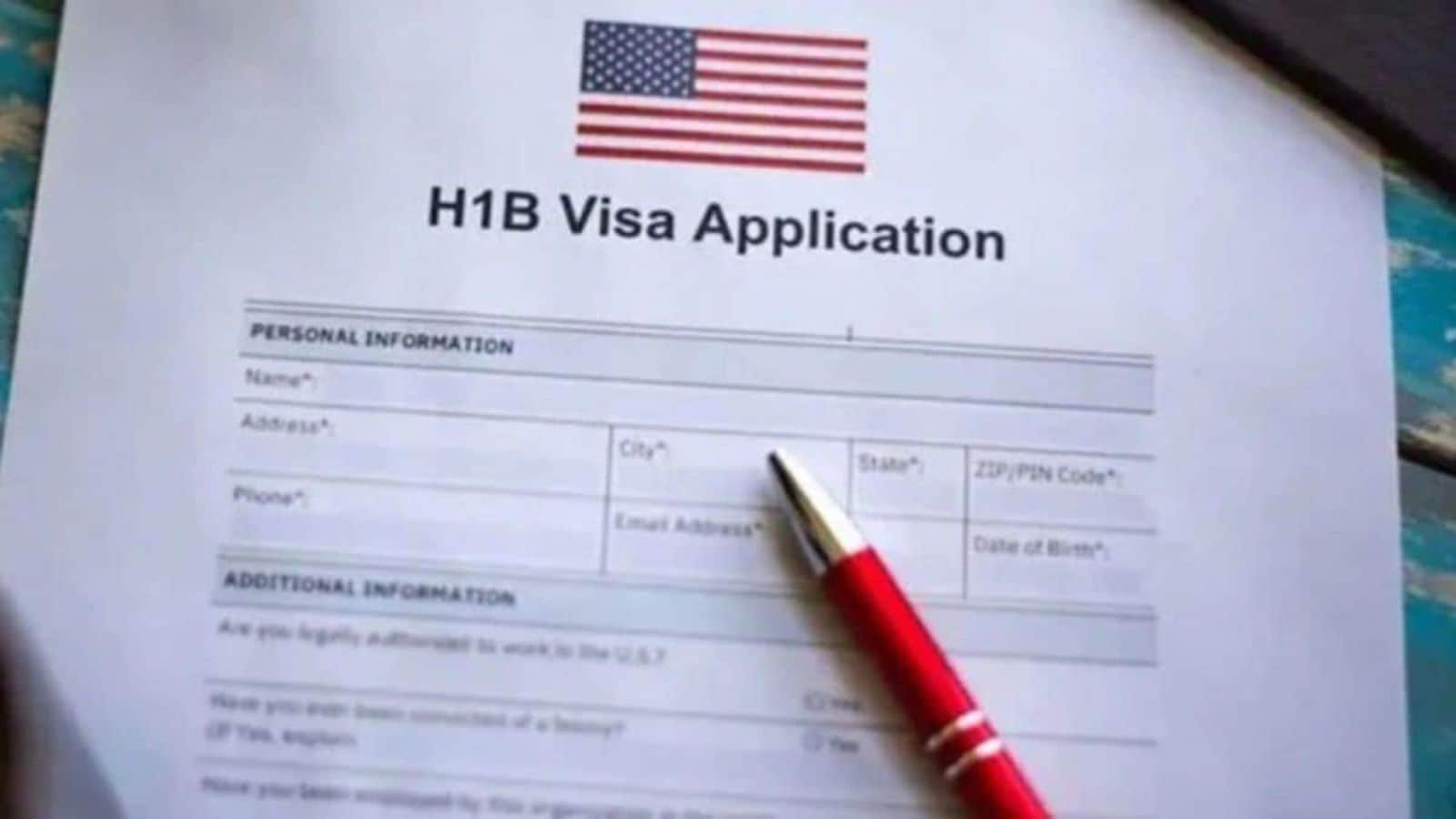
Then, a push notification on his phone flickered to life. A US lawmaker had just introduced a new bill aimed at restructuring the H-1B visa program.
With a few keystrokes thousands of miles away, the ground shifted beneath Aarav’s feet. And he is far from alone. As discussed in detailed articles by Wired, the effects are significant.
Every year, tens of thousands of highly skilled tech workers, predominantly from India, enter a high-stakes lottery system. The prize is the H-1B visa, a document that transforms abstract professional ambition into American reality. To the economists and politicians in Washington, these visas are numbers on a ledger, levers to be pulled to protect domestic labor or stimulate corporate growth. But to the human beings behind the data packets, the H-1B is a fragile bridge suspended over an ocean of regulatory uncertainty.
When a new reform bill enters the congressional floor, that bridge begins to sway.
The Calculus of Protectionism
The legislative machinery of Washington operates on a simple, recurring premise: protect the local worker. The newly proposed bill seeks to fundamentally alter how H-1B visas are allocated, moving away from the traditional lottery system toward a wage-based prioritization model.
Currently, the system functions largely as a game of chance. Once an applicant meets the stringent educational and professional criteria, their name goes into a digital drum. If the computer picks them, they get to build a life in Seattle, Austin, or Boston. If not, they try again next year, or pack their bags.
The new proposal wants to replace luck with a strict hierarchy of compensation. Under this framework, the federal government would prioritize visa applicants who are offered the highest salaries by their American employers. The logic seems straightforward on paper. By forcing companies to pay premium wages for foreign talent, the bill aims to prevent corporations from using overseas workers to undercut the domestic tech labor market. It assumes that if a company has to pay an astronomical salary to a foreign engineer, they will only do so for truly irreplaceable talent.
But logic conceived in a legislative chamber often fractures when it hits the pavement of the real world.
Consider the mid-level software engineer. They aren't corporate executives or specialized artificial intelligence researchers commanding seven-figure compensation packages. They are the builders. They write the scripts that keep banking apps secure. They optimize the cloud databases that allow global logistics networks to function without a hitch.
By shifting the allocation exclusively to the highest bidders, the bill inadvertently creates an environment where only massive tech conglomerates can afford to sponsor foreign talent. The startup in Denver trying to build a new medical diagnostic tool on a tight budget is priced out. The mid-sized cybersecurity firm in Ohio loses its competitive edge.
The system becomes an arena where only the giants can play, leaving the actual workers as collateral damage.
The Invisible Stakes of Uncertainty
To understand the true weight of these legislative shifts, one must look past the press releases and view the daily reality of the visa holder. It is a life lived in three-year increments.
When you are on an H-1B visa, your existence in the country is tied entirely to your employment status. If a project loses funding and you are laid off, a digital countdown clock begins. You have exactly sixty days to find another employer willing to navigate the labyrinthine process of visa sponsorship, or you must leave. Sixty days to pack up a life, sell a car, break a lease, and say goodbye to a community you spent years building.
This constant, low-humming anxiety shapes every decision. It dictates whether you buy a house or keep renting. It influences whether you start a family or wait for a green card processing queue that, for Indian nationals, can literally take decades due to per-country caps.
"You learn to live out of a suitcase even when you own furniture," says Priya, a systems architect who spent seven years in California under the visa program. "Every time a new bill is introduced, you look at your living room and wonder if you're going to have to box it all up by the end of the quarter."
This is the human element missing from the standard political debate. The conversation often treats these workers as temporary economic units—cogs that can be imported when production needs a boost and discarded when the political wind changes. But these cogs have mortgages. They have children who speak with American accents and know no other home.
The Myth of the Cheap Labor Pool
A persistent narrative driving these reform bills is the idea that foreign tech workers are a source of cheap labor, imported wholesale to displace American graduates. It is a compelling story for a political campaign, but it ignores the rigorous reality of the modern corporate landscape.
Hiring an international employee is extraordinarily expensive. Companies do not choose the visa path to save a quick buck. Between legal fees, filing costs, mandatory corporate fees, and the internal administrative hours required to navigate the Department of Labor, sponsoring a single H-1B worker can cost an employer upwards of ten thousand dollars before the worker even logs into their first terminal.
Furthermore, current regulations already require employers to pay H-1B workers the "prevailing wage"—a metric calculated to ensure that foreign professionals are compensated at the same rate as their domestic peers in the same geographic region.
The idea that thousands of Indian tech workers are arriving to work for substandard wages in Silicon Valley is a ghost story designed to frighten voters. The reality is a hyper-competitive talent market where companies pay a premium because the specific technical skill sets are in critically short supply globally.
When a bill threatens to disrupt this pipeline, it doesn't automatically create a surplus of local talent ready to fill the void. Instead, it often forces American companies to look outside their borders entirely.
The Great Relocation
Capital and innovation are notoriously fluid. They flow toward the path of least resistance. If the United States closes its doors to high-skilled professionals through restrictive wage floors and unpredictable lottery overhauls, the work does not simply stop. It moves.
Over the past decade, neighboring countries have watched the volatile American immigration debate with quiet satisfaction. Canada, in particular, has positioned itself as the primary beneficiary of US tech anxiety. With streamlined immigration pathways, rapid visa processing for skilled professionals, and a clear, predictable route to permanent residency, cities like Toronto and Vancouver have transformed into massive technology hubs.
American enterprise is adaptive. If a company cannot secure a visa for a brilliant data scientist in San Francisco, they will open an engineering office in Waterloo and place them there. The work still gets done. The code still gets written. But the economic benefits—the income taxes, the local consumer spending, the secondary job creation, the cultural enrichment—evaporate from the American ecosystem.
We are witnessing a quiet drain of global intellectual capital. The very policies designed to protect the American economy risk starving its most vital engine: innovation.
The Horizon at Dawn
Back in Bangalore, the sun was beginning to break through the heavy morning haze, painting the sky in pale shades of orange and gray. Aarav closed the news tab on his browser. The bill was just an introduction, a piece of paper thrown into the slow, grinding gears of the legislative process. It might pass, it might be heavily amended, or it might die quietly in a sub-committee room like so many before it.
But the damage of uncertainty is immediate.
He looked back at the photograph of the bridge on his desk. The golden paint seemed a little less bright under the cold morning light. He opened his IDE and went back to work, writing clean, efficient lines of code that didn't care about borders, passports, or congressional voting blocks.
The global tech economy runs on the minds of people who are willing to cross oceans to build something new. When we rewrite the rules of that journey, we aren't just changing policy. We are redrawing the maps of human lives.