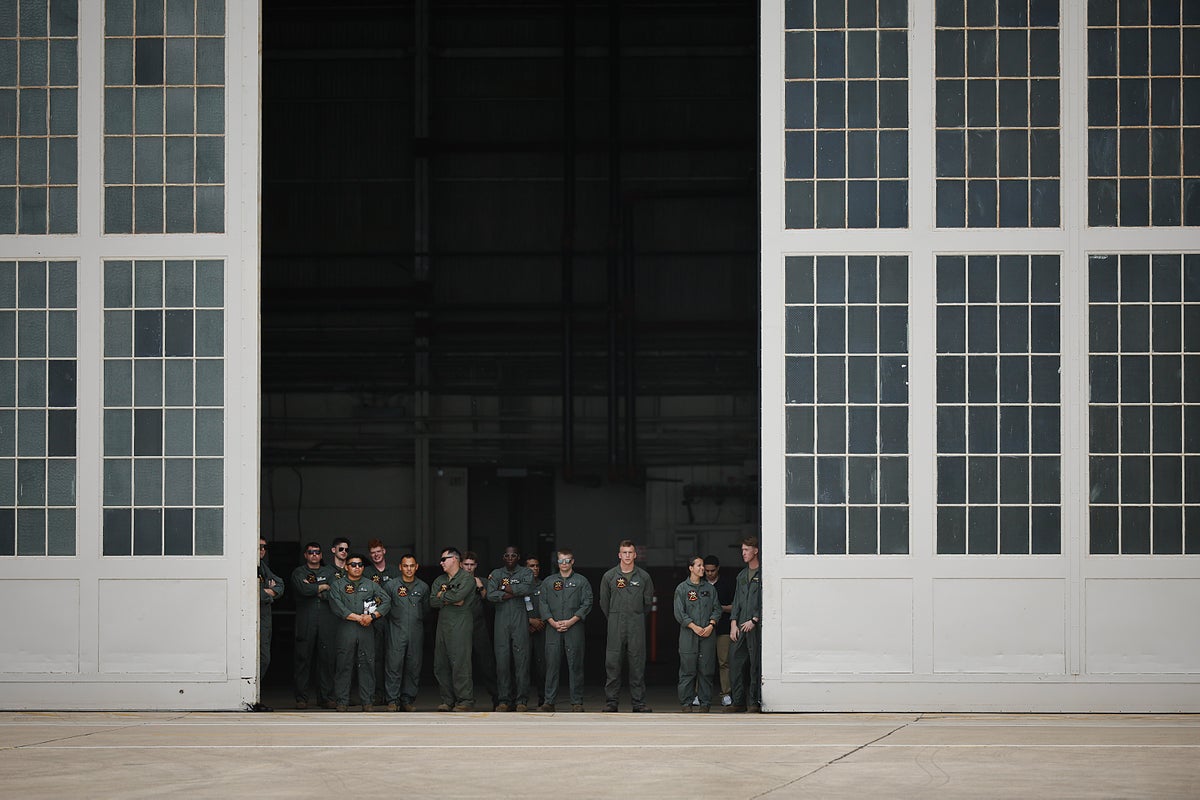
A localized disease outbreak within a high-density institutional environment acts as a stress test for defensive public health infrastructure. The infection of at least 159 military recruits with influenza at the 37th Training Wing within Joint Base San Antonio-Lackland highlights a direct correlation between policy de-regulation and operational readiness degradation. The outbreak occurred within eight weeks of a Department of Defense directive that shifted the annual influenza vaccine from a universal readiness requirement to an optional preventative measure.
Analyzing this event requires evaluating the biological math of closed-system transmission alongside the administrative friction of shifting organizational frameworks. When individual medical autonomy replaces systematic immunologic mandates in a concentrated environment, the probability of an epidemic rises predictably. Managing these competing values reveals an inherent friction between individual liberty and collective force preservation.
The Mathematical Engine of Closed-System Transmission
To understand how the infection rate accelerated so rapidly among the 37th Training Wing, we must look at the basic reproductive number ($R_0$) of influenza within a high-density, closed ecosystem. $R_0$ represents the average number of secondary infections generated by a single infectious individual in a completely susceptible population. In standard civilian environments, the seasonal influenza $R_0$ typically oscillates between 1.2 and 1.8.
However, basic military training alters the variables that govern transmission dynamics. Recruits live in shared, open-bay dormitories, consume meals in high-capacity dining facilities, and undergo prolonged, strenuous physical exertion that elevates respiratory ventilation rates. This environmental density shifts the transmission coefficient significantly higher than civilian baselines.
The primary barrier to exponential growth in such environments is the herd immunity threshold ($HIT$), calculated using the standard formula:
$$HIT = 1 - \frac{1}{R_0}$$
Prior to the policy shift enacted on April 21, 2026, the military's universal immunization policy maintained a vaccination rate approaching 100%. This systemic saturation kept the actual immune proportion of the population well above the required threshold, effectively compressing the effective reproduction number ($R_t$) to less than 1.0. When $R_t$ remains below 1.0, sustained chains of transmission cannot survive, and introduced pathogens burn out cleanly.
Following the rescission of the mandate, the vaccine uptake rate among Lackland recruits dropped precipitously to roughly 40%. This decline created an immediate immunologic deficit. With 60% of the population remaining susceptible, the actual immune fraction fell far short of the threshold required to disrupt transmission. Consequently, the introduction of a single viral vector triggered a rapid, localized outbreak, demonstrating how quickly an immunologic void is filled when environmental density remains constant.
The Operational Cost Function of Training Degradation
The impact of an infectious outbreak within a primary training pipeline extends far beyond individual clinical symptoms. It acts as a direct bottleneck for force generation. Basic Military Training operates as a highly coordinated, time-sensitive logistics pipeline. It is designed to transform recruits into operational personnel across strict, non-negotiable multi-week blocks.
When an outbreak forces a quarantine, the military incurs specific operational and financial penalties. The total impact can be modeled through three distinct cost centers:
- Direct Attrition and Recycling Rates: Symptomatic trainees require isolation and antiviral treatment, such as oseltamivir. If a recruit misses critical, mandatory training modules due to illness, they cannot graduate with their assigned cohort. They must be held back and integrated into a subsequent training cycle—a process known as "recycling." This delays their arrival at technical schools and, ultimately, their deployment to operational units.
- Medical Asset Diversion: Managing 159 confirmed cases, alongside testing and monitoring exposed contacts, diverts clinical personnel from routine care. It stretches the capacity of local military medical facilities, such as the 59th Medical Wing and Brooke Army Medical Center, forcing them into active containment rather than optimized baseline operations.
- Surgical Quarantine Friction: To halt the transmission chain, commanders must implement strict non-pharmaceutical interventions. These include restricting troop movements, isolating whole flights, and sanitizing common areas. This friction disrupts the standard training schedule, reducing the efficiency of instructional staff.
The operational bottleneck is further complicated by severe clinical outcomes. While the majority of influenza cases resolve without permanent injury, a baseline percentage requires hospitalization due to secondary complications like viral or bacterial pneumonia. At least two recruits at Lackland required hospitalization during this event. Furthermore, the death of a trainee in their sixth week of training under a concurrent medical emergency has prompted an active investigation. While a definitive link to the influenza outbreak is not yet confirmed, the coincidence highlights the heightened risk profiles that emerge when health systems are stressed by an active epidemic.
Policy Whiplash and the Implementation of Structural Exemptions
The administrative response to the Lackland outbreak illustrates the difficulty of managing a decentralized, individual-choice policy within an organization built on standardized execution. In his April directive, Defense Secretary Pete Hegseth explicitly framed the removal of the long-standing mandate as an optimization strategy for warfighting capability, arguing that universal medical mandates infringed upon personal autonomy and damaged recruitment or retention.
However, the rapid drop in localized herd immunity forced a structural intervention. To contain the outbreak, the Air Force invoked an "Exception to Policy" (ETP) clause provided by the Under Secretary of Defense for Personnel and Readiness. This clause allows specific service branches to override the optional status and re-institute mandatory vaccinations if a thorough risk assessment indicates that local operational readiness or force preservation is critically compromised.
This swift policy reversal introduces several systemic complications:
- Command Credibility Friction: Shifting rapidly from an absolute defense of bodily autonomy to an emergency mandatory vaccination order at the installation level creates institutional friction. It sends mixed signals regarding the true operational necessity of preventative medicine.
- Inconsistent Readiness Profiles: Allowing individual service branches, or specific installations within those branches, to execute separate ETPs creates a fragmented force health architecture. Units operating under a localized mandate will possess high immunologic protection, while adjacent units operating under the default optional framework remain vulnerable to sudden outbreaks when deployed or co-located.
- Logistical Reaction Lag: Deploying vaccines reactively to suppress an active outbreak is inherently less efficient than proactive, systematic administration. The human body requires approximately two weeks post-vaccination to develop robust antibody responses. Consequently, mandating vaccines after an outbreak has already taken hold means the intervention cannot prevent the initial, most costly waves of infection and operational disruption.
Mitigating Risk Under Voluntary Immunization Frameworks
If the Department of Defense continues to prioritize voluntary medical choices as its primary policy baseline, maintaining force readiness requires shifting from an absolute reliance on mandates to a sophisticated risk-mitigation framework. Relying on basic educational campaigns is historically insufficient to achieve the herd immunity thresholds required for dense institutional living. Instead, military leadership must deploy structural alternatives to minimize transmission risk.
First, the military must alter the physical environment of basic training to reduce the baseline transmission coefficient. If the susceptible population is allowed to expand, the environment itself must be made less conducive to viral spread. This requires upgrading mechanical ventilation and filtration systems within all communal barracks to achieve a higher rate of air exchanges per hour, alongside deploying continuous ultraviolet germicidal irradiation in high-traffic common areas.
Second, commanders must implement predictive screening protocols. Rather than reacting after dozens of troops present with a fever, training wings need to employ routine, non-invasive surveillance strategies. This includes continuous wastewater testing across specific barracks dormitories to detect viral shedding days before clinical symptoms manifest across a unit, allowing for precision isolation rather than sweeping, disruptive quarantines.
Ultimately, the event at Lackland Air Force Base demonstrates that removing a universal medical mandate does not eliminate the structural need for herd immunity; it merely shifts the cost of maintaining it from a proactive pharmaceutical baseline to reactive operational disruption. When policy choices lower immunologic defenses in a high-density environment, the system will inevitably pay the price in lost training days, stretched medical assets, and compromised force generation. Strategic defense planning requires recognizing that medical autonomy and operational optimization are interconnected variables within a zero-sum calculation.