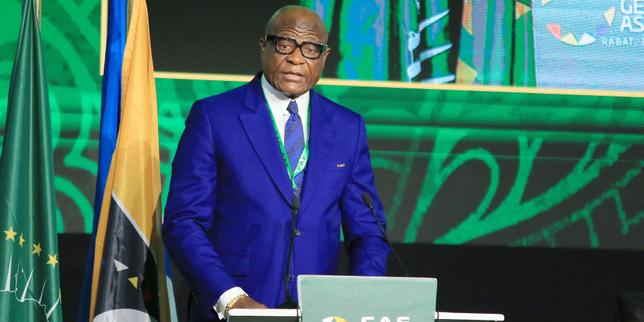
Constant Omari wants a resignation. The former FIFA Council member and veteran administrator recently stepped into the public square to demand that Gianni Infantino either face a vote of confidence or pack his bags. The chorus of moral outrage echoes the same tired refrain we have heard for decades: football is rotting from the head down, the presidency has too much concentrated power, and a return to old-school continental consensus governance will somehow purify the sport.
It is a lazy critique wrapped in righteous rhetoric. It misses the entire operational reality of modern global sports administration.
I have spent two decades watching sports federations self-destruct under the weight of their own bureaucratic hypocrisy. I have seen administrators clutch their pearls over executive overreach while quietly pocketing daily allowances and manipulating regional voting blocks for decades. Omari and his ideological peers are not fighting for transparency. They are fighting to restore a system of decentralized patronage where regional kingmakers held global football hostage behind closed doors.
Infantino did not invent authoritarian sports governance. He simply industrialized it, centralized it, and redirected the revenue streams away from the old guard's private accounts and directly toward the federations that actually need the cash.
Let us dismantle the core misconceptions driving the anti-Infantino crusade, starting with the fantasy that FIFA was ever a democratic temple before he took over in 2016.
The Myth of the Golden Age
The primary weapon of the Infantino detractors is nostalgia. They talk about the pre-2016 era under Sepp Blatter as if it were a golden age of checks and balances. This is historical revisionism of the highest order.
Under the old regime, power was concentrated in a small, self-perpetuating European and South American clique. FIFA operated like a Swiss private bank with a football problem. Billions flowed through opaque development funds with zero accountability, and small associations from Africa, Asia, and Oceania were treated like political fodder—voted in blocs every four years and ignored the rest of the time.
When Infantino dismantled the old Executive Committee and replaced it with the larger, theoretically more inclusive FIFA Council, he broke the European hegemony. That is the actual sin that drives the European media and disgruntled insiders crazy. Infantino shifted the center of gravity of world football away from Zurich and UEFA headquarters, opening the door to the rest of the planet.
To demand a vote of confidence now because a faction of traditionalists dislikes his expansionist agenda is absurd. Infantino wins elections because the global majority—the small and medium-sized associations who never saw a dime of infrastructure funding thirty years ago—know exactly who keeps the lights on in their domestic leagues.
The Revenue Paradox Everyone Ignores
Critics love to point out that FIFA under Infantino generates staggering amounts of money, framing commercial success as proof of corporate greed. They point to the expanded Club World Cup and the bloated 48-team World Cup as cash grabs that ruin the sporting calendar.
Here is the contrarian truth that nobody in the legacy sports media wants to admit: commercial expansion is the only thing keeping global football from total financial stratification.
Let us look at the mechanics. Without aggressive revenue diversification, the top five European leagues—the Premier League, La Liga, Serie A, Bundesliga, and Ligue 1—would consume the entire financial ecosystem. The gap between a club in Manchester and a club in Maputo would become an unbridgeable chasm.
By expanding tournaments and creating new commercial products, Infantino has inflated FIFA's cash reserves to levels that allow for unprecedented solidarity payments. The FIFA Forward program channels millions directly into national associations for pitch construction, grassroots coaching, and women's football development.
| Metric | Pre-Infantino Era (Blatter Late Years) | Current Infantino Era |
|---|---|---|
| Direct Development Funding per Association | Minimal, heavily politicized | Millions guaranteed via FIFA Forward |
| World Cup Participant Structure | Euro-Centric / South American heavy | Expanded representation for Africa, Asia, CONCACAF |
| Governance Transparency | Closed-door executive committees | Publicized audit committees and digital reporting |
Critics call this vote-buying. Economists call it redistribution. If you want a truly global sport instead of a private European country club, you need a central clearinghouse aggressive enough to extract capital from commercial giants and scatter it across the developing world. Infantino plays the villain in Geneva and London so that federations in Fiji and Rwanda can build training facilities.
The Geopolitical Tightrope
Another favorite argument of the moral crusaders is that Infantino is too cozy with authoritarian governments. They clutch their pearls over tournaments hosted in nations with dubious human rights records.
Imagine a scenario where FIFA adopts a rigid, puritanical geopolitical filter, awarding hosting rights exclusively to mature Western democracies with pristine records. What happens to the global game?
Football ceases to be a global language and retreats into a regional luxury good. Hosting the World Cup in Qatar was controversial, abrasive, and disruptive. It also forced infrastructure development in the Middle East, catalyzed labor reform debates that would never have happened otherwise, and proved that the tournament belongs to the entire world, not just Western Europe and North America.
Infantino understands realpolitik better than his predecessors. He realizes that sports diplomacy is transactional. You do not change the world by locking authoritarian states out of international competition; you change it by dragging them into the spotlight, forcing them to spend billions on infrastructure, and making them accountable to a global television audience of billions.
The critics who demand his resignation want a return to comfortable Western hegemony where global sport serves as a polite backdrop for European dominance.
The Accountability Fallacy
Does Infantino have flaws? Absolutely. The centralization of power around the presidency is undeniable. The ethics committees have been streamlined to a point that raises legitimate eyebrows, and his communication style often alienates traditional stakeholders.
Demanding a snap resignation or a destabilizing vote of confidence is not the solution. It is a temper tantrum thrown by administrators who lost their monopoly on power.
If Constant Omari and his allies actually cared about governance reform, they would propose structural mechanisms to democratize revenue allocation further, rather than trying to oust the executive who broke open their old boys' club. But they do not want reform. They want their old seats back.
Stop listening to the moral panic of officials who profited from the very opacity they now pretend to abhor. Gianni Infantino is not the disease; he is the ruthless symptom of a globalized sport that refuses to be governed by European gatekeepers anymore.
If you want to fix football, look past the personality cults, ignore the manufactured outrage from Zurich and London, and look at the balance sheets. The money is finally moving. Deal with it.
.png?width=1200&auto=webp&trim=0%2C0%2C0%2C0)