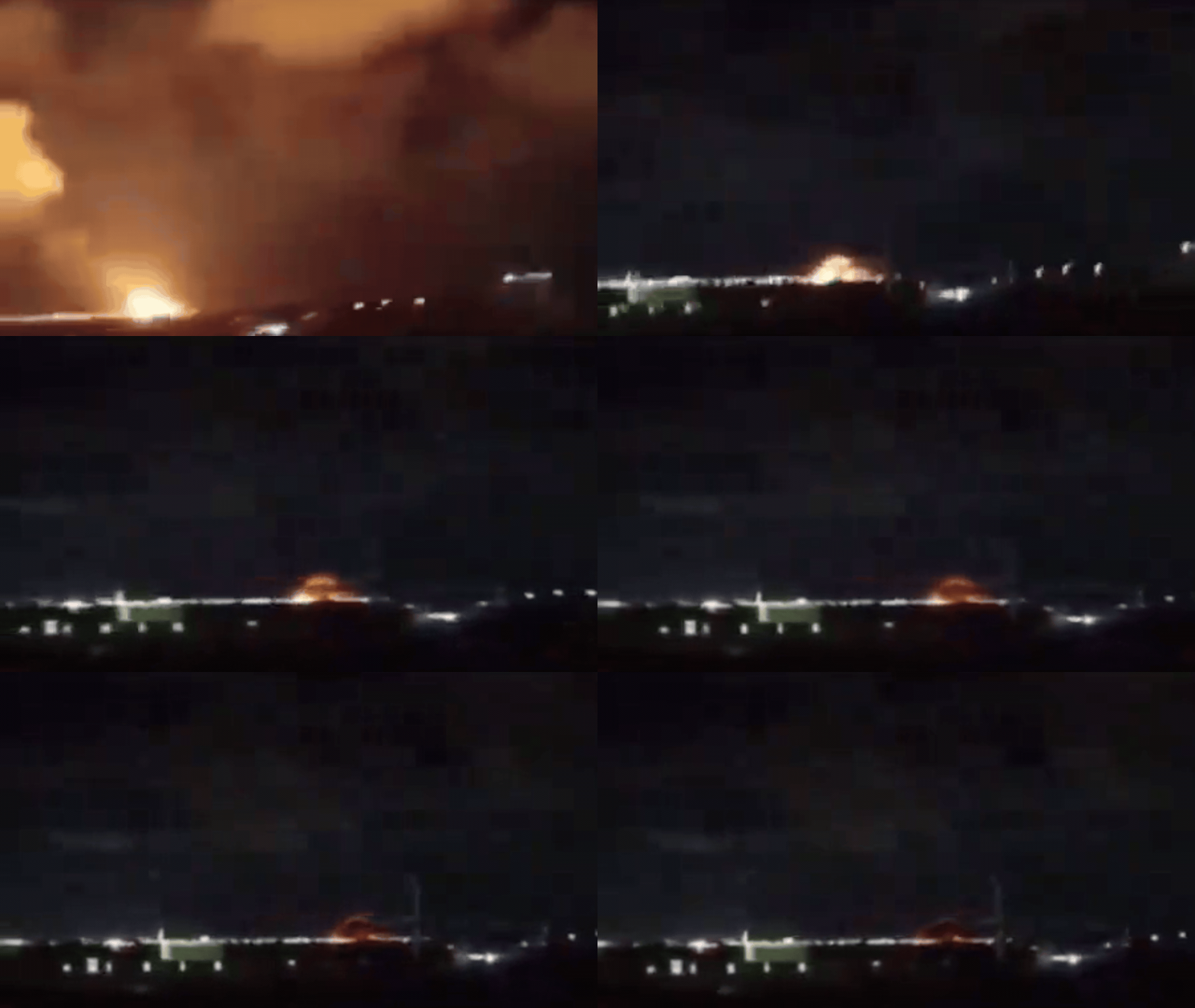
The tarmac at Aden International Airport was not supposed to shatter that December afternoon. Airports are designed to be hinges—points of graceful transition where the earth falls away and the sky takes over, where families embrace through glass and strangers pass without looking up. They are monuments to human connectivity, poured in thick grey concrete and gleaming with plate glass. But on December 30, 2020, that hinge broke.
Plumes of thick, charcoal smoke climbed lazily into the coastal sky over southern Yemen, curling above the turquoise waters of the Gulf of Aden. Just minutes before, a plane carrying the newly formed power-sharing cabinet of the Yemeni government had touched down, returning from Saudi Arabia to signal a fragile new beginning. The cabin doors had barely cracked open when the first blast tore through the arrivals hall. Then came the second. Shrapnel chewed through the concrete pillars. Glass rained down like sleet. The air filled with the thin, metallic tang of cordite and the panicked cries of baggage handlers, journalists, and security forces scrambling for cover behind luggage carts and concrete barriers.
Twenty-six people died. More than a hundred others carried away wounds that would outlast the news cycle.
Yet, as the smoke drifted out over the Arabian Sea, the horizon miles to the north was already flickering with a different kind of fire.
The Calculus of Distance
To understand what happened on that runway, you have to pull back from the smoking wreckage in Aden and look at the vast, rust-colored expanses of the Arabian Peninsula. Distance here is not just a measure of geography; it is a weapon.
Hundreds of miles away across the border, in the rugged highlands of northern Yemen, a movement known politically as Ansar Allah—and globally as the Houthis—had been locked in a grinding, multi-year war against a coalition led by Saudi Arabia. For years, this conflict had played out in trenches, dry riverbeds, and bombed-out marketplaces. It was a war of attrition that starved children and flattened ancient mud-brick homes, largely hidden from the front pages of Western newspapers by the sheer exhaustion of its duration.
But war evolves. It reaches for longer arms.
Hours after the Aden airport explosions, sirens wailed across the flat, oil-rich plains of Saudi Arabia's Eastern Province and over the fortified rooftops of Riyadh. High above the desert, invisible to the naked eye, a swarm of explosive-laden drones and ballistic missiles traced silent, deadly arcs through the stratosphere.
This was not a chaotic militia firing blindly into the dark. This was a calculated demonstration of reach. The message was as sharp as a blade: You can form a government in Aden, you can shelter behind coalition borders, but there is nowhere out of our range.
Consider what it feels like to live beneath that flight path. Imagine sitting in a brightly lit kitchen in Riyadh, the hum of the air conditioner cutting through the midnight quiet, knowing that thousands of feet above, an autonomous delta-wing drone—cheaply constructed, guided by commercial satellite coordinates, and packed with military-grade explosives—might be drifting silently toward a petroleum facility or a civilian neighborhood.
That is the psychological architecture of modern asymmetrical warfare. It doesn't just destroy infrastructure; it occupies the quiet spaces of the mind.
The Human Engine of a Forgotten War
Wars are frequently charted by generals using blue and red arrows on pristine maps, as though armies were chess pieces moved by dispassionate hands. But every arrow on those maps represents a boy who forgot how to sleep, a mother who counts the minutes between distant thuds, and a currency so devalued that a single paper bill can barely buy a loaf of bread.
In Yemen, the human cost is not a byproduct of the conflict; it is the environment itself.
Before the airport blast, the cabinet members on that plane were supposed to represent a reconciliation—a fragile bridge built between southern separatists and the internationally recognized government, brokered in Riyadh to staunch the bleeding of a fractured state. They stepped off the aircraft stairs expecting handshakes, cameras, and the cautious optimism of diplomats. Instead, they stepped into a war crime.
A baggage handler named Tariq, twenty-four years old, was standing thirty yards from the VIP terminal when the first blast hit. He remembers the sound not as a loud boom, but as a sudden, suffocating vacuum.
"The world simply stopped breathing," he would recount later, staring at the calloused palms of his hands. "There was no time to think. Only time to run, and even then, your legs felt like they were moving through wet cement."
Tariq survived because a reinforced concrete pillar deflected the worst of the shrapnel. But three of his coworkers did not. Their names were logged in brief UN reports, tucked away in PDF files that few civilians outside the region will ever read. Their deaths were chalked up as "operational casualties" in a briefing room thousands of miles away.
To reduce these events to geopolitical strategy is to misunderstand why they matter. The strikes on Aden and the subsequent missile salvos launched toward Saudi Arabia are symptoms of a deeper, rotting rot: the belief that human survival is an acceptable currency to spend in the pursuit of absolute dominance.
The Invisible Architecture of Escalation
Why Aden? Why now?
To answer that, you have to look at the geometry of desperation. When conventional fronts freeze and diplomacy turns into an endless treadmill of closed-door negotiations in Geneva or Stockholm, combatants look for leverage. The Houthis, hardened by years of surviving airstrikes that devastated northern infrastructure, mastered the art of asymmetric retaliation. By utilizing locally assembled loitering munitions—often engineered with smuggled foreign components—they leveled the playing field against a coalition with billions of dollars in advanced Western weaponry.
When a cheap drone can force a multi-billion-dollar Patriot missile battery to fire a defensive interceptor, the economic equation of war shifts violently. When that same drone strikes an international airport, it severs a nation's windpipe, cutting off the last remaining tether to the outside world.
Aden airport is more than asphalt and baggage carousels. It is the lungs through which aid, journalists, and returning citizens breathe. By targeting it, the perpetrators ensured that Yemen would remain quarantined in its misery—a humanitarian catastrophe wrapped inside a geopolitical chessboard.
And across the border, the Kingdom of Saudi Arabia found itself trapped in its own strategic dilemma. Having entered the war in 2015 with the expectation of a swift campaign to restore the ousted government, Riyadh instead found itself playing an endless game of aerial defense, protecting its oil refineries, desalination plants, and sprawling cities from a relentless, low-cost aerial campaign.
Every intercepted missile is a tactical victory; every missile that gets through is a strategic humiliation.
The Echoes on the Tarmac
Today, the glass at Aden airport has been swept up. The structural engineers have patched the concrete walls with fresh mortar, and flights occasionally land and depart under the watchful eyes of heavily armed security forces. Life in the city resumes with that grim, heroic resilience unique to people who have survived the absolute worst of human nature.
People buy fish at the Crater district market. Children kick deflated soccer balls through dusty alleyways. The ministers who survived the blast moved into heavily guarded compounds, their power-sharing arrangement permanently stained with the blood of the people they swore to protect.
Yet, the smoke from that December afternoon never truly cleared. It settled into the atmosphere of the region, a permanent haze of suspicion and unresolved violence.
When we look at headlines detailing cross-border strikes and shattered terminals, it is easy to view them as distant tragedies happening to distant people on a different planet. That is the great anesthesia of distance. We scroll past the photos of twisted metal, feeling a momentary pang of pity before returning to our coffee cups and morning commutes.
But the world is smaller than our indifference lets us believe. The same fragile supply chains, the same desperate political calculations, and the same terrifying democratization of destructive technology touch us all.
Out on the tarmac in Aden, the wind still sweeps in off the Gulf, rustling the torn edges of a political banner that promised peace. It is a quiet reminder that until we look past the strategy and see the human beings standing in the crosshairs, the next explosion is only ever a takeoff away.


