For decades, the border between Russia and North Korea existed mostly as a ghost line on a moth-eaten map. It cut through a sliver of geography so narrow, so stubbornly guarded, that the mapmakers of the world treated it like a typographical error. There was an iron bridge, yes—the Bridge of Friendship, spanning the muddy waters of the Tumen River—but that bridge carried only the slow, heavy clatter of freight trains. Iron tracks. Steel wheels. Guarded gates. If you were a human being standing on the riverbank, looking across the water from Khasan to Tumangang, you could smell the coal smoke of the other side, but you could not walk there. You could not drive a truck across.
Now, the asphalt is drying.
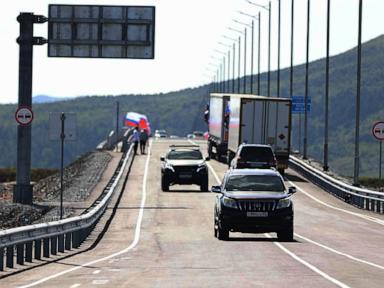
Russia and North Korea have officially opened their first direct road link across that shared border, bridging the Tumangang area with Primorsky Krai. A concrete ribbon. A strip of gray paving that sounds simple enough on a dry news ticker, but carries the heavy, subterranean weight of shifting global tectonic plates.
Imagine standing on that new asphalt today. The air smells of wet aggregate, diesel exhaust, and the sharp, metallic tang of cold river water. To your left, the vast, pine-dark expanses of the Russian Far East stretch toward the horizon like an unread book. To your right, the hills of North Korea rise up, terraced and stern, folding inward against the outside world. Until this week, the only way across this minuscule border was the railway built back in the late nineteen-fifties. Everything else required massive detours, diplomatic clearance through third countries, or sheer bureaucratic impossibility.
Bridges change behavior. Roads rewrite geography.
To understand why this matters, you have to look past the press releases and stare directly at the cold mechanics of logistics. When nations isolate themselves from the traditional centers of global trade, they begin to stitch together alternative threads. They look for new routes, new bypasses, new veins through which to pump goods, materials, and machinery. This new road is not merely a convenience for weekend drivers. Civilian traffic is not clogging these lanes. Instead, this concrete link is built for heavy transport, commercial flow, and the immediate, urgent demands of two governments drawing closer under the crushing pressure of international sanctions.
Consider what happens when a railway is your only umbilical cord. A train is efficient, but it is rigid. It runs on a schedule. It requires massive infrastructure at both ends to load and unload bulk cargo. A road, by contrast, is fluid. A truck can pull up to a warehouse, take on a pallet of flour, machine parts, or raw materials, and drive straight through. A truck can idle. A truck can adapt.
By paving a direct automobile route, Moscow and Pyongyang have removed a logistical bottleneck that has persisted since the Soviet era.
To grasp the human stakes, consider a hypothetical logistics dispatcher sitting in a concrete-block office on the North Korean side. For years, every single boxcar moving across the Tumen River had to be carefully accounted for, coordinated through months of paperwork, and channeled through a single, heavily monitored rail bridge. If a shipment of grain or fuel was delayed, entire supply chains stalled in the bitter winter cold. Now, looking out the window at the fresh lanes of the new international crossing, that same dispatcher sees a simpler reality: rubber on pavement. Wheels turning without waiting for a locomotive's clearance.
This is how isolation transforms. It does not disappear; it simply reorganizes.
The physical connection sits at a remarkably unique geographic junction. Just a few miles away lies the tripoint where Russia, North Korea, and China meet. This corner of Northeast Asia is becoming one of the most heavily watched geopolitical flashpoints on Earth, though it rarely commands the theatrical headlines of other global conflicts. While the West focuses its gaze elsewhere, this quiet corner of the map is being systematically paved, wired, and reinforced.
Critics might call it a minor infrastructure project. After all, what is a single two-lane road in the grand scheme of continental landmasses?
The answer lies in history. Roads are never just asphalt. The Roman roads built the empire long before the legions marched across them to conquer. The dirt tracks of the American frontier drew settlers into the unknown, altering the demography of a continent forever. When you lay down a permanent, all-weather road between two isolated economies, you are creating a permanent channel of dependency and exchange. You are lowering the friction of interaction.
On the Russian side, the Primorsky Krai region has long looked out toward the Pacific, aching for development, trade partners, and economic oxygen. On the North Korean side, the eternal search for reliable trade outside the gaze of Western financial institutions remains an absolute survival imperative.
As the first official commercial vehicles test the suspension of the new bridge and roll onto the fresh tarmac, the river below continues its ancient, indifferent flow toward the Sea of Japan. The water does not care about geopolitics. The mud does not care about sanctions. But the concrete will remember every ton of cargo that passes over it.
The ghost line on the map is gone. In its place stands a hard, gray seam, binding two distant worlds a little bit closer together in the dark.