Saltwater does not negotiate. It does not pause to read property deeds, and it holds no respect for municipal tax maps.
Stand on the edge of the Jersey Shore during a November nor'easter and you will understand the singular, low-grade terror that haunts coastal homeowners. The wind screeches through porch railings, carrying spray that tastes like bitter iron and battery acid. Below the pilings, the Atlantic Ocean rolls in with heavy, rhythmic violence, chewing away at the very earth holding up the foundations. For decades, the ritual was always the same. Sirens wail. Sandbags appear in driveways like pathetic gray fortifications. Basements flood. And then, after the storm passes, the residents shovel out the muck, patch the drywall, and wait for the next tide to test them again.
Until recently.
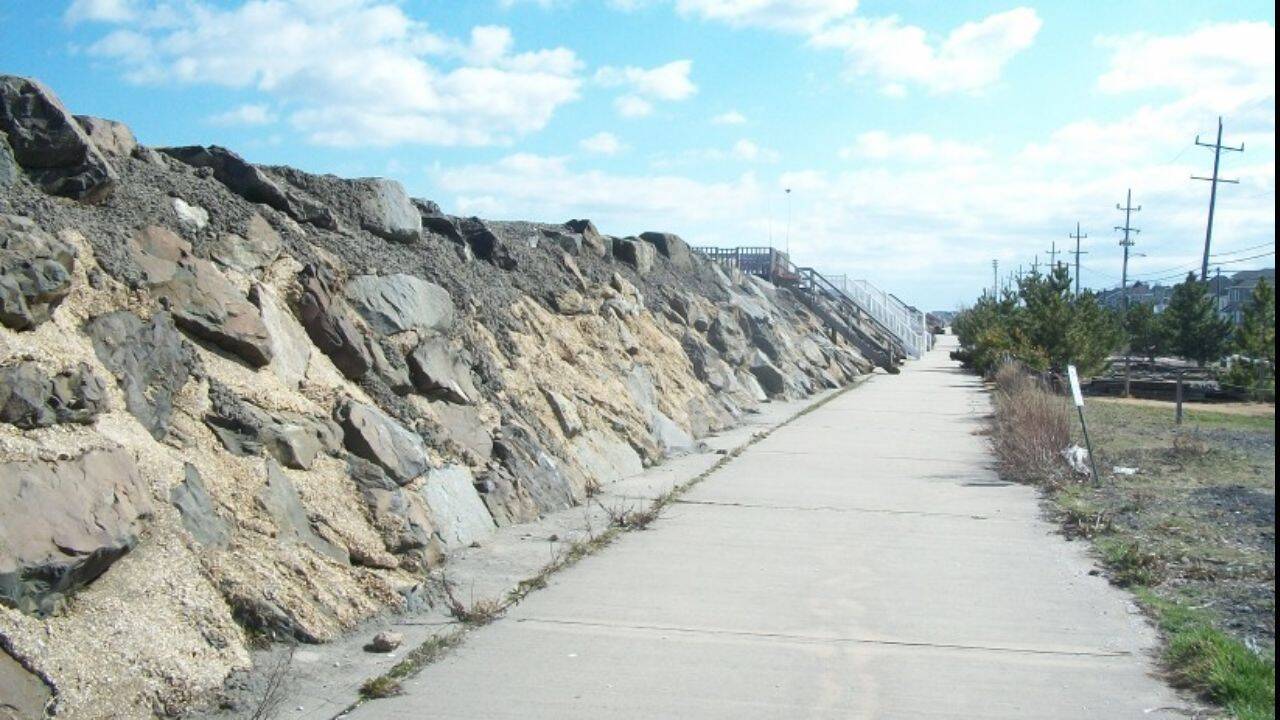
Along stretches of the New Jersey coastline, a quiet transformation has taken place. Massive stone barriers and towering concrete seawalls now stand where shifting dunes used to be. They look out of place, brutalist giants dropped onto sun-bleached barrier islands where pastel siding and salt-pitted decks once defined the horizon. They were built to protect a highway and the multi-million-dollar beach houses flanking it. Millions of tons of granite and steel, dropped into the surf with a single, desperate promise: stop the water.
To understand why this happened, you have to look past the political speeches and the engineering diagrams. You have to look at Clara.
Clara is a hypothetical resident whose story mirrors hundreds of real families along the coast. She bought her grandparents' bungalow in Ocean County thirty years ago. Back then, the ocean was a distant neighbor, glimpsed only from the second-story window as a thin blue sliver behind rolling dunes sea-oats and beach grass. You walked a quarter-mile over powdery sand to reach the surf. Summers smelled like funnel cake, coconut oil, and ozone.
By the time Hurricane Sandy tore through the coastline, those dunes were gone. The ocean didn't just visit Clara's street; it moved into her living room. The water sat three feet deep inside the house for two days, turning heirlooms into pulp and rotting the floor joists from the bottom up. When she finally returned, her neighborhood smelled of dead fish, mold, and sewage.
Insurance rates skyrocketed. The town faced a grim mathematical reality. Property taxes fund municipal budgets, and property taxes depend entirely on property existing. If the ocean swallowed the highway and the houses, the town effectively ceased to exist on the tax rolls. Something had to give.
Enter the seawall.
When the state announced the massive coastal protection project, opinions split sharply. On one side stood property owners desperate for anything that might save their investments from being dragged into the deep. On the other side stood environmentalists and geologists shaking their heads, whispering ancient truths about the nature of sand.
Sand is not stationary. It is a traveler. Beaches are designed by nature to migrate, to shift and breathe with the seasons, absorbing the blow of storms by rolling with the punch. When you drop a immovable concrete wall in front of a dynamic beach, physics fights back. The wave hits the wall, bounces off with doubled fury, and scours the sand away from the base at an accelerated rate. You save the house behind the wall, but you often sacrifice the beach in front of it.
Consider the paradox. To save the beach, we paved it with stone. To save the town, we altered the very shoreline that made the town worth saving in the first place.
Walking along the base of one of these new New Jersey seawalls today, the sensory experience is jarring. The acoustic profile of the shore has changed. Instead of the gentle, hissing rustle of water sliding over a wide sloping beach, you hear a chaotic, metallic roar as waves crash directly against vertical granite blocks and rebound into churning foam. Gulls wheel overhead, confused by the sudden architecture. Children still climb the boulders, looking for hermit crabs in the crevices, but the margin for error has vanished.
There is an invisible psychological weight that settles over a community once the concrete goes up. A seawall offers a profound, intoxicating sense of security. For the first few months after construction, homeowners sleep better when the wind picks up. They look out their windows at the gray barrier and feel insulated from the planetary dread that comes with rising sea levels and intensifying storms.
Yet, that security is a ghost story we tell ourselves.
Every engineer who signed off on the project knows the timeline. They know about the projected sea-level rise over the next fifty years. They know that a seawall is not a permanent fix; it is a delay tactic. It buys time for a generation. It allows people like Clara to live out their lives in the homes they love, watching one last sunset over an artificial horizon. But it shifts the bill to tomorrow.
Eventually, the water gets higher. The storms get stronger. The wall, no matter how thick, how deep its steel pilings go into the bedrock, faces an opponent that never gets tired.
We are standing at a historic crossroads in how humanity relates to the edge of the world. For centuries, we built light and moved when the water chased us. Native populations knew better than to plant permanent roots in shifting barrier islands. But modern real estate, with its concrete foundations and municipal bonds, demands permanence. We built our dreams on sand, and now we are spending billions of dollars trying to turn sand into stone.
The sun dips below the horizon, painting the New Jersey sky in bruising shades of violet and orange. The tide turns. Down on the beach, the waves strike the granite wall with a dull, concussive thud, throwing a halo of white spray into the darkening air. Inside her living room, Clara turns on a lamp, listens to the heavy thud of the ocean against the concrete outside, and wonders how long the wall will hold.