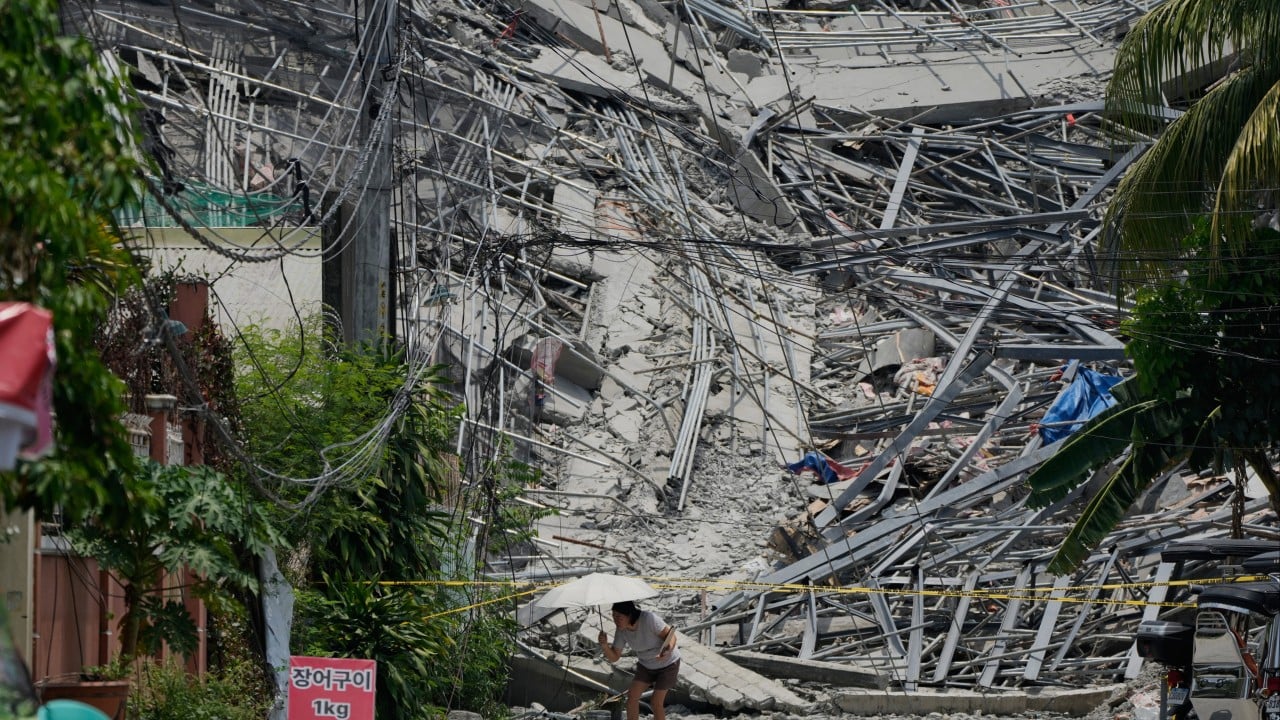
The sound of a collapsing building does not resemble the clean, cinematic rumble heard in movies. It is a wet, grinding shriek. It is the sound of thousands of tons of concrete shearing through rebar, pulverized plaster turning instantly into a blinding gray fog, and the sudden, terrifying absence of light.
At a hotel construction site in the Philippines, that sound became reality in a fraction of a second. One moment, a crew of laborers was working on the upper tiers, pouring the literal foundation of someone else’s future luxury vacation. The next, the structure folded in on itself like a house of cards, trapping multiple workers beneath a chaotic mountain of jagged debris. For a different view, check out: this related article.
When a building pancaked, time stopped being an abstract concept measured by a clock on the wall. It became a physical weight. Every tick of the second hand corresponded directly to the settling of dust, the pooling of blood, and the dwindling supply of oxygen trapped in accidental, suffocating pockets of air.
Outside, the tropical heat beat down on a frantic rescue scene. Inside, under the crushing weight of the world, a handful of human beings were forced to wait. Similar analysis on the subject has been shared by Reuters.
The Geography of a Pocket
Imagine your entire universe shrinking to the size of a twin mattress.
To understand what happens in the immediate aftermath of a structural failure, consider a hypothetical worker named Reynaldo. He is twenty-four, originally from a rural province, sending seventy percent of his meager paycheck back to his mother. When the floor beneath him vanished, instinct took over. He curled into a fetal position beneath a heavy steel girder.
That girder saved his life. It also became his cage.
In disaster medicine and urban search and rescue, these spaces are known as "survival pockets." They are accidental sanctuaries formed when structural elements prop each other up at jagged angles. But a survival pocket is a fragile miracle. The air inside is thick with crystalline silica dust, which tears at the lining of the lungs with every breath. The darkness is absolute, a heavy, sensory-deprivation blanket that plays tricks on the mind.
In the pitch black, the human brain tries to fill the silence. Reynaldo would hear the groan of the building settling above him. A millimeter shift three stories up could mean instant oblivion below. He would hear the distant, muffled shouting of his coworkers. Some cries would be sharp and urgent. Others would slowly taper off into a soft, ragged whistling.
The immediate threat isn't just the lack of air; it is the chemistry of the human body under pressure. When a heavy object pinches a limb for hours, the muscles begin to break down, releasing toxins into the bloodstream. As long as the debris presses down, the toxins are contained. But the moment the weight is lifted, those poisons rush to the heart and kidneys. Rescuers call this crush syndrome. It means that even the act of saving someone can inadvertently kill them if not managed with precise medical intervention.
This is the invisible math guiding the hands of the rescuers scrambling over the ruins above.
The Architecture of Chaos
On the surface, the scene looked like a war zone. Dozens of emergency responders, local police, and volunteers converged on the twisted remains of the hotel. But you cannot simply bring a bulldozer to a pile of collapsed concrete when living people are buried underneath. Heavy machinery vibrates. Vibration causes shifts. Shifts cause deaths.
Instead, the rescue became an agonizing exercise in macro-surgery.
Rescuers used specialized acoustic sensors—microphones so sensitive they can pick up the scraping of a fingernail against concrete or the faint, rhythmic thud of a human heartbeat through feet of solid material. They called for absolute silence on the pile. The heavy engines idle. The shouting stops. Hundreds of people hold their breath, listening to the earth, praying for a whisper.
Once a location was pinpointed, the physical torment of the rescue began. Rescuers slid through narrow, muddy gaps, tunneling through the wreckage by hand. They used small saws, hydraulic jacks, and their bare fingers to clear away the jagged teeth of broken rebar.
Every bucket of debris passed down the human chain represented a tiny gasp of air won back for the men trapped below.
The psychological toll on the rescue crews is immense. They operate under the shadow of the Golden Hour—the critical window during which a critically injured person must receive definitive medical care to survive. As the sun began to dip below the horizon, casting long, bruised shadows across the disaster site, that window began to slam shut. The heat of the Philippine day gave way to the humid, suffocating weight of the night, complicating the effort as floodlights flickered to life, painting the dust cloud in eerie, stark whites.
The True Cost of the Skyline
Why do these buildings fall?
While engineering investigations take months to determine the exact structural flaws—whether it was sub-standard cement, a failure in the load-bearing columns, or an unpermitted additional floor—the systemic blueprint is almost always the same. It is the story of rapid, aggressive development outpacing oversight.
Across developing urban centers, tourist infrastructure rushes to meet demand. Hotels, resorts, and high-rises sprout from the earth overnight. In the race to cash in on the next economic boom, corners are occasionally cut. Inspections are bypassed. Safety margins are thinned out until they are paper-thin.
The people who pay the price for these structural shortcuts are never the investors sitting in air-conditioned boardrooms. They are the men in plastic hardhats who earn a few dollars a day to pour concrete in the blazing sun. They are the invisible backbone of the modern skyline, forgotten until their workplace becomes their tomb.
Consider what happens next: the news cameras will eventually pack up. The headline will fade from the front pages. A legal battle will ensue, filled with corporate finger-pointing, insurance claims, and bureaucratic delays. But for the families waiting outside the perimeter line, huddled behind the police tape, the world has permanently fractured.
A mother stares at the pile of rubble, clutching a cheap plastic phone, waiting for a call that might never come. A wife wonders how she will feed her children without the monthly remittance from the city. For them, the hotel collapse is not a news event. It is a sudden, violent demarcation line between the life they knew and a future defined by a gaping, hollow absence.
Late into the night, a sudden shout echoed from the center of the ruins. The human chain froze. A canine unit focused intensely on a narrow crevice between two collapsed slabs.
A hand emerged from the dust. It was caked in gray grime, the fingers trembling but curled tightly into a fist, reaching toward the sky. A rescuer grabbed it, locking fingers, a human anchor holding fast against the pull of the grave.