The swamp smells of ancient peat, salt, and the sharp, chemical tang of ambition.
Stand at the edge of the marshes in southwestern Louisiana, and you can feel the earth yielding. It is a quiet, stubborn sort of place where fishermen mend nets by hand and the humidity hangs heavy enough to drink. Soon, the horizon will belong to thunder.
SpaceX is planting a one-hundred-billion-dollar stake in this marshland.
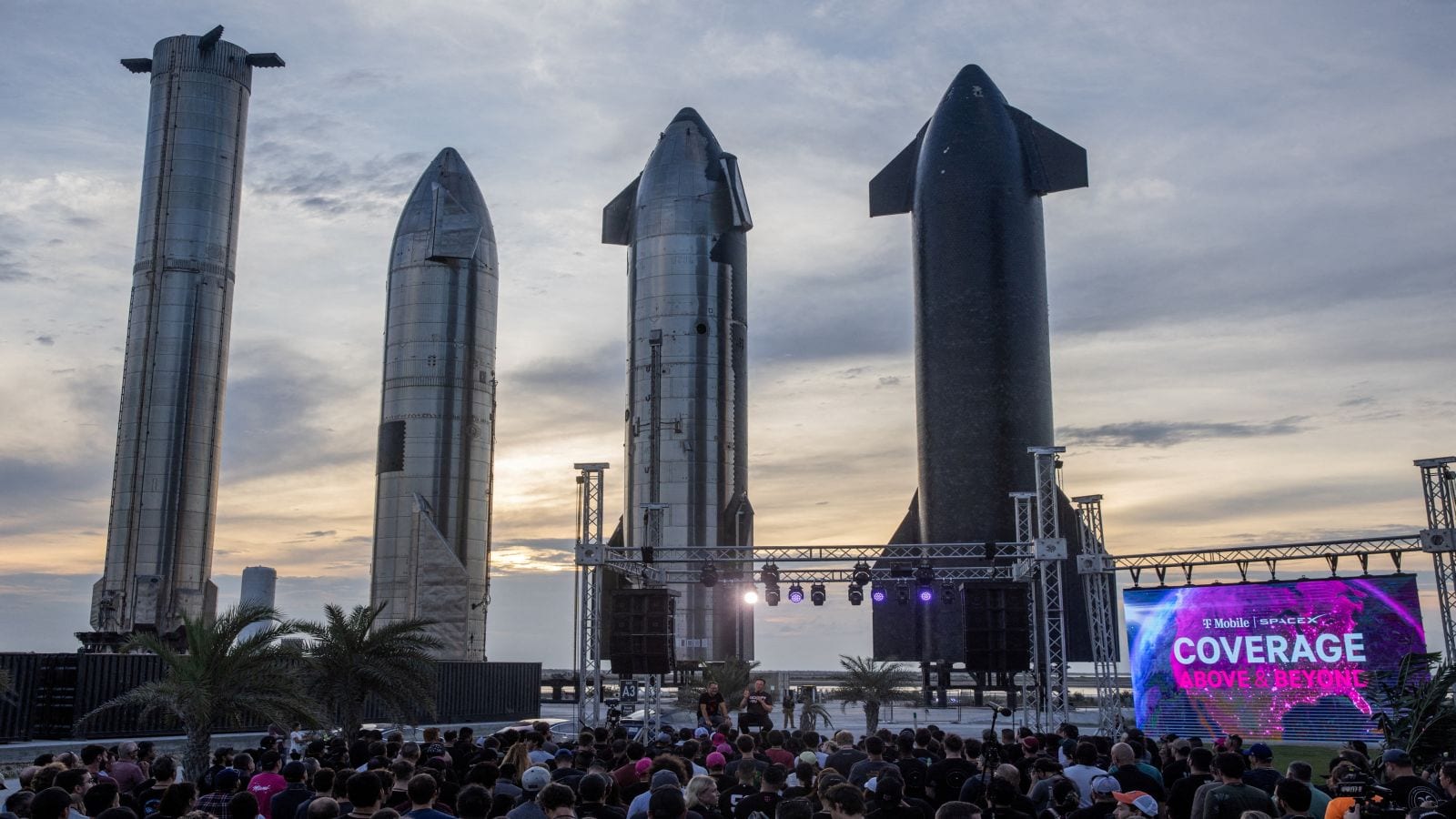
Dry reports call it a Starship manufacturing and launch site. They talk about economic zones, payload capacities, and orbital vectors. They speak in the sterile tongue of corporate press releases. But numbers like one hundred billion do not capture the sound of concrete pouring at dawn, or the way a pelican banks sharply away from a crane towering over the bayou. This is not just an industrial park. It is an altar built for the next sky.
Consider Marcus, a welder whose father worked the offshore rigs when the oil money still flowed like bourbon. Marcus knows steel. He knows how saltwater eats through a weld if the mix is off by a fraction of a percent. When he looks at the blueprints for the Louisiana Starship complex, he does not see a collection of dry data points. He sees the weight of his own neighborhood shifting toward the stars.
"We used to chase what was under the water," Marcus says, wiping a smudge of grease from his brow, his voice low against the drone of an airboat. "Now we build the things that leave it behind entirely."
The Heavy Metal Pipeline
Why Louisiana? Why drag orbital-class rockets away from the salt-crusted flats of Boca Chica and into the wet warmth of the Gulf Coast?
The answer is simple physics wrapped in logistics. Starship is too big for traditional roads. You cannot squeeze a nine-meter-wide stainless steel titan onto an interstate. You must move it by water. The Gulf provides a natural highway, a liquid ribbon connecting manufacturing yards straight to the launch pads of history.
And then there is the hunger.
We forget how much data our invisible digital lives actually weigh. Every time you ask an artificial intelligence to write a poem, diagnose a patient, or generate a digital streetscape, a data center somewhere draws enough power to light a small town. Those processors are choking on latency. They demand a nervous system fast enough to match human thought.
Satellites are the answer. Not the old, heavy school buses of the nineties that drifted quietly in geostationary purgatory, but low-Earth orbit constellations. Thousands of them. Constellations designed to feed AI models with uninterrupted, lightning-fast connectivity from pole to pole.
SpaceX is not just building a rocket factory in Louisiana. They are laying the tracks for an orbital data highway.
The Stakes We Cannot See
It is easy to look at a rocket launch and see only theater. Fire, smoke, a billion dollars of hardware punching holes in the ozone layer, and a crowd cheering on a beach. We consume it as spectacle.
We miss the quiet utility underneath.
Imagine a clinic in rural Montana or a cargo ship stranded in the middle of the Pacific Ocean. For decades, isolation meant vulnerability. A doctor unable to download a high-resolution MRI scan. A captain flying blind without real-time weather telemetry.
When Starship flies heavy payloads of next-generation satellites into orbit, those blackout zones shrink. The satellites act as routers in the sky, bypassing the fragile, copper-and-glass infrastructure of the ground. When the next hurricane slams into the very marshes where SpaceX is pouring its foundations, the local emergency responders will not rely on downed cell towers. They will ping the sky.
That is the hidden architecture of the hundred-billion-dollar bet. It is not about reaching Mars, at least not today. It is about binding the Earth so tightly together that distance ceases to be an excuse for neglect.
The Cost of the Future
Progress is never polite. It arrives with heavy machinery and disrupted sleep patterns.
Drive down the narrow parish roads near the site, and you will see the tension etched into mailboxes and porch screens. Real estate speculators have already arrived, their clean suits looking entirely out of place against the weathered siding of cypress-wood shacks. Property taxes tick upward. The quiet hum of the night is broken by the heavy thrum of transport trucks hauling aggregate.
Change demands a toll.
Yet, stand there as the sun dips below the cypress line, painting the water in bruised shades of purple and gold, and the inevitability of it becomes palpable. The old economy of this coast is fading, its bones rusting in the brackish water. Something new must take its place. If it cannot be oil, perhaps it can be orbit.
The engineers walk the site with clipboards, talking of thrust-to-weight ratios and propellant densification. They are blind to the poetry of the marsh. They do not care about the herons or the ghost stories of pirates buried in the salt-grass. They care about the math.
And yet, the math requires the marsh.
The Last Ascent
History is written by the infrastructure we leave behind. The Romans built roads. The Victorians laid iron rails across continents. We are stringing constellations across the dark.
The Louisiana Starship site will rise. The stainless steel towers will pierce the southern humidity, gleaming like silver needles against the grey sky. Eventually, the countdown will echo across the bayou, rattling the windows of the wooden houses where generations have lived and died by the tide.
When the engines ignite, the ground will shake. The birds will scatter. And for a few breathless seconds, the people standing on the muddy banks of the Gulf will forget the mortgage, the humidity, and the uncertainties of tomorrow.
They will simply look up. And the world will be a little smaller, a little brighter, and forever changed.