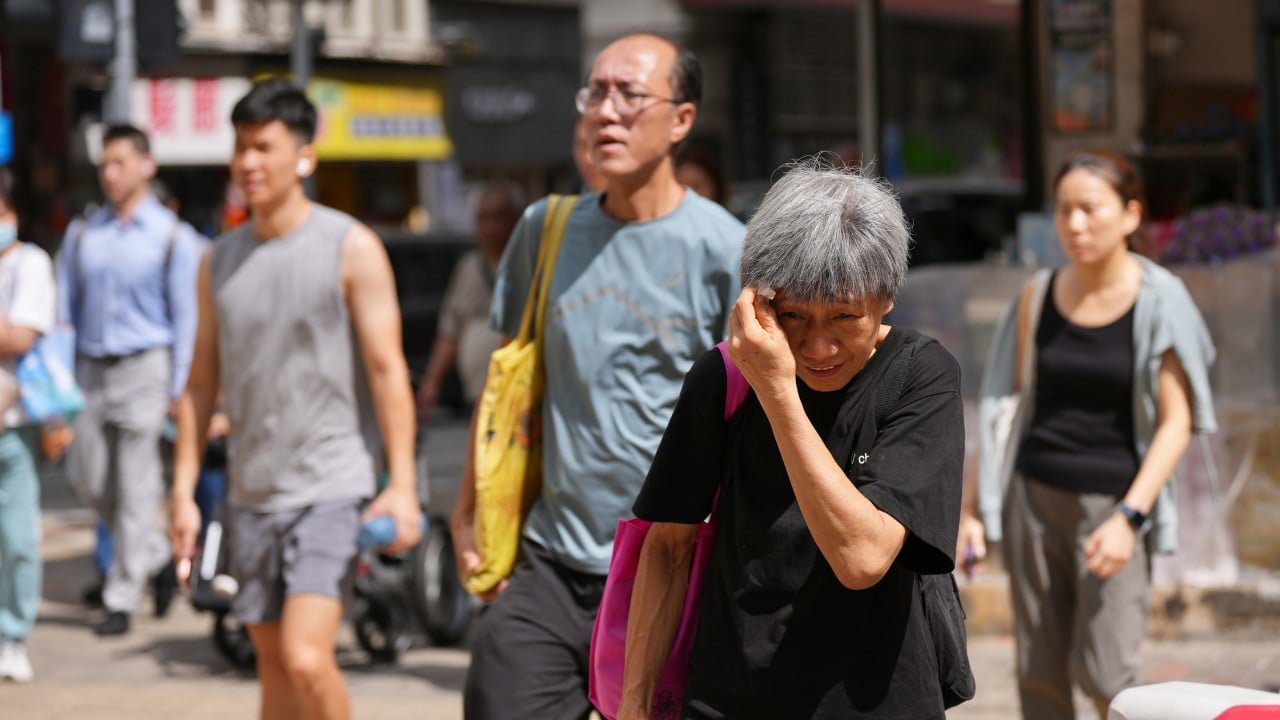
The air does not move in Sham Shui Po. It sits heavy, trapped between monolithic walls of grey concrete that have soaked up the sun’s violence all afternoon, radiating it back out long after dusk. Outside, the neon signs of Hong Kong bleed red and green into the haze. Inside a subdivided flat barely larger than a walk-in closet, the thermometer reads thirty-eight degrees Celsius.
Uncle Chan wipes a grey-spotted forearm with a damp towel that has already grown warm. He is seventy-two. His world is four hundred square feet carved into six microscopic chambers, partitioned by plywood and corrugated iron, sharing a single rusted toilet. There is a small electric fan in the corner, but it does not cool; it merely shuffles the suffocating soup of humidity from one side of the room to the other.
He does not turn on the air conditioner. He doesn't have one. And even if he did, the electric meter spins fast enough to trigger a quiet panic about next month's rent.
So he sits. He waits for the night to offer mercy that never arrives.
Hong Kong is a city of vertical ambition, of glass-and-steel towers piercing the mist, of fortunes made in the blink of an eye. Yet beneath the shimmering financial veneer lies an older, harsher reality. When extreme weather strikes, the metropolis reacts with swift, coordinated warnings for typhoons. Signal eight goes up, the ferries stop, and the city secures its hatches. But heat? Heat arrives quietly. It does not smash windows or tear down scaffolding. It simply tightens its grip around the throat of the city, targeting the invisible, the elderly, and the poor who inhabit the concrete margins.
Experts have issued warnings for years. The city lacks a comprehensive, legally binding extreme heat action plan. While official advisories flash across television screens telling citizens to drink water and stay indoors, these words ring hollow when your indoor space is a windowless cubicle that traps heat like a baker's oven.
Consider what happens inside these urban heat islands. Concrete and asphalt absorb solar radiation by day and release it slowly at night, preventing temperatures from dropping to safe physiological levels. For a healthy executive living in a Mid-Levels high-rise equipped with central climate control, summer is merely an inconvenience managed between an air-conditioned garage and an air-conditioned boardroom. For Uncle Chan, summer is a slow-motion endurance test.
Our bodies are magnificent thermal engines, designed to sweat and cool through evaporation. But physics has a breaking point. When the ambient temperature climbs high and the relative humidity hovers near ninety percent, sweat refuses to evaporate. The cooling mechanism stalls. The core temperature rises. Blood rushes to the skin to release heat, straining the heart. Without relief, organs begin to falter.
This is not hyperbole. This is biology.
Public health data repeatedly reveals a grim correlation between prolonged heatwaves and spikes in mortality among older demographics in densely populated urban centers. Yet, because heat-stroke or heat-aggravated cardiovascular failure often masquerades as other underlying conditions on a death certificate, the true toll of extreme temperatures remains muffled. It is a silent crisis.
Why does a global financial powerhouse, renowned for its administrative efficiency and crisis-response muscle, lag behind in heat vulnerability management?
Part of the answer lies in how we perceive danger. We fear what is sudden and dramatic. We prepare for the typhoon because it arrives with a roar. Heat, on the other hand, creeps in like a thief in the night. It feels ordinary. It feels like "just summer."
When policy treats heat as an inconvenience rather than a public health emergency, the response remains voluntary and fragmented. NGOs and volunteer groups scramble to distribute bottled water and cheap fans to subdivided flat residents. Charity steps in where structural policy stalls. But volunteers cannot rewrite urban architecture. They cannot lower the ambient temperature of a district choked by high-rises and starved of green ventilation corridors. They cannot retrofit thousands of dilapidated subdivided units with proper insulation or ventilation overnight.
What would a genuine heat action plan look like?
It would begin with legal thresholds. Just as construction work pauses under certain typhoon signals, outdoor labor protections must become mandatory when heat indices cross critical boundaries, guaranteeing shaded rest breaks and hydration for sanitation workers, construction crews, and delivery riders.
It would involve designated, air-conditioned cooling centers within walking distance of impoverished neighborhoods—not merely as charity, but as civic infrastructure, treated with the same urgency as a bomb shelter or an emergency clinic.
It would mandate building retrofits for public housing and low-income dwellings, tackling the urban heat island effect at its root through cool roofs, vertical greening, and improved cross-ventilation.
Right now, these measures exist largely on paper, discussed in academic symposiums while the asphalt bakes.
Back in Sham Shui Po, Uncle Chan pours another cup of lukewarm tap water. He listens to the hum of traffic drifting up from the street, mixed with the muffled coughs and television sounds of his neighbors trapped in their respective concrete boxes. The night outside offers no breeze. The walls are still warm to the touch.
The sun will rise again tomorrow, relentless and unyielding, ready to turn the city back into a furnace. And the residents of the margins will wake up, open their windows to the stagnant air, and hope they are strong enough to outlast the season.


