Twenty feet below the scorched expanse of the prairie, the world sounds different. Up top, the wind howls across the desolate acreage, carrying the dry rattle of dead grass and the distant drone of highway traffic. Down here, the silence has weight. It presses against the eardrums, thick and heavy, punctured only by the steady, rhythmic thrum of industrial air filtration units pushing oxygen through overhead PVC pipes.
This is not a cave carved by water over millennia, nor is it a basement carved out for a suburban storm cellar. This is human resolve poured in heavy aggregate concrete, thick steel beams, and deep-seated paranoia.
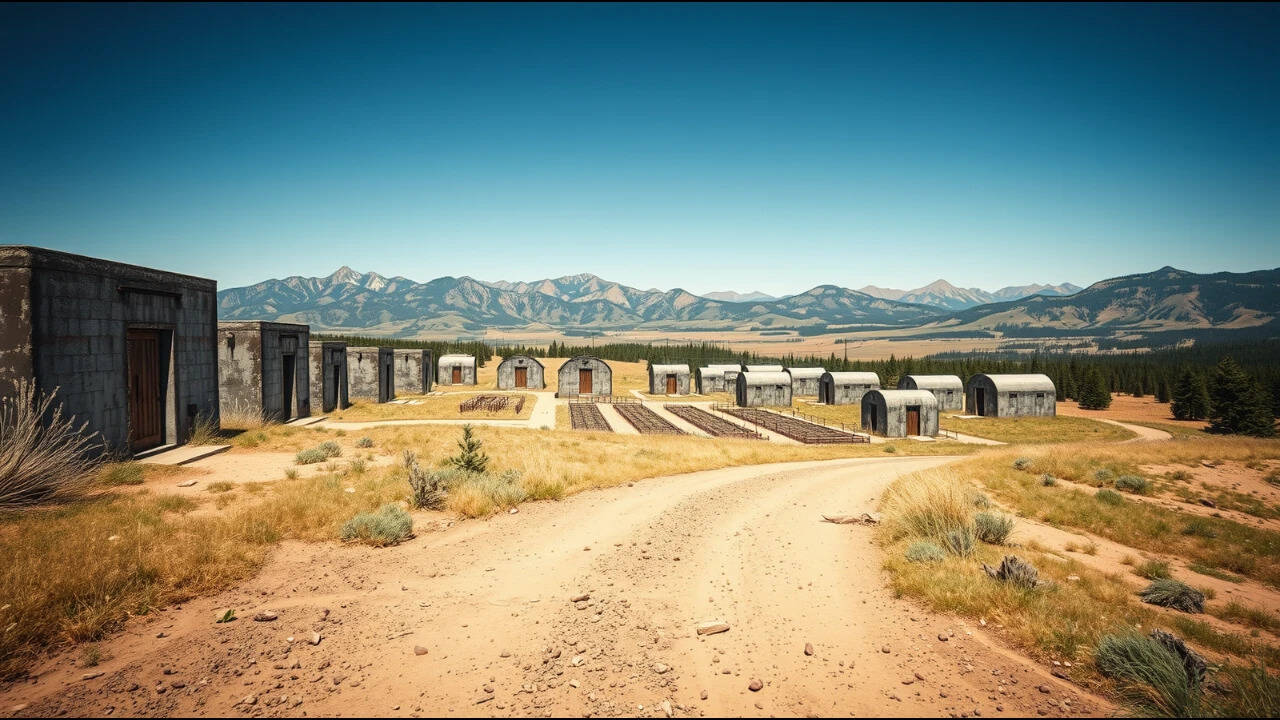
Rows of reinforced concrete igloos stretch into the dim gloom, originally designed to store thousands of pounds of high explosives and munitions during the height of the Cold War. Today, they store something far more volatile: human anxiety about the trajectory of modern civilization.
Across the globe, former military installations—ammunition depots, decommissioned missile silos, underground command bunkers—are experiencing an improbable second life. They are being bought up, gutted, sanitized, and transformed into subterranean survival communities. Families trade their conventional mortgages and suburban cul-de-sacs for steel blast doors and dehydrated food stores, seeking refuge from a future they no longer trust. Yet, almost as soon as the first fresh coats of paint dry and the backup generators hum to life, a different kind of war begins. Not a war of nuclear fire or societal collapse, but a grinding, paper-strewn war of zoning permits, municipal injunctions, and county courts.
To understand why people trade open skies and sprawling suburban lawns for windowless concrete tubes, you have to look past the sensationalized headlines of doomsday preppers and bunker mentality. You have to look at Arthur.
Arthur is fifty-eight years old, with the weathered hands of a retired contractor and eyes that instinctively scan every room for exits and choke points. He spent thirty years building commercial strip malls and suburban subdivisions before he bought a stake in a decommissioned munitions storage facility out in the rural plains. He did not buy it because he wanted to live out an action movie fantasy or hide from the neighbors. He bought it because he grew tired of watching the world fracture along seams he could no longer mend.
"People call this crazy," Arthur says, his voice echoing slightly off the curved concrete ceiling of his unit. He gestures to a compact kitchen area outfitted with propane burners, a tiny stainless-steel sink, and neat stacks of vacuum-sealed rice and beans. "They think you're unhinged because you want a roof that can take a direct shockwave and keep standing. But look around. Everything above ground feels temporary. The supply chains, the electrical grid, the civic trust, the economy. We didn't build this to hide from the world. We built this because the world stopped feeling stable."
Arthur’s unit is one of dozens nestled into the earthen berms of the sprawling compound. From a distance, the site looks like a series of low, green hills dotted with heavy steel doors—terrain sculpted by the military in the mid-twentieth century to contain accidental detonations. The engineering logic worked then. The thick layers of earth and reinforced concrete ensured that if one bunker went up in flames, the blast was directed upward into the sky, protecting the surrounding storage units from chain-reaction explosions.
Now, those same blast walls protect against a different kind of shockwave: the relentless unpredictability of modern life.
Communities like this operate on a delicate ecosystem of shared fears and rigid cooperation. When you live in a concrete tube measuring eighty feet long and twenty-six feet wide with your spouse and a couple of neighbors down the hall, petty squabbles carry existential weight. Who forgot to clean the greywater filter? Whose turn is it to check the battery banks in the solar array? How do you resolve a dispute over generator fuel when the nearest hardware store is fifty miles away and the local county commissioner has just filed a cease-and-desist order?
Ah, the county commissioner.
That is where the real drama unfolds. Long before any theoretical catastrophe threatens these underground enclaves, a much more immediate disaster arrives in the mailbox in the form of a legal summons.
Municipal governments do not quite know what to do with a collection of citizens turning former military ordnance sites into residential havens. Are these permanent dwellings? Are they recreational vehicles parked below grade? Do they violate local building codes that require windows in every habitable bedroom, or septic regulations that assume a house sits above a leach field rather than inside a buried concrete vault?
The answer, according to local planning boards, is usually a resounding yes.
Legal battles over bunker communities have become a quiet, recurring fixture in rural counties across the country. Neighbors complain about increased traffic on dusty county roads where heavy trucks once hauled artillery shells. Environmental agencies raise questions about subterranean septic systems handling human waste beneath sensitive water tables. County zoning administrators pore over municipal zoning ordinances drafted in the nineteen-seventies, scratching their heads over whether an ammunition bunker qualifies as a single-family home, a commercial storage facility, or an unauthorized trailer park.
The irony is thick enough to cut with a utility knife. People escape into the earth to get away from government regulation, only to find themselves hauled into small-town courtrooms to argue over municipal code compliance with lawyers who wear suits and ties above ground.
Consider Clara, a former pediatric nurse who invested her retirement savings into securing a berth within the bunker network. She sits at a folding table inside her unit, illuminated by the warm glow of LED strip lighting, surrounded by towering stacks of legal briefs and municipal zoning codes.
"We thought we were buying peace," Clara says, tracing a finger along the margin of a court injunction. "Instead, we bought a lawsuit. Every time we try to upgrade the plumbing or install a secondary ventilation shaft, the county slaps us with another stop-work order. They act like we are building a compound to overthrow the government. We just want clean air, a working toilet, and a place where we don't have to worry about the next grid failure."
The tension between underground dwellers and local authorities highlights a fundamental friction in modern society: the clash between institutional standardization and individual self-reliance. Modern building codes are written for a world of predictable infrastructure—connected power grids, municipal water mains, paved roads, and emergency response teams that can arrive within ten minutes if something goes wrong.
A bunker community rejects those assumptions entirely. It operates on the premise that the infrastructure might fail, and when it does, the individual is on their own.
When you tell a building inspector that you do not need municipal water because you have a deep well and a six-stage reverse osmosis filtration system, the inspector does not feel reassured. They feel threatened. The bureaucratic system is designed to govern dependencies. When people remove themselves from those dependencies, the system struggles to find a legal category to put them in. Are these residents exercising prudent caution, or are they unpermitted squatters operating outside the social contract?
The courts are currently attempting to answer that question, one injunction at a time. Judges listen to arguments about fire safety ratings on heavy steel blast doors, emergency egress routes, and the definition of a permanent structure. Meanwhile, inside the bunkers, residents hold community meetings on folding chairs, voting on shared security protocols and crop rotation schedules for the hydroponic bays installed in the rear storage rooms.
Life down here moves to a different rhythm. Without the glare of streetlights or the relentless notifications of a smartphone, time stretches. Residents organize cooking classes, book clubs, and maintenance shifts. They share stories of why they came here. Some fled financial instability; others fled urban density; a few carry the quiet trauma of surviving natural disasters that wiped out their previous lives without warning.
Beneath the legal wrangling and the bureaucratic frustration lies a deeper emotional current. These bunker communities are monuments to human vulnerability. They are physical manifestations of the fear that the safety nets we take for granted are remarkably fragile.
When the power fails during an ice storm, cities grind to a halt within hours. When global supply chains stutter, supermarket shelves empty in days. Most people push those thoughts aside, trusting the invisible machinery of modern civilization to keep turning. But the people who buy into bunker communities are the ones who stared at that machinery, saw the rust on the gears, and decided to build an ark.
The legal battles will likely drag on for years. County boards will demand architectural stamps, environmental impact studies, and fire suppression compliance. Attorneys will bill thousands of hours arguing over whether a steel tube buried under five feet of dirt constitutes a dwelling.
Yet, as the sun dips below the prairie horizon and the heavy steel doors are swung shut and bolted from the inside, the noise of the courtroom fades.
Down in the dark, beneath twenty feet of reinforced concrete, the air hums. The filtration units pull in the prairie wind, scrub it clean, and distribute it through the living quarters. A family sits around a folding table, sharing a meal cooked on a propane stove, laughing at a joke that echoes softly against the curved walls.
They are living in the crosshairs of the law and their own fears. But for tonight, the sky could fall, and they would hardly feel the impact.