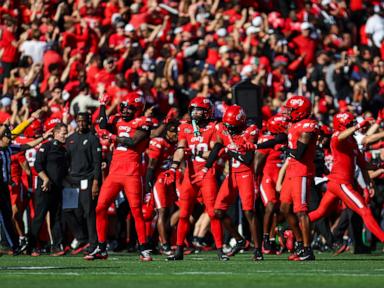
Conference games in college football have compressed into the tightest competitive margins in over fifty years because the traditional structural advantages of blue-blood programs—talent hoarding, localized recruiting monopolies, and scheme asymmetry—have been systematically dismantled by market deregulation. Handicapping modern conference play requires abandoning historical brand-equity models and adopting a framework built on roster liquidity, coaching efficiency, and high-variance clock mechanics.
For decades, the predictive model for college football conference play operated on a simple power-law distribution. Three or four apex programs within any given league accumulated disproportionate rosters of four- and five-star athletes, storing excess talent on the second and third strings as insurance against injury. This depth created a compounding advantage in the fourth quarter of conference games, where superior conditioning and fresh rotations turned competitive first halves into three-touchdown margins. That ecosystem no longer exists. The convergence of the NCAA transfer portal, Name, Image, and Likeness (NIL) compensation, and conference realignment has flattened the talent curve across the Power Four conferences, transforming weekly conference slates into low-margin, coin-flip environments. If you enjoyed this article, you might want to look at: this related article.
The Three Structural Drivers of Margin Compression
To understand why point spreads in conference play have narrowed and upset frequencies have spiked, analysts must isolate the three operational variables driving parity.
1. Roster Liquidity and the End of Talent Hoarding
In a closed labor market where players faced a mandatory one-year sit-out penalty for transferring, elite programs could stockpile blue-chip prospects. A five-star linebacker would willingly sit behind an all-conference upperclassman for two seasons before seeing significant snaps. Immediate transfer eligibility introduced free-market liquidity to college rosters. Today, second-string talent at apex programs immediately reallocates to mid-tier conference rivals offering immediate starting snaps and competitive NIL packages. For another look on this development, refer to the recent update from Bleacher Report.
The downstream effect on conference play is immediate. The talent gap between a conference’s top-tier roster and its middle-tier roster has shrunk from a chasm to a marginal difference in top-end draft picks. While elite teams still possess superior first-round NFL talent at the top of their depth charts, their baseline starter quality across all twenty-two positions now mirrors that of programs historically relegated to the middle of the standings. When injuries inevitably occur during the grueling eight- or nine-game conference grind, the drop-off in replacement-level performance is drastically steeper for top programs than it was a decade ago.
2. The Democratization of Schematic Innovation
Historically, offensive and defensive schemes evolved within isolated regional silos, giving innovative coaching staffs a multi-year window to exploit conference opponents before adjustments caught up. Universal access to advanced film-study software, analytical tracking data, and rapid coaching-tree cross-pollination has eliminated schematic monopolies.
A mid-tier conference program with a disciplined defensive coordinator can now install complex simulated pressures, match-zone coverages, and tempo-control offenses that neutralize raw athletic disadvantages. Furthermore, the rapid movement of coordinators across programs means opposing staffs frequently possess intimate institutional knowledge of their rivals' playbooks, cadences, and situational tendencies. Conference familiarity breeds defensive efficiency, suppressing explosive play rates and forcing offenses into sustained, high-execution drives where a single penalty or turnover dictates the outcome.
3. Rule Changes and Clock Compression
The 2023 NCAA rule modification keeping the game clock running after first downs—except inside the final two minutes of each half—acted as an accelerant on margin compression. By reducing the average number of possessions per game by roughly 10 to 15 percent, the rule artificially shortened the sample size of plays within a sixty-minute contest.
In any probabilistic sport, reducing the number of trials increases outcome variance. A superior team needs volume to allow its talent edge to manifest over time. Fewer possessions mean a single early turnover, a missed field goal, or a blown coverage carries disproportionate weight on the final scoreboard. Underdogs no longer need to outplay a favorite for four quarters; they merely need to execute a ball-control script across nine or ten total possessions to keep the margin within a single score entering the final five minutes.
Deconstructing the Modern Conference Handicapping Framework
Traditional sports betting and analytical models rely heavily on trailing season averages, recruiting rankings, and historical home-field advantage. In an era of half-century parity, these metrics lag behind the reality on the field. Evaluating conference matchups requires a shift toward real-time efficiency metrics and situational leverage.
Net Success Rate Over Explosive Play Rate
Explosive plays (gains of 12+ yards rushing or 16+ yards passing) are high-variance events that often mask underlying structural flaws. While explosive plays swing momentum, Success Rate—defined as gaining 50 percent of required yardage on first down, 70 percent on second down, and 100 percent on third or fourth down—measures down-to-down sustainability. In tight conference games with compressed clocks, teams that maintain high rushing success rates dictate tempo, shorten the game further, and insulate themselves against catastrophic third-and-long passing situations. When evaluating two evenly matched conference opponents, the side with the superior defensive rushing success rate holds the decisive structural edge, regardless of offensive firepower.
The Line-of-Scrimmage Attrition Index
Because roster depth has thinned across the board, cumulative physical attrition dictates late-season conference outcomes. Analytical models must weight offensive and defensive line continuity above skill-position production. A team entering November with four of its five original starting offensive linemen intact possesses a massive communication and cohesion advantage over an opponent relying on transfer portal patchwork along the defensive front. Track snap-count distributions across the first six weeks of the season; teams forced to play their starting defensive tackles more than 65 percent of total snaps routinely suffer fourth-quarter collapse against physical, run-heavy conference schemes.
Special Teams Hidden Yardage and Field Position Leverage
When offensive efficiency flattens across a conference, special teams transition from an afterthought to a primary scoring driver. In one-score games, starting field position dictates play-calling aggressiveness. A punter capable of consistently pinning opponents inside the 10-yard line forces conservative first- and second-down run calls, allowing the defense to stack the box and force low-percentage third-down throws. Conversely, kicking reliability inside 45 yards often represents the literal margin of victory. Evaluating net punting efficiency and kicker accuracy under pressure provides higher predictive value in tight conference slates than comparing quarterback passing yards.
The Limitations of Parity-Based Modeling
Treating every conference game as an automatic coin flip introduces a dangerous blind spot. While average margins have compressed, systemic mismatches still exist, and failing to identify them leads to overvaluing mediocre underdogs.
First, quarterback variance remains the ultimate equalizer and destroyer. A mid-tier roster with an elite, veteran transfer quarterback can outperform its underlying metrics for an entire season, masking deficiencies along the offensive line or in the secondary. Conversely, an elite roster saddled with a turnover-prone, inexperienced signal-caller will play down to its competition every Saturday. Parity models must apply a heavy multiplier to quarterback decision-making under pressure—specifically measuring turnover-worthy play rates rather than raw completion percentages.
Second, travel and circadian disruption in expanded super-conferences create asymmetric fatigue that standard power ratings fail to capture. When teams cross two or three time zones for a noon local kickoff, early-game execution suffers predictably. The physical toll of cross-country conference travel compounds over consecutive weeks, creating spots where a theoretically equal opponent suffers a sudden, unexplained drop in third-down conversion efficiency and tackling fundamentals.
Third, coaching situational equity separates winners from losers when games consistently reach the final two minutes. Many veteran coaches remain tethered to conservative fourth-down punt thresholds and suboptimal timeout management designed for an era of 14-possession games. In a 10-possession game, punting on fourth-and-2 from the opponent’s 42-yard line surrenders critical win probability. Analysts must audit coaching aggression indices; staffs that aggressively utilize fourth-down analytics steal roughly one to two additional conference victories per season purely through mathematical optimization.
Operationalizing the Edge in Conference Slates
Navigating a historically compressed conference schedule demands strict adherence to process over narrative. Public perception and media coverage remain anchored to brand names, creating persistent market inefficiencies whenever a traditional powerhouse struggles against a surging mid-tier program.
- Fade Brand-Name Line Inflation: Whenever a ranked legacy program enters a conference road game favored by more than a touchdown against an opponent ranked within the top 40 of net yards per play, the market is almost certainly pricing in historical reputation rather than current roster reality. Prioritize taking the points with disciplined, run-efficient home underdogs in these spots.
- Target Second-Half Unders in High-Efficiency Matchups: When two top-tier conference defenses meet, the combination of familiar coaching schemes and the running first-down clock severely restricts total play volume. Look to attack under totals in the second half once defensive coordinators have neutralized initial scripted drives.
- Isolate Post-Bye Week Scheduling Advantages: In a physical, attrition-heavy conference environment, a bye week functions as a critical reset button for injured linemen and worn-down defensive rotations. Systematically back teams coming off a bye week when facing an opponent playing its fourth or fifth consecutive physical conference game without rest.
- Weight Turnover Margin Regression: Teams winning close conference games purely on the back of unsustainable fumble recovery luck (anything above 60 percent recovery rate) are prime candidates for immediate regression. Fade undefeated or one-loss conference leaders whose point differential lags significantly behind their win-loss record.
Abandon any handicapping approach that relies on projecting blowouts in league play. Structure your analytical models around fourth-quarter execution, fourth-down coaching aggression, and trench continuity, and deploy capital exclusively on disciplined underdogs and low-possession totals until the market fully prices in the permanent flattening of the college football hierarchy.