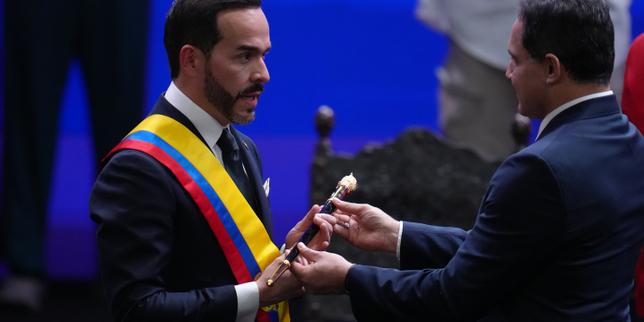
Everybody loves a strongman narrative. The lazy consensus dominating international headlines insists that Colombia’s newly sworn-in president, Abelardo de la Espriella, is going to pull off a miraculous, Nayib Bukele-style neon-lights crackdown on the nation's drug cartels and guerrilla syndicates.
The lazy narrative says total war equals total victory. It assumes that mass troop deployments, aggressive presidential decrees, and a swaggering attitude will magically erase decades of entrenched narco-economics.
It is a comforting fantasy for armchair strategists, and it is entirely wrong.
Colombia is not El Salvador. Treating a sprawling, mountainous geography the size of France and Spain combined—chock-full of multi-billion-dollar cocaine enterprises, autonomous guerrilla armies like the ELN, and syndicates like the Clan del Golfo boasting thousands of battle-hardened troops—as if it were a densely populated Central American urban hub is military malpractice.
The Geography of Failure
I have watched foreign policy pundits cheer as regional leaders declare total war, ignoring the fundamental economic engine of the conflict. You cannot arrest your way out of a multi-billion-dollar supply chain. When you squeeze a mature cartel geographically, you don't destroy it; you compress it, professionalize it, and force it deeper into the jungle canopy.
The outgoing administration’s "Total Peace" initiative was an unmitigated disaster that empowered criminal actors through naive concessions. But swinging the pendulum entirely to the opposite extreme—relying solely on brute military force without fixing the underlying institutional decay—is a trap.
History provides a brutal reminder. Colombia has never defeated an insurgent group by force alone. Every single major security breakthrough in the nation's past came from a hybrid cocktail of targeted intelligence, regional economic integration, and strategic pressure—not blunt-force trauma from a government trying to govern by emergency decree without a solid legislative majority.
Why the Iron Fist Breaks on the Jungle Floor
Imagine a scenario where thousands of fresh troops are poured into the Catatumbo region. What happens next? The local insurgents simply melt across an international border that is structurally impossible to seal, wait out the initial kinetic surge, and return to taxing the coca leaf once the state’s fiscal budget strains under the weight of the deployment.
The hardline security approach treats symptoms while ignoring structural corruption. Cartels do not survive because they are romantic revolutionaries; they survive because they function as sophisticated corporate logistics firms. They offer employment, financial liquidity, and local protection where the state offers nothing but an absentee ballot and an occasional battalion.
If the new administration plans to spend its political capital on hyper-visible, headline-grabbing urban raids in Cali or Bogotá while failing to dismantle the offshore financial networks laundering cartel cash, the entire campaign is just expensive theatre.
The Alternative Nobody Wants to Fund
Real security is boring. It requires forensic accountants tracking shell companies in Panama and Dubai, rather than presidents posing in tactical vests. It requires building municipal courts that don't take bribes, constructing roads so farmers can move legal produce cheaper than cocaine paste, and securing local borders through intelligence-led policing rather than sweeping declarations of total war.
The new administration has the fiery rhetoric, and Washington is already dangling billions in security aid to back the play. But money and muscle without a granular, region-specific containment strategy will only back the armed groups into a corner, triggering a decentralized asymmetric bloodbath.
Stop pretending that a single election can rewrite decades of geopolitical supply and demand. Total war without institutional reform is just a slow-motion ambush.
Colombia's New President Wants a War. He's Going to Get One.
This analysis breaks down why Colombia's new administration is facing a deeply entrenched network of armed factions that cannot be easily defeated by conventional military crackdowns alone.