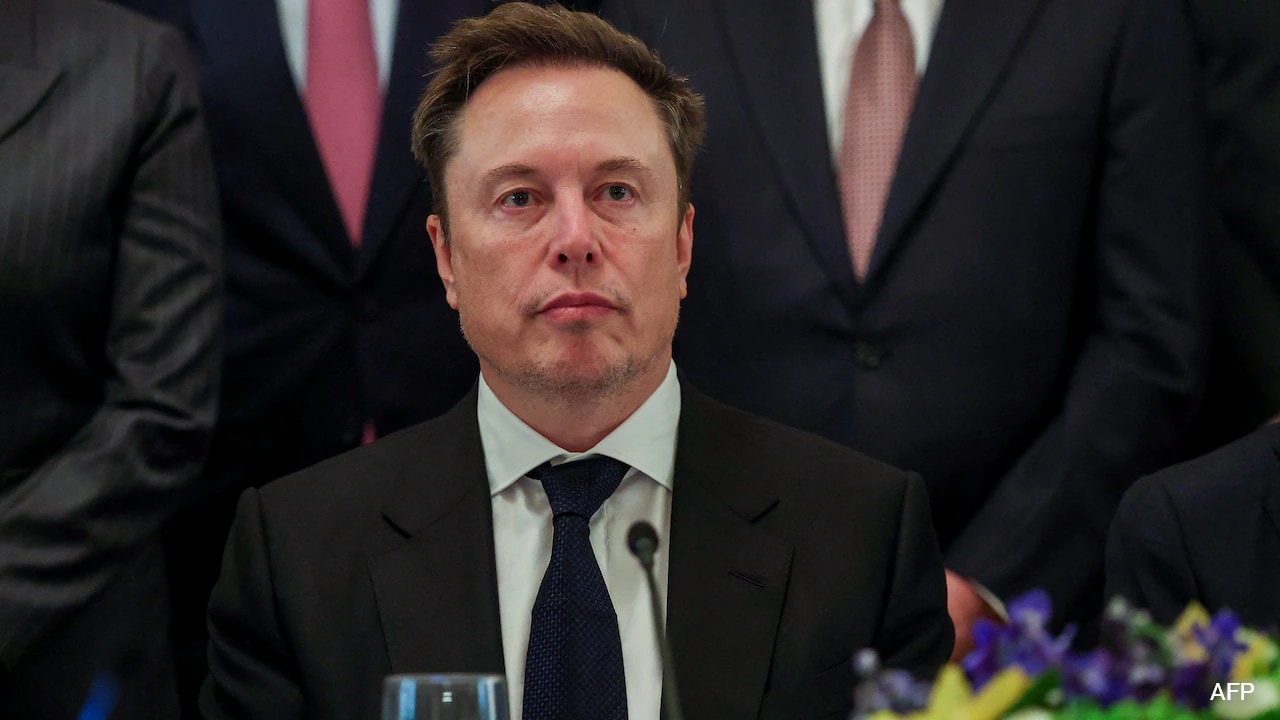
The screen glowed cold in the dark room, reflecting the exhaustion of midnight scrolling. Out there in the ether, millions of voices converged into an invisible chorus, shouting, defending, and attacking. At the center of this digital maelstrom stood two figures whose gravitational pull shapes the modern world: Elon Musk, the mercurial architect of orbital rockets and digital town squares, and Mukesh Ambani, the quiet titan whose empire stitches together the daily lives of over a billion souls in the Indian subcontinent.
When Musk recently turned his digital gaze toward the online supporters of Ambani's digital ecosystem, accusing them of absurd hypocrisy and ridiculous arguments, he wasn't merely sparking another fleeting social media skirmish. He was touching a raw nerve in the global conversation about who gets to build, own, and police the future of human connection.
To understand why this friction matters, you have to step away from the abstract glow of silicon chips and billion-dollar valuations. You have to look at how humanity communicates today.
Imagine sitting in a crowded Mumbai local train during the evening rush hour. The air is thick with humidity and anticipation. Look down, and almost every single pair of eyes is locked onto a glowing rectangle. For millions of people, that smartphone screen is not a luxury; it is the primary portal to education, commerce, entertainment, and identity. It is the soil upon which modern life is cultivated.
Mukesh Ambani’s Jio did not just sell cheap data to India; it fundamentally reengineered the social fabric of an entire nation. By dropping the cost of internet access through the floor years ago, millions of people who were once locked out of the information age suddenly found a voice. A street vendor in Jaipur could suddenly accept digital payments via a flickering QR code. A young girl in a remote village in Bihar could watch world-class tutorials on her handheld screen.
That massive democratization of access created fierce, almost tribal loyalty. When a corporation builds the literal pipes through which your daily reality flows, you defend it. You defend it with the fierce pride of someone who remembers what it was like to be invisible.
On the other side of the planet, Elon Musk views the world through a radically different lens. For Musk, the internet is an interplanetary battleground for free expression. His vision of communication is raw, unfiltered, and deeply combative. When Starlink, his satellite internet venture, set its sights on global expansion, it inevitably collided with local telecom landscapes dominated by established domestic giants.
The clash between Musk and Ambani's digital defenders is therefore not a clash of mere egos. It is a fundamental philosophical war over spectrum allocation, market access, and regulatory control. Musk argued that satellite spectrum should be assigned directly through administrative methods, akin to global standards, while legacy telecom players argued fiercely for auctions to maintain a level playing field and protect domestic investments.
When the policy debates spilled over into the public arena, the digital armies mobilized. Tweets flew back and forth like tracer fire in a night battle. Musk, ever the provocative digital native, lashed out at what he perceived as double standards from accounts fiercely loyal to the Indian telecom giant, labeling their arguments contradictory and hypocritical.
Yet, looking at this battle through the binary lens of right versus wrong misses the deeper human truth. Both men are playing infinite games, but the rules they favor serve entirely different masters.
Musk’s philosophy champions absolute disruption, an ungoverned wild west where technology scales at lightning speed, unfettered by traditional borders. It is an exhilarating vision, but it often ignores the messy realities of sovereign regulation, local infrastructure, and the massive capital investments required to wire difficult terrains.
Ambani’s approach, meanwhile, is deeply rooted in national infrastructure, localized dominance, and state-aligned scale. It connects the unconnected, but it does so within a tightly controlled, highly commercialized ecosystem where the consumer is both an empowered citizen and a captive market participant.
When the supporters of these titans clash online, they are fighting proxy wars for two very different futures. One side envisions a sky darkened by thousands of low-earth-orbit satellites, bringing high-speed connections straight from the void to any remote hut on Earth. The other side envisions towering cellular masts anchored deep into the soil, pumping high-capacity fibre-optic data through every street corner, village square, and urban high-rise.
The irony, of course, is that both visions are rushing toward the exact same destination: a world where no human being is ever truly offline, where every thought, transaction, and interaction is mediated by invisible waves passing silently through the air.
As the dust settles on another round of digital crossfire, the real question remains suspended in the quiet space between server pings and satellite arcs. We are building the nervous system of the human race. Who gets to decide how it feels, what it costs, and whose rules it obeys?
The screen goes dark. The reflection fades. Out there in the quiet night, the satellites keep turning, and the towers keep humming, waiting for the next dawn.


