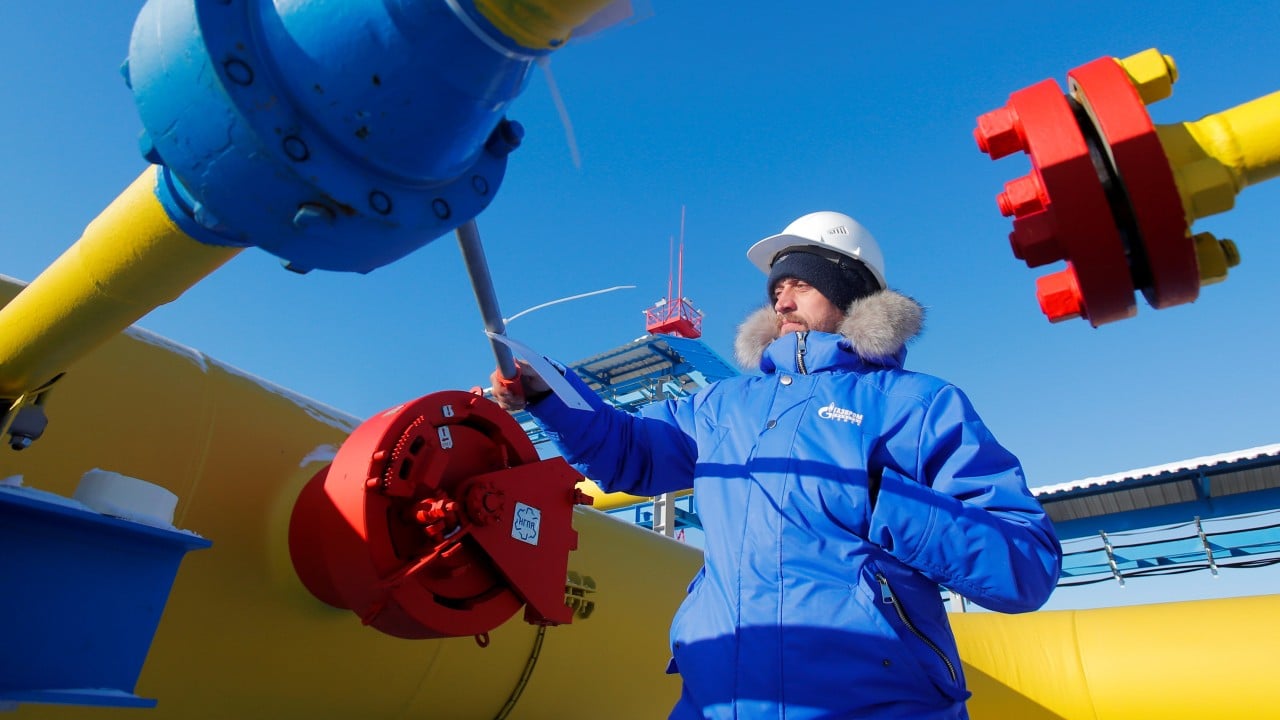
In the dead of a Siberian winter, the breath turns to ice crystals before it even clears a heavy wool scarf. The frost does not merely coat the trees; it locks the earth in a vice of iron and white silence. Beneath that frozen crust lies an ocean of natural fuel, sleeping in the dark, waiting for a key that no one can quite afford to turn.
For years, the blueprint for the Power of Siberia 2 pipeline has sat on polished mahogany desks in Moscow and Beijing. It promises a roaring artery of warmth, stretching thousands of miles from the Yamal Peninsula across the Mongolian steppe and straight into the roaring industrial furnaces of China. It sounds like an inevitable marriage of geography and necessity. Don't forget to check out our recent post on this related article.
It is stalled.
The machinery has stopped because two superpowers cannot agree on the price of a cubic meter of warmth. On paper, this is a routine negotiation between corporate giants and state treasuries. In reality, it is a high-stakes standoff over who gets to dictate the economic gravity of the twenty-first century. To read more about the background of this, Business Insider provides an informative breakdown.
To understand why a pipe thousands of miles long can be brought to a dead stop by a disagreement over numbers, you have to look past the spreadsheets and watch the human actors. Picture a negotiator in Beijing sitting in a minimalist conference room, sipping green tea, looking at a global energy market flooded with cheap alternatives. China does not need this gas tomorrow. It has LNG tankers bobbing on the Pacific waves, coal reserves buried in its own soil, and long-term contracts signed with suppliers who are eager to please. From Beijing's perspective, buying Siberian gas is a matter of convenience, not desperation. They want it priced near domestic rates—rock bottom, subsidized, practically a favor to an isolated northern neighbor.
Now picture his counterpart in Moscow, staring at a map that bleeds red ink. Russia's traditional western markets have slammed shut, choked by sanctions and political rupture. The lucrative pipelines that once fed the homes and factories of Europe are cold and quiet. Moscow's treasury relies on the energy trade the way a climber relies on a single rope over an abyss. To sell gas to Beijing at domestic Russian prices is to hand over a vital lifeline at a discount, accepting a profound economic wound just to keep the gas flowing eastward.
Pride is expensive. Survival is more so.
This is where the negotiations hit a wall of jagged concrete. Russia wants China to shoulder a massive share of the construction costs for a multi-billion-dollar infrastructure project that crosses some of the most unforgiving terrain on the planet. Mongolia sits in the middle, a vast and quiet nation watching two behemoths argue over its backyard, hoping the eventual agreement brings transit fees rather than geopolitical friction.
Numbers lie on a spectrum. When Gazprom talks to CNPC, every single decimal point carries the weight of national sovereignty. If Moscow blinks first, it signals weakness to every other buyer watching from the sidelines. If Beijing walks away, Moscow faces an isolated economic future with vast resources it cannot easily monetize.
The stalemate reveals a deeper truth about modern globalization. Interdependence was supposed to make war unthinkable and trade frictionless. Instead, it has turned into a weaponized chess board. Energy is no longer just a commodity used to boil water or power a turbine; it is diplomatic leverage, a badge of allegiance, and a scoreboard for who holds the upper hand.
Consider what happens next if the pipeline is never built.
Russia turns further inward, locking its energy wealth into aging fields or pivoting toward smaller, less lucrative regional buyers. Its economy adapts through sheer friction, growing harder, leaner, and more isolated. Meanwhile, China diversifies its energy portfolio so thoroughly that no single supplier can ever hold leverage over its industrial engine. The Arctic wind continues to howl over the Yamal Peninsula, keeping the gas locked safely underground, untouched and unprofitable.
Yet the economic gravity pulling these two nations together is immense. Borders are arbitrary lines, but energy demands are physical realities. China's hunger for clean-burning fuel to displace coal is real. Russia's need for a massive, solvent, long-term buyer is absolute.
The delay is not a cancellation. It is a slow, grinding war of attrition fought with balance sheets and press releases. Both sides are waiting for the other to blink, to feel the pinch of changing global markets, to realize that winter is coming for everyone, eventually.
Until then, the steel pipes sit stacked in Siberian rail yards, rusting quietly under the snow, waiting for statesmen to decide what an empire is worth.