Frostbite.
It starts quietly at fourteen thousand feet, long before a soldier realizes his toes have stopped arguing with the wind and simply given up. Learn more on a connected subject: this related article.
Up on a high Himalayan ridge, the air is thin enough to make every breath a negotiation. You can hear your own pulse thrumming behind your ears like a drum in an empty hall. Beneath your boots, gravel shifts over permafrost, and across the valley sits another outpost—men in heavy parkas watching through binoculars, waiting for a mistake or a shift in patrol lines.
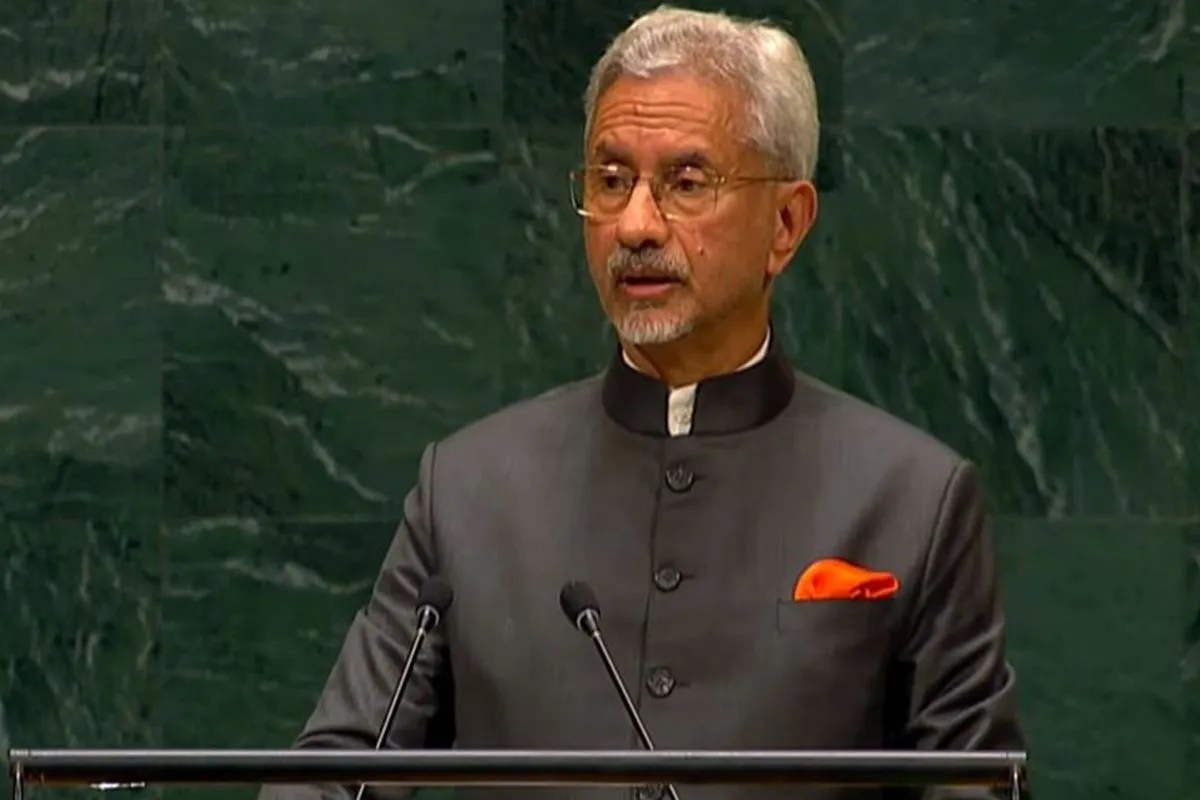
Down in a warm, glass-walled auditorium at the Bloomberg New Economy Forum, thousands of miles away from the wind and the frostbite, a microphone picks up a calm, measured voice. External Affairs Minister S. Jaishankar is speaking to an audience of executives, economists, and diplomats who live by quarterly earnings, supply chain maps, and polite international consensus. Further reporting by Al Jazeera highlights related perspectives on the subject.
His message is blunt. Without peace and tranquility along the border, there cannot be normal relations between India and China.
Simple words. Six words in Hindi when the headlines strip them down: सीमा पर शांति नहीं तो रिश्ते नहीं.
Yet when a senior diplomat says that on a stage built for global commerce, the room goes quiet in a different way. Bankers like nuance. Traders like ambiguity. They want a neat box labeled economics where two giants can trade billions in electronics, active pharmaceutical ingredients, and industrial goods, and another neat box labeled security where generals quietly manage friction out of sight.
Jaishankar is telling them the boxes do not exist.
I have spent years watching how foreign policy collides with ordinary lives—from quiet border towns where roads suddenly fill with olive-green convoys to factory floors in Mumbai and Bengaluru where a delayed shipment from Shenzhen can stall a production line for weeks. Looking at those two worlds side by side, I sometimes feel dizzy trying to hold both truths at once. How do you explain to a small manufacturer trying to keep workers on payroll that geopolitical dignity comes first? And how do you explain to a mother whose son is stationed on a barren pass in Ladakh that trade numbers matter more than the ground beneath his boots?
Truthfully, I do not always have an easy answer. Geopolitics is messy, uncomfortable, and rarely fair to the people caught inside its gears.
Two Giants Sharing a Scar
To understand why Jaishankar’s line carries such weight at an economic forum, you have to look back past the press releases and soundbites.
For decades, a convenient bargain held sway between New Delhi and Beijing. Both countries were rising. Both needed stable neighborhoods to grow their economies, lift millions out of poverty, and claim their place in the twenty-first century. The Line of Actual Control—the de facto border stretching across deserts, river valleys, and icy peaks—was treated almost like a paused clock. Agreements were signed in 1993, 1996, 2005, and 2013 pledging peace, restraint, and confidence-building measures.
Trade boomed under that umbrella. Two-way commerce surged past the hundred-billion-dollar mark in recent years, turning rivals into indispensable trading partners in several critical sectors. India imported solar components, telecom gear, chemicals, and machinery; China sold into one of the world’s fastest-growing consumer markets while competing with Indian influence across South Asia and the Indian Ocean.
Then came 2020 in the Galwan Valley.
(Note: The following account of a border family is a hypothetical composite built to illustrate real pressures experienced along the frontier.)
Picture Kavita, a shopkeeper in a high-altitude settlement in northern India whose livelihood depends on summer trekkers, local transport, and steady supply routes. Before 2020, winter brought snow and slow business, but spring always brought routine. By the time Galwan erupted into deadly hand-to-hand combat—the first fatal clash along that frontier in forty-five years—Kavita’s world had changed in ways no trade statistic could capture. The quiet tracks behind the ridges were no longer theoretical lines on a map. They were places where young men died in the dark beside an icy river.
Once trust breaks at that level, pretending business can proceed as if nothing happened is not pragmatism. It is denial.
When Jaishankar stands before a global economic audience and restates that peace on the border is the bedrock of normal ties, he is drawing a line in concrete. You cannot ask a country to ignore armed massing and broken accords on its frontier just to keep a boardroom presentation cheerful.
The Myth of Compartmentalization
Listen closely to the pushback whenever a leader says no border peace, no normal ties.
The counterargument usually sounds reasonable on paper. Keep politics and trade separate, the argument goes. Let businesses trade, let tourists travel, let students study, and let diplomats argue in quiet rooms.
History offers a sobering warning about that idea.
Think of compartmentalization like a watertight bulkhead on a ship. In calm seas, watertight compartments are brilliant engineering; if one section floods, the rest stays dry. Now imagine the hull is scraped along a jagged reef for miles while the crew keeps polishing the brass on the upper deck. Eventually, the pressure warps the steel.
Modern supply chains are not isolated compartments. A microchip, a battery cell, a pharmaceutical precursor, or a piece of grid equipment carries dependencies woven through dozens of links. If security relations deteriorate, economic ties become leverage—and leverage becomes a weapon. Export controls tighten. Licenses slow down. Investments face scrutiny. What looked like harmless commerce yesterday turns into strategic vulnerability today.
Consider what happens next when a country relies heavily on a rival for critical inputs:
Every time friction spikes along the frontier, every importer and policymaker in New Delhi asks a hard question. If tensions flare again tomorrow, will that supply chain hold, or will it choke at the worst possible moment?
That is why India has pushed harder for domestic manufacturing, self-reliance, and diversified partnerships—from electronics assembly and semiconductors to green energy and supply chain resilience with trusted partners. It is not merely an industrial policy. It is survival instinct dressed in economic clothes.
Why This Matters at a New Economy Forum
Someone watching the Bloomberg New Economy Forum might ask a fair question: Why bring hard border politics into a gathering about global markets, capital flows, and economic growth?
Because capital hates surprise, and markets price risk long before diplomats sign treaties.
For years, global investors treated Asia’s two giants through two separate lenses. China was the world’s factory floor and a massive market scale play. India was the demographic powerhouse, the services engine, and—increasingly—an alternative manufacturing hub as companies looked for a "China plus one" strategy.
Both stories are deeply tied to stability.
If India and China remain locked in deep mistrust because the border is unsettled, the ripple effects touch everything from regional shipping lanes and energy security to technology standards and global investment sentiment. A tense border means higher defense spending, tighter scrutiny of cross-border capital, and slower normalization of ties—including flights, visas, and bilateral channels that grease everyday commerce.
Jaishankar’s remarks at the forum were not a rejection of economic ambition. India wants growth. India wants investment. India wants to compete and prosper in a turbulent world.
Rather, his words were a demand for honesty. True economic normalization requires a stable foundation. You cannot build a sturdy house on shifting gravel and call it a masterpiece.
What People Get Wrong About "Normal Relations"
When headlines boil a complex foreign policy stance down to a snappy phrase—सीमा पर शांति नहीं तो रिश्ते नहीं—it is easy to misunderstand what is actually being said.
First, it does not mean every single commercial transaction stops overnight or that diplomatic channels vanish. Great powers with a shared border and deep global footprints still talk, still manage crises, and still trade in areas where interests overlap. Diplomacy is not a light switch; it is a dimmer knob with many settings.
Second, "peace and tranquility" is not a vague poetic wish. In the language of India-China border diplomacy, it refers to concrete, verifiable arrangements: troops staying in their designated bases, no unilateral attempts to alter the status quo along the Line of Actual Control, respect for patrolling norms, and de-escalation in friction points.
Third, this stance is not aimed at scoring applause in a conference hall. When an Indian foreign minister repeats it abroad, the primary audience is not just Western executives or Chinese officials. It is also domestic—citizens who watched soldiers stand guard through brutal winters and who expect their government not to trade away sovereignty for convenience.
That is the human tension at the heart of the story. Governments are judged on two ledgers at once: the ledger of national security and the ledger of economic well-being. When those two ledgers pull in opposite directions, leadership means deciding which one cannot be compromised.
The Long Shadow Over the Ridge
The forum lights eventually dim. Coffee cups are cleared away. Executives fly back to London, New York, Singapore, and Mumbai to review their next quarter’s numbers.
Up in the high Himalayas, the wind never leaves.
Night falls fast at altitude, turning snow from blinding white to steel blue and then to pitch black. Inside a tiny, insulated shelter clinging to a rocky slope, a young sentry checks his watch, breathes into his collar to warm his face, and listens to the quiet hum of the mountain.
He does not read transcripts of global economic forums. He knows the cold. He knows the weight of his rifle. He knows that the line drawn across the rock and ice outside his door is not an abstraction.
Down in the cities, we argue over charts, tariffs, alliances, and headlines. We debate whether trade heals rivalries or deepens them. We want clean answers in a complicated century.
And somewhere between the glass towers of global conferences and the silent, frozen ridges of the frontier, the real test remains unchanged: a nation can negotiate its future in boardrooms, but its dignity is defended on the ground.


