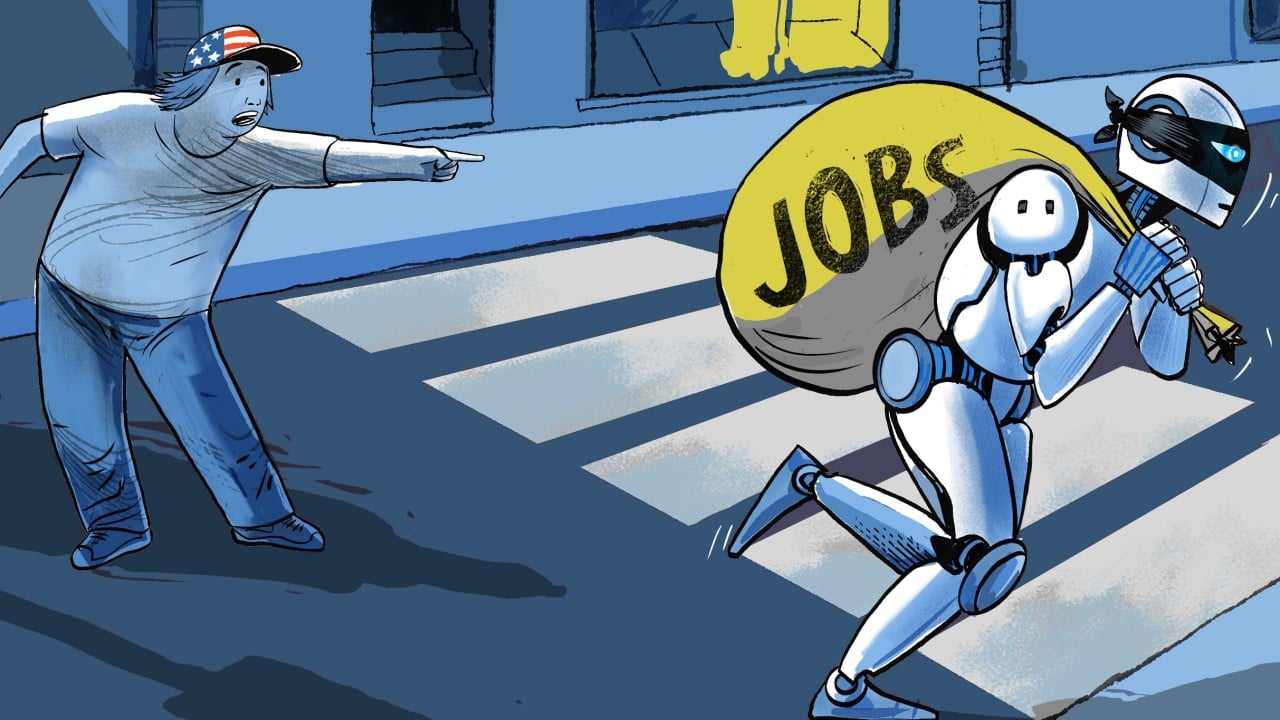
The air inside the concrete shells of Northern Virginia’s data centers smells faintly of static, ozone, and hot plastic. It is a sterile, humdrum scent, but it is the smell of modern power. For decades, the control of information moved through traditional channels: legislative chambers, network broadcast studios, and courtroom briefs. Today, it moves through copper wires, fiber-optic bundles, and cooling stacks.
When Donald Trump returned to the White House, the public conversation naturally fixated on the familiar, high-decibel battles over tariffs, immigration checkpoints, and judicial appointments. But away from the cameras, a much quieter, far more consequential reorganization of American power began. It centers on a single, sweeping ambition: the complete alignment of the nation’s artificial intelligence infrastructure under direct executive influence. Discover more on a similar topic: this related article.
This is not a traditional regulatory framework. It is an architecture designed to pick winners, consolidate computing dominance, and push aside the bureaucrats who spent years trying to slow the technology down. To understand what is happening, you have to look past the political theater and see the chess pieces being placed on the digital board.
The Night the Safeguards Melted
Consider a hypothetical engineer named Sarah. For three years, she sat in a sterile office park in San Francisco, working on what the industry calls red-teaming. Her entire job was to break her company’s AI models before the public could. She would feed the system toxic prompts, trying to trick it into spitting out instructions for building a dirty bomb, writing phishing code, or generating deepfake videos designed to tank a stock price. Further reporting by TechCrunch delves into related perspectives on the subject.
When she succeeded, the engineering teams patched the hole. It was slow, tedious, and expensive work. It served as the foundation of the Biden administration’s 2023 Executive Order on AI, which forced tech companies to share these safety test results with the federal government.
Then came the rewrite.
With a stroke of a pen, the Trump administration moved to dismantle those exact reporting requirements. The argument from the Oval Office was straightforward: these safety guardrails were nothing more than back-door censorship, an ideological muzzle designed to make American technology weak while China surged ahead.
For Sarah, the shift was immediate. The internal corporate pressure to slow down and check for systemic bias or long-term societal risks vanished overnight. The new directive from the C-suite was clear. Speed is everything. Compute or die.
The executive order that once acted as a regulatory speed bump is being replaced by an aggressive framework that treats AI not as a public utility requiring caution, but as a national weapon requiring deployment. By treating safety checks as political interference, the administration has effectively cleared the track for an unrestricted corporate race.
The New Digital Barons
Power requires a physical home. You cannot run a trillion-parameter neural network on a laptop; you need fields of servers sucking megawatts of electricity directly from the grid.
This physical reality has created a strange, unprecedented alliance between the populist right and the most aggressive factions of Silicon Valley. For years, traditional tech companies favored a cautious, collaborative relationship with Washington. But a newer breed of venture capitalists and defense tech founders chafed under that scrutiny. They saw Washington as an obstacle.
They found their champion in a president who views the world through the lens of deals, leverage, and dominant players.
The administration’s strategy centers on creating a closed ecosystem of preferred national champions. By rolling back environmental restrictions on energy production, the government can clear the way for massive new data centers fueled by natural gas and nuclear power. In return, these tech companies are expected to build the defense systems, surveillance tools, and economic engines that Washington demands.
Think of it as a modern digital enclosure movement. The open-source movement—where independent developers across the globe collaborate on free, accessible AI models—is being starved out. When the state partners exclusively with a handful of multi-billion-dollar conglomerates under the banner of national security, the independent garage developer becomes a relic of the past.
The stakes are entirely invisible to the average person scrolling through a retail app or asking a chatbot to write a work email. But the foundation of who owns the underlying math of the century is being poured right now.
The Ghost in the Bureaucracy
Washington runs on a system of permanent experts. These are the career scientists at the National Institute of Standards and Technology, the researchers at the National Science Foundation, and the policy analysts at the Federal Trade Commission. They are the people who study how algorithmic hiring tools discriminate against working-class applicants, or how automated credit scoring locks families out of housing market opportunities.
Under the current executive strategy, these agencies are systematically defunded or stripped of their oversight authority. The traditional rule-making process is being replaced by centralized political appointments.
When you remove the independent experts from the room, the conversation changes entirely. A federal agency looking at AI through the lens of civil rights sees a dangerous tool that needs boundaries. A centralized executive office looking at AI through the lens of geopolitical supremacy sees a machine that must be fed more data, no matter where that data comes from or whose privacy is compromised.
It is a profound shift in the American philosophy of governance. For nearly a century, the trend was to delegate complex technical decisions to specialized agencies. Now, the model is a direct pipeline from the executive branch to the corporate boardroom.
The Mirage of the Open Market
Proponents of this strategy argue that it represents the ultimate victory for the free market. They claim that by cutting red tape, the administration is letting American ingenuity run wild.
But look closer at the mechanics.
True free markets require low barriers to entry and intense competition. The current policy trajectory does the opposite. By tying AI development directly to massive infrastructure subsidies, defense contracts, and exclusive national security clearances, the state is effectively constructing a moat around the existing tech titans.
If you are a startup trying to build a novel AI tool that focuses on medical diagnostics or educational equity, you do not fit into the national greatness narrative. You do not get the subsidized electricity. You do not get the fast-tracked regulatory approvals. You are left to compete for the scraps of computing power left behind by the defense contractors.
The market isn't being freed. It is being conscripted.
The Cold Horizon
We have a habit of viewing technological shifts through the lens of science fiction. We worry about sentient machines, autonomous robots, or sci-fi dystopias.
The reality is far more mundane, and far more unsettling. The true power of artificial intelligence lies in its ability to quietly decide who gets a loan, who is flagged by law enforcement, which news stories rise to the top of a feed, and which weapon systems are targeted.
When that decisions-engine is fused with the singular will of an aggressive executive branch, the traditional checks and balances of American governance begin to warp. The judiciary cannot easily review an algorithm it does not understand. Congress cannot easily legislate a technology that moves faster than a committee can schedule a hearing.
The concrete shells in Northern Virginia continue to hum, day and night, drawing power from the river valleys and coal fields, processing petabytes of human thought, behavior, and language. The guards at the gates wear corporate badges, but the marching orders are coming directly from the capital.
The future is not a rogue machine taking over the world. It is a quiet room where a small group of executives and politicians look at a screen, adjust a few variables in the code, and realize that no one left in America has the power to tell them no.