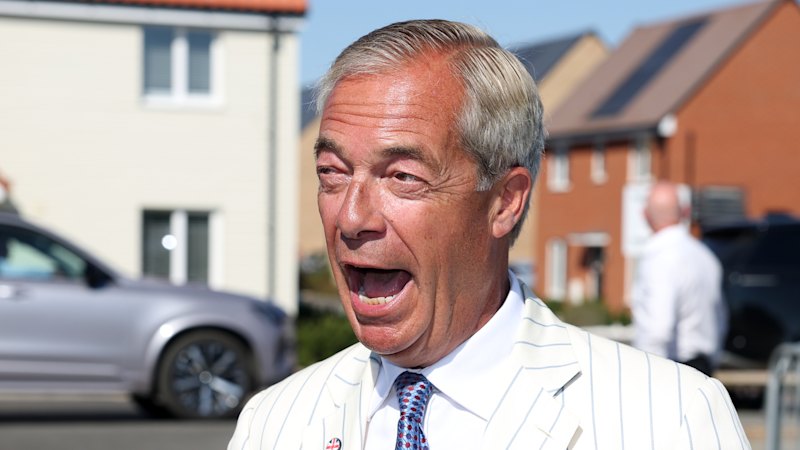
Nigel Farage secured his return to the House of Commons by winning the Clacton by-election with 22,239 votes, representing 63.34 percent of a reduced 44 percent turnout. Yet this theatrical exercise in political self-preservation has achieved the exact opposite of what the Reform UK leader intended. By deliberately triggering a contest to deflect intense public scrutiny over a five million pound gift from cryptocurrency billionaire Christopher Harborne, Farage stepped into a trap of his own making. The major political parties boycotted the ballot entirely, dismissing it as an expensive vanity project. This tactical withdrawal left the coastal constituency open to a surreal circus featuring thirty-four candidates, most notably the parody contender Count Binface, who vacuumed up 9,455 votes, or nearly twenty-seven percent of the total. Farage may have retained his seat, but he did so inside an electoral vacuum that exposed the structural limits of his populist appeal.
Political movements built entirely around the grievance of a single charismatic figure operate under strict thermodynamic laws. They require constant external friction against an established enemy to maintain momentum. When Farage stood down in July to force the by-election, he framed it as an epic crusade of the people versus the establishment. That narrative immediately fractured when the establishment simply refused to show up. Without major party opponents to push against, the contest transformed from a noble rebellion into an isolated administrative exercise. Farage spent election night avoiding the Clacton Leisure Centre count entirely, choosing instead to retreat to a guarded airbase perimeter for a private event dubbed Farage Fest. His absence spoke volumes about the brittle reality underlying his triumphant rhetoric.
Consider the mechanics of the vote itself. Farage managed to increase his raw vote count from the 2024 general election by a mere thousand ballots. In a normal political ecosystem, a sitting party leader fighting a solitary campaign would expect a massive consolidation of support. Instead, more than a quarter of the active electorate cast their ballots for a comedian dressed as an intergalactic rubbish bin. This protest vote was not an endorsement of municipal waste management. It was a precise, localized expression of exhaustion from constituents who realized they were being used as pawns in a personal legal defense strategy. For a veteran agitator who has spent three decades styling himself as the ultimate voice of the common voter, drawing nearly ten thousand votes to a parody act is an institutional humiliation.
The timing of this manufactured mandate could not be more perilous for Reform UK. The parliamentary standards commissioner's investigation into the undeclared crypto donation has now formally resumed. Farage's entire gambit was designed to create a political shield, operating on the assumption that a fresh electoral victory would make Westminster think twice before sanctioning him. That calculation misreads the institutional mechanics of the House of Commons. MPs do not govern by public relations campaigns. If the watchdog finds that Farage breached transparency rules regarding gifts and benefits-in-kind linked to figures like convicted fraudster George Cottrell, the ethics committees will proceed regardless of how many coastal ballots were cast in August.
A hypothetical scenario illustrates the bind. If an executive at a major corporation attempts to bypass internal compliance audits by holding a vote of confidence among a handpicked subset of junior employees, the governing board does not drop the investigation. They view the stunt as evidence of consciousness of guilt. Westminster treats procedural infractions with similar institutional gravity. Farage can broadcast complaints about biased media outlets and hostile police forces all he likes, but none of these grievances alter the statutory requirements of the register of members' financial interests.
Beneath the immediate parliamentary jeopardy lies a deeper strategic erosion. National polling metrics indicate that Reform UK has slid from its previous highs as immigration numbers, the primary engine of their initial momentum, have begun to recede from peak headlines. Furthermore, the political landscape has shifted with other parties seizing the narrative on domestic delivery. When an insurgent party ties its entire national brand to the personal grievances and untouchable aura of one man, any self-inflicted farce ripples instantly through its support base. Farage is back on the green benches, but he occupies them stripped of his aura of untouchable political invulnerability.
The parliamentary watchdog will now pick up its files right where it left them. The questions regarding large financial transfers remain unanswered by any ballot paper. Clacton voted to send its MP back to London, but the journey ends not in triumph, but in a tightening web of accountability.