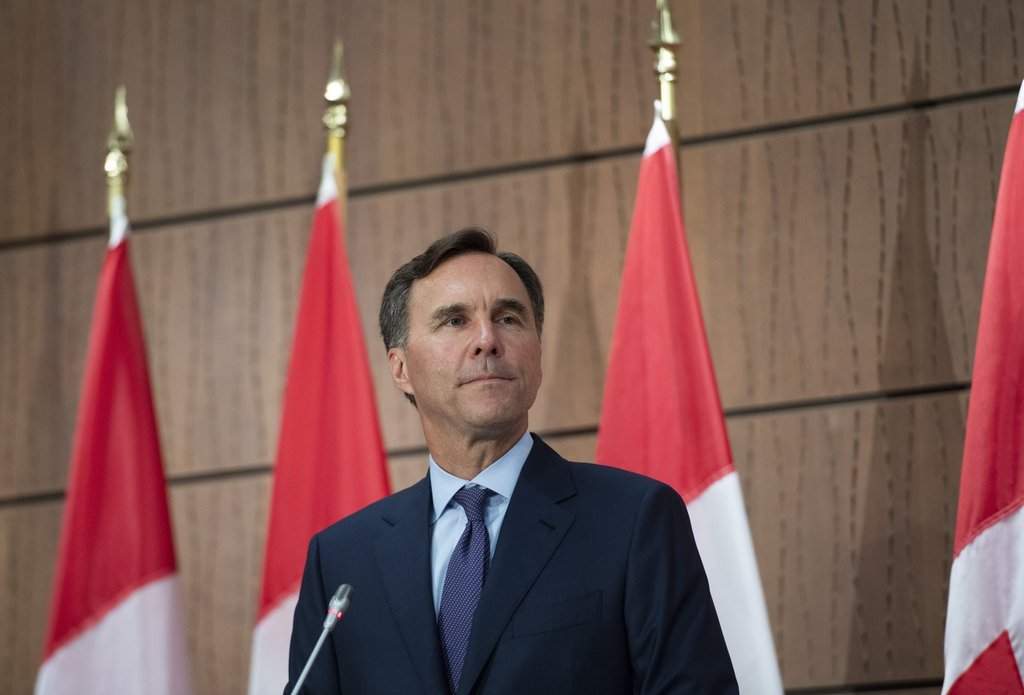
The financial press is reading the room completely backward.
When CIBC announced Bill Morneau as its incoming board chair, the predictable chorus on Bay Street immediately struck up the same tired tune. Critics pointed to his messy 2020 exit from Ottawa. Pundits whispered about political baggage. Market watchers treated the move like a defensive crouch by a bank desperate to burnish its establishment credentials.
They missed the entire point.
Naming a former Minister of Finance to chair one of Canada's Big Six banks isn't a nostalgic nod to the Laurentian consensus, nor is it an exercise in political rehabilitation. It is a cold, calculated recognition of how global banking actually works right now. If you think commercial banking in North America is still won or lost on branch-level retail margins and clever consumer apps, you haven't been paying attention to the regulatory vice tightening around balance sheets from Toronto to Washington.
The Myth of the Apolitical Bank Board
For decades, the standard playbook for Canadian bank governance favored lifers. You promoted a career auditor, a former telecom chief, or a quiet Bay Street lawyer to the chair's seat. Their primary job was to nod through dividend hikes, rubber-stamp executive compensation, and stay out of the headlines.
That world is dead.
Modern banking is no longer a pure capital-allocation business; it is a sovereign-adjacent utility operating inside a geopolitical minefield. Between Basel III endgame capital requirements, shifting cross-border trade rules, and hyper-politicized monetary policy, a bank's biggest existential risks don't come from a rival lender down King Street. They come from finance ministries, central banks, and supranational regulatory bodies.
I have sat in boardrooms where brilliant retail executives froze the moment a conversation shifted from net interest margins to sovereign debt restructuring or cross-border capital mobility. They didn't have the muscle memory for it. They treated regulators like weather patterns—something to complain about and endure—rather than actors whose incentives can be mapped, anticipated, and navigated.
Bill Morneau doesn't read about sovereign fiscal policy in analyst notes. He wrote the budgets. He sat across from G7 finance ministers when global supply chains fractured in 2020. He knows precisely how the machinery of state reacts when credit markets seize up, because his hands were on the levers.
What Everyone Gets Wrong About Political Baggage
Let's address the elephant in the boardroom. Yes, Morneau resigned from federal politics amid the WE Charity controversy. Yes, his relationship with the Prime Minister's Office soured over pandemic spending guardrails.
To the casual observer, that looks like a liability. To an institutional investor looking at CIBC's balance sheet, it looks like proof of spine.
Think about the actual mechanics of what happened in Ottawa during the summer of 2020. Morneau wasn't pushed out for being reckless with public money; he clashed with political operatives precisely because he wanted to put a ceiling on fiscal stimulus while the political wing wanted the spending taps welded open. In the private sector, friction with politicians who ignore fiscal math isn't a stain on your resume. It is a badge of honor.
Furthermore, people suffer from selective amnesia regarding Morneau's actual career before he ever touched a campaign bus. Before entering public office in 2015, he spent decades building Morneau Shepell into a human resources and pension powerhouse. He ran a publicly traded company. He understood actuarial risk, pension liabilities, and institutional asset management long before he ever stepped foot on Parliament Hill.
Treating him merely as a "former politician" is lazy shorthand. He is a lifelong corporate operator who happens to have spent five years running the G7's most scrutinized fiscal portfolio.
Dismantling the "CIBC Is Playing Catch-Up" Narrative
Another lazy take floating around financial circles is that CIBC is perpetually the fourth or fifth wheel among the Big Six—too exposed to domestic mortgages, too light on international scale compared to RBC or TD, and desperately trying to buy credibility through high-profile board appointments.
Let's look at the actual structural realities of Canadian banking.
- The Domestic Mortgage Trap: Every Canadian bank is heavily leveraged to domestic real estate, though CIBC historically carried a higher relative concentration of uninsured domestic mortgages. Navigating a multi-year mortgage renewal cliff requires more than retail underwriting; it requires deep insight into macro-prudential policy and housing finance regulation from Ottawa and OSFI (the Office of the Superintendent of Financial Institutions).
- The U.S. Expansion Reality: Following TD's well-publicized regulatory nightmares in the United States over anti-money laundering controls, every Canadian bank board is suddenly terrified of cross-border compliance blind spots. CIBC's acquisition of PrivateBancorp in Chicago gave it a meaningful U.S. commercial footprint. Scaling that footprint without tripping over American regulatory tripwires requires a board chair who understands diplomatic and regulatory hardball at the highest levels.
- Institutional Wealth and Capital Markets: CIBC doesn't win by out-branching RBC in small-town Ontario. It wins by capturing cross-border mid-market commercial clients and institutional wealth. Those clients don't care about retail marketing campaigns; they care about geopolitical stability, tax treaties, and cross-border capital flows.
Imagine a scenario where a mid-sized Canadian industrial manufacturer is trying to finance an acquisition in the American Midwest while North American trade agreements are being renegotiated. Who do you want chairing the board that oversees your commercial bank's risk appetite and cross-border strategy? A retired accounting partner who spent forty years auditing domestic utilities, or someone who has personally negotiated trade and fiscal frameworks with Washington?
The Governance Trap Nobody Talks About
Of course, bringing a heavyweight into the chair's seat isn't a guaranteed victory. There is a very real downside to appointing a former finance minister, and pretending otherwise would be dishonest.
When you put someone with Morneau's profile at the head of the board table, you risk blurring the line between governance and management.
Corporate governance theory—championed by thinkers like Peter Drucker and codified in modern institutional frameworks—draws a hard boundary: management runs the company; the board holds management accountable and sets long-term strategic guardrails. When a board chair possesses massive public stature, deep domain expertise, and an extensive Rolodex, there is an inherent temptation for that chair to become a shadow CEO.
If Morneau starts acting like an executive chairman—meddling in day-to-day capital allocation or overshadowing the CEO in client meetings—CIBC will end up with a fractured command structure. The market punishes banks with two pilots in the cockpit.
There is also the partisan tax. In an era of hyper-polarized politics, having a prominent Liberal cabinet alumnus as the public face of a major financial institution means CIBC will occasionally catch stray bullets from political opponents in Ottawa or provincial capitals. Certain provincial governments may view the bank through a partisan lens, regardless of how strictly apolitical its lending decisions remain.
How to Actually Evaluate Bank Leadership Moves
If you are an investor, an analyst, or a corporate strategist trying to figure out whether this move actually strengthens CIBC, stop reading political gossip columns. Look at three concrete indicators over the next eighteen months instead:
- Capital Allocation Discipline in Commercial Banking: Watch how aggressively CIBC deploys capital into U.S. mid-market lending versus domestic retail mortgages. A strong board chair pushes management away from comfortable, low-margin domestic habits toward higher-return, cross-border commercial growth.
- Regulatory Friction: Keep an eye on OSFI capital buffers and cross-border compliance audits. The true value of a former finance minister isn't what he says in the annual report; it's the regulatory landmines the bank quietly avoids because its board understands how policymakers think.
- Executive Succession Planning: A board chair's single most important job is hiring, evaluating, and eventually replacing the CEO. Watch whether CIBC's next generation of executive leadership looks like traditional Canadian retail bankers or globally minded capital markets operators.
Bay Street loves to pretend that finance operates in a pure, rational vacuum untouched by politics and statecraft. That illusion comforts analysts who prefer neat spreadsheets over messy geopolitical reality.
CIBC just admitted out loud that the old rules don't apply anymore. The rest of the Big Six are watching—and calculating whether their own boards are built for the world that's actually coming.