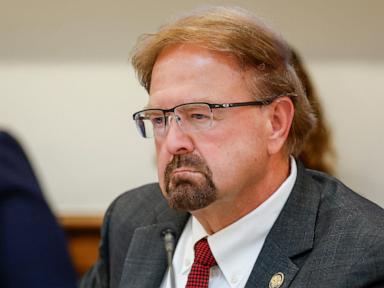
Mainstream news outlets are running their standard, predictable playbooks. The House Ethics Committee announced an official review into Representative Chuck Edwards over allegations of sexual harassment and a hostile work environment, and the media instantly treated the announcement like a profound moment of congressional accountability. They tie it neatly to recent high-profile congressional departures. They call it a sign of heightened scrutiny.
They are missing the entire point.
The public disclosure of the Edwards investigation is not a triumph of ethics. It is a tactical maneuver by a cornered committee trying to salvage its own reputation. By treating a preliminary, rule-based review as a definitive hammer of justice, the lazy consensus completely misreads how power, secrecy, and optics actually operate on Capitol Hill.
The Myth of the Proactive Bureaucracy
Look closely at the mechanics of the announcement. The committee stated it is reviewing whether Edwards violated the Code of Official Conduct, adding its standard boilerplate language: "the mere fact that it is investigating... does not itself indicate that any violation has occurred."
I have watched institutions burn millions of dollars on internal investigations and public relations containment. The fundamental rule of any regulatory or disciplinary body is simple: you only choose transparency when secrecy becomes a greater liability.
Under House Ethics Committee rules, an initial staff review conducted under Rule 18(a) can operate entirely in secret. The committee had zero obligation to tell the public anything at this stage. They only issue a public confirmation when their hands are forced by external pressures.
In this case, the details had already leaked to media outlets weeks prior, tracking back to text messages reviewed by journalists. The committee did not uncover this through a rigorous, proactive compliance system; they were handed a public relations mess that was already detonating in the press. Publishing the statement was an act of catching up, not leading.
The Flawed Logic of Institutional Self-Correction
The prevailing narrative suggests that a bipartisan committee is the ideal vehicle to clean up congressional misconduct. This premise is completely upside down.
A committee comprised of sitting politicians investigating other sitting politicians is structurally incapable of objective neutrality. It operates on a currency of leverage, timing, and political self-preservation.
Consider the timing. The House leadership is facing intense pressure to appear responsive to workplace misconduct. To appease the public and quiet the noise, leadership directed partisan caucuses to form working groups to evaluate workplace policies. The public statement on Edwards serves as the perfect shield. It allows the institution to signal that the system works, precisely so they do not have to radically alter the system itself.
Imagine a private corporation where senior vice presidents are accused of severe misconduct, and the board of directors decides that the internal investigation will be handled exclusively by a rotating committee of other vice presidents from competing divisions. No outside counsel. No independent oversight. No objective third-party arbitration. No corporate HR department on earth would defend that as a best practice. Yet, we are told to respect it as the pinnacle of legislative accountability.
The Collateral Damage of the Current Process
The current congressional disciplinary design manages to achieve the worst of both worlds: it fails to protect staffers swiftly, and it denies accused individuals a rapid, definitive resolution.
By dragging these reviews out into the public sphere without moving to a formal Investigative Subcommittee—which requires a higher threshold and a vote—the process creates a prolonged state of limbo.
- For the staff: The current framework relies heavily on anonymous leaks to force the committee’s hand. This forces junior employees to risk their careers by navigating a media landscape just to get an internal complaint noticed.
- For the accused: A lawmaker faces a cloud of suspicion that can be easily weaponized during an election cycle, without an expedited mechanism to actually test the evidence under cross-examination or formal discovery.
Edwards immediately labeled the situation "politically motivated fiction." Whether that claim holds water or not is precisely what a real judicial process is supposed to determine. Instead, the House relies on a system where the announcement itself acts as the punishment, long before the facts are ever formally established.
Dismantling the Compliance Illusion
When organizations face systemic behavioral issues, the standard, failed response is to create more committees, draft longer codes of conduct, and issue stern press releases. It gives the illusion of movement while maintaining the status quo.
True structural accountability requires removing the self-policing loophole. If Congress genuinely wanted to address workplace hostility, it would hand the investigative and fact-finding power over to an entirely independent, non-partisan body with the unilateral authority to subpoena evidence and issue binding findings, independent of political leadership's permission.
Instead, Washington clings to an opaque, multi-tiered committee review process that serves as a political pressure valve. The establishment media will continue to report on every milestone statement as a sign of progress. Do not buy it. The public scrutiny surrounding Chuck Edwards does not prove that congressional oversight is working—it proves that the institution only responds when it can no longer hide.