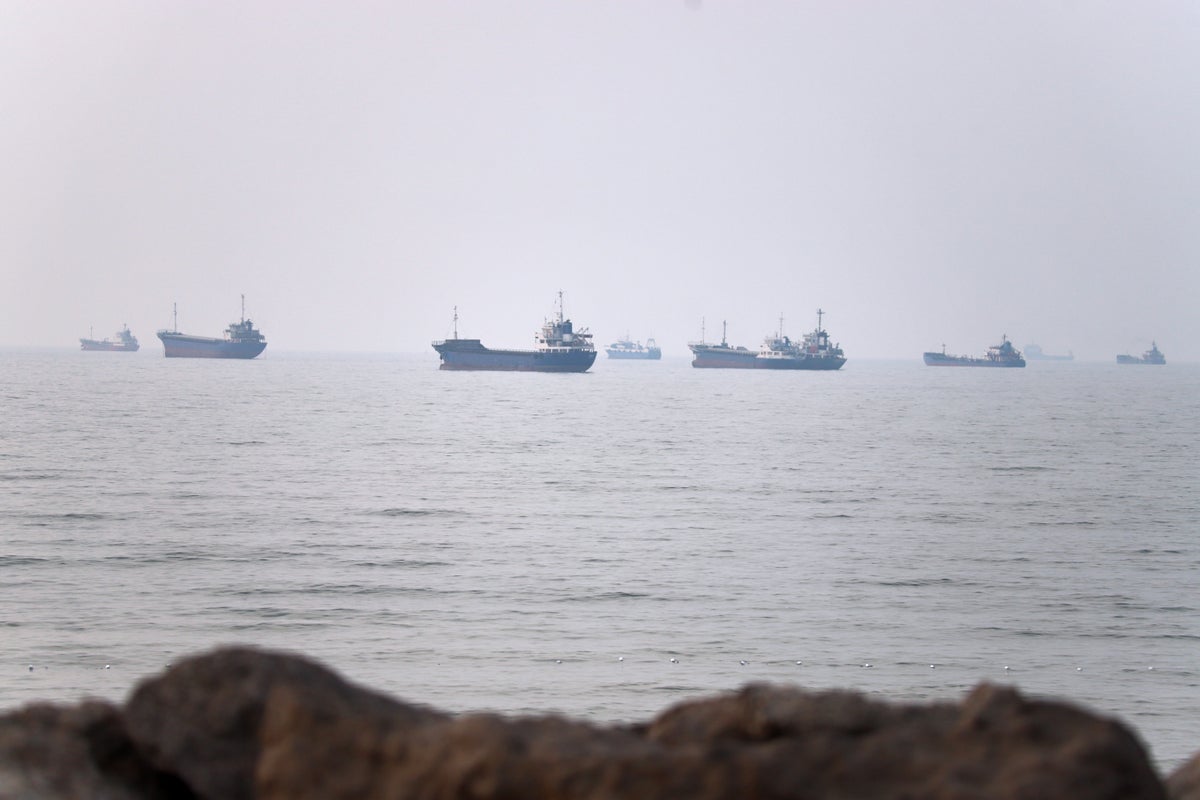
A commercial crude carrier burns in the Strait of Hormuz after a projectile strike, triggering the predictable scramble of international security alerts. The immediate response follows a well-worn script where oil futures tick upward, marine insurance adjusters recalculate risk, and naval command centers dispatch warships to the scene. Yet, focusing strictly on the physical black smoke billowed across the water misses the broader structural breakdown. This latest attack exposes a fundamental reality that the global shipping industry has tried to ignore for a generation. Commercial maritime deterrence is broken, and traditional naval power cannot fix it.
The incident highlights a structural mismatch in modern geopolitical conflict. On one side are the multi-billion-dollar naval assets tasked with keeping international shipping lanes open. On the other are non-state actors and regional powers utilizing cheap, expendable asymmetric technologies to disrupt global supply chains at will. The balance of economic friction has swung decisively away from the defenders.
The Illusion of Freedom of Navigation
For decades, the international community relied on the assumption that a visible naval presence could guarantee safe passage through vital maritime chokepoints. This assumption is dead. The Strait of Hormuz, measuring just twenty-one miles wide at its narrowest point, handles roughly one-fifth of the world’s liquid petroleum consumption every single day. It is an operational bottleneck where large vessels are functionally trapped on predictable transit corridors.
When a projectile strikes a tanker, the military response is inherently reactive. Warships can patrol shipping lanes, escort specific high-value targets, and intercept a high percentage of incoming threats. They cannot, however, achieve a perfect interception rate across hundreds of square miles of crowded coastal waters. A single low-cost loitering munition or anti-ship missile slipping through naval defenses is enough to neutralize the economic viability of a shipping route.
The math favors the attacker. A modern naval destroyer fires interceptor missiles that cost millions of dollars per launch to down a drone built for a fraction of that price. This creates an unsustainable economic equation for defending forces. Western militaries are burning through limited stockpiles of sophisticated munitions to protect commercial assets, while adversaries face almost no financial constraints in maintaining a steady rhythm of low-level harassment.
The Shell Game of Modern Maritime Ownership
To understand why these attacks continue with impunity, one must examine the opaque financial and legal architecture of the global merchant fleet. The burning ship in the gulf is rarely just a ship. It is an intricate web of holding companies, shell corporations, and regulatory loopholes designed to obscuring accountability.
Most commercial vessels operate under flags of convenience. Countries like Panama, Liberia, and the Marshall Islands register the vast majority of the world's ocean-going tonnage. These open registries offer ship owners low taxes, minimal regulatory oversight, and a convenient layer of legal insulation. When a projectile hits a vessel registered in a tiny island nation, owned by a shell company in a European tax haven, managed by an agency in Asia, and crewed by mariners from developing nations, the diplomatic response becomes fragmented.
- Flags of convenience dilute the sovereign responsibility of maritime nations.
- Complex corporate structures shield the ultimate beneficial owners from the financial consequences of regional instability.
- Fragmented labor markets mean the crews risking their lives have zero political leverage in the capitals where foreign policy decisions are made.
This fragmentation prevents a coordinated, decisive international retaliation. If an American or British flagged vessel with a domestic crew were targeted directly, the political pressure for a decisive military response would be immense. By outsourcing registration and labor to the highest bidder, the shipping industry has inadvertently stripped itself of the sovereign protection it now desperately requires.
The War Risk Premium and Supply Chain Friction
The true target of a maritime strike is rarely the physical cargo or the hull of the vessel itself. The true target is the global insurance market. When violence spikes in a maritime chokepoint like the Strait of Hormuz, the Joint War Committee of the London insurance market quickly updates its listed areas of perceived risk.
Ship owners operating in these designated zones must pay a specialized war risk premium. These surcharges can skyrocket from a nominal fee to hundreds of thousands of dollars per voyage within forty-eight hours of an attack. For standard commercial operations, these added costs quickly erode thin profit margins.
Imagine a hypothetical shipping company operating a fleet of ten Suezmax tankers. Under normal conditions, transit costs are predictable and managed through long-term freight agreements. If a string of kinetic strikes causes war risk premiums to jump by 1% of the vessel's total value per transit, the daily operational cost becomes untenable. The company faces a brutal choice: absorb the massive losses, pass the costs directly to consumers, or reroute vessels around longer, safer, but vastly more expensive alternative paths.
This financial friction ripples through the entire global economy. Higher shipping costs translate directly into increased raw material prices, fluctuating energy costs, and manufacturing delays. The vulnerability is not a logistical inconvenience. It is a systemic tax on global trade.
The Shadow Fleet and the Two Tiered Maritime Order
The rise of Western sanctions on energy exporters has accelerated the creation of a massive, parallel maritime economy known as the shadow fleet. Hundreds of aging, poorly maintained tankers now operate completely outside the boundaries of mainstream maritime oversight. These vessels frequently turn off their Automatic Identification System transponders, falsify cargo manifests, and engage in risky ship-to-ship transfers in international waters to disguise the origin of their oil.
The existence of this secondary fleet complicates the security picture in the Middle East. Shadow fleet vessels regularly operate without standard Protection and Indemnity insurance clubs, which handle major environmental liabilities and salvage operations. If a projectile strikes an uninsured, structurally compromised shadow tanker carrying millions of barrels of crude, the resulting environmental and economic disaster would fall entirely on the coastal states bordering the strait.
Salvage Limitations in Hostile Waters
When a tanker catches fire, extinguishing the blaze and securing the cargo requires specialized salvage tugs and highly trained hazardous materials crews. In a highly contested environment like the Strait of Hormuz, private salvage companies are deeply hesitant to deploy assets into the line of fire. Commercial tugs lack armor, point-defense systems, or military escorts, making them sitting ducks for subsequent drone strikes.
The Breakdown of International Maritime Law
The United Nations Convention on the Law of the Sea establishes clear frameworks for innocent passage through international straits. However, these legal concepts carry little weight when confronted with asymmetric regional actors who do not recognize the legitimacy of Western-dominated legal frameworks. The international community's inability to enforce these laws uniformly has turned treaties into mere suggestions.
The Logistics of the Invisible Threat
Modern anti-ship technologies have democratized destruction. Decades ago, threatening a massive crude carrier required a sophisticated military apparatus complete with radar installations, naval vessels, and trained aircrews. Today, an operator sitting in a concealed mobile launcher miles inland can launch a GPS-guided drone that presents a minimal radar signature and can strike a ship's bridge with pinpoint accuracy.
These weapons are easily transported, hidden in civilian infrastructure, and deployed without warning. This reality invalidates the traditional naval strategy of seeking out and destroying an enemy’s offensive capability before it can be used. There are no massive naval bases or visible missile silos to target. The threat is diffuse, hidden, and constantly shifting.
The commercial maritime sector remains built for a world that no longer exists. Ships are designed for maximum cargo capacity and fuel efficiency, with zero structural redundancy to survive kinetic impacts or explosive blasts. Crews receive training for fire safety and navigation, not damage control under active military bombardment.
As long as the international community treats these incidents as isolated security anomalies rather than symptoms of a broken global framework, the fires will continue to burn. The solution requires a fundamental restructuring of maritime accountability, a transformation of global insurance risk sharing, and a realistic assessment of the limits of naval power in confined coastal waters. Until those structural changes occur, every vessel entering the strait is simply rolling the dice.