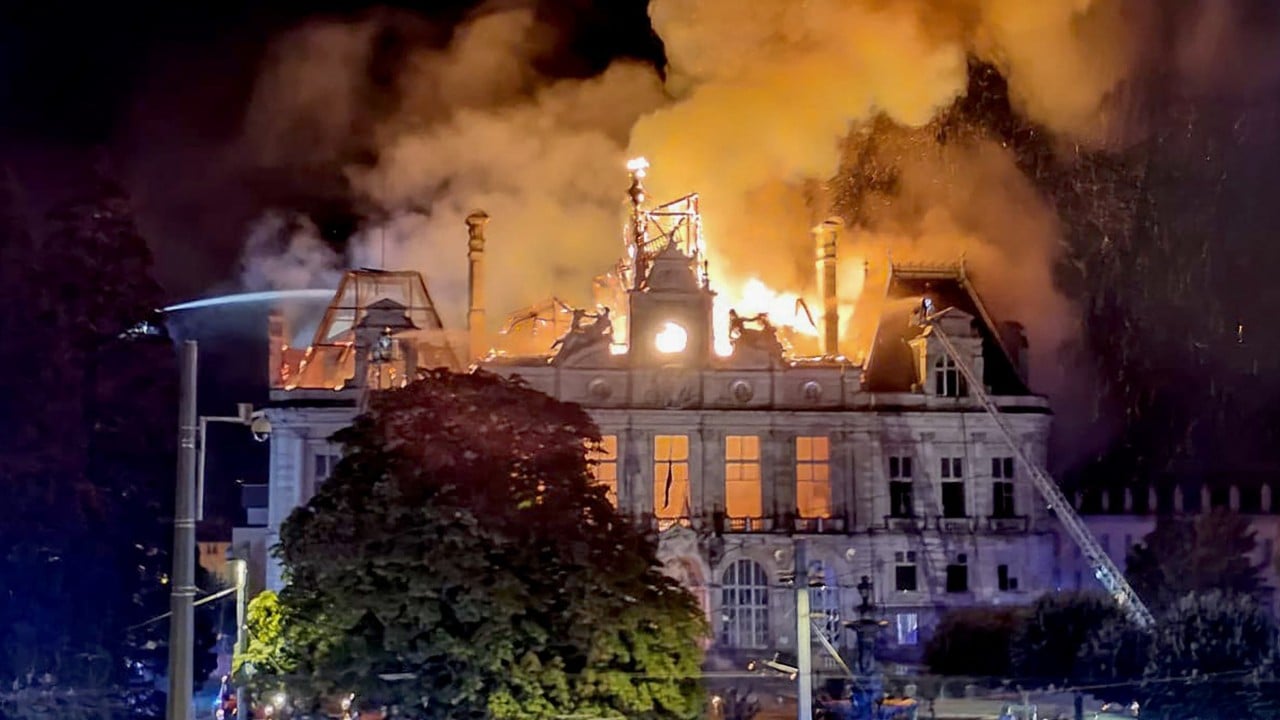
Every time smoke rises over Paris or a boulevard in Lyon turns into a tactical chessboard, media outlets rush to ask the exact same lazy question: how do Chinese internet users view the protests in France? Then they scroll through Weibo, Douyin, and Zhihu, cherry-pick a few sarcastic memes about pension ages or broken storefronts, and hand you a neat little story about East versus West.
Lazy. Predictable. Completely backward. Meanwhile, you can find similar stories here: Inside the Fake IT Worker Scam Funding North Korea's Nuclear Push.
When people online in China react to unrest in France, they are rarely giving you an objective geopolitical report card on the Fifth Republic. They are running a domestic stress test. They are looking at someone else's street theater to negotiate their own boundaries, vent frustrations that cannot be voiced as directly at home, and test what kind of commentary survives moderation.
Treat a viral Weibo post about French strikers as a direct window into foreign policy, and you will misread the room every single time. I have watched multinational brands, PR agencies, and political analysts blow millions of dollars misreading Chinese social feeds because they confused performative online chatter with actual public consensus or policy alignment. They treated a sarcastic comment section like a referendum. It is not a referendum. It is a mirror. To understand the bigger picture, we recommend the recent report by The Guardian.
The Myth of the Monolithic Weibo Reaction
Start with the biggest mistake in coverage of Chinese social media: pretending "internet users" is a single person with a single voice.
Weibo is not Douyin. Douyin is not Zhihu. RedNote—Xiaohongshu—is not either of those. Even within a single platform like Weibo, a trending hashtag on a Tuesday afternoon contains wildly different currents: state-affiliated accounts pushing a specific framing, nationalist commenters mocking Western dysfunction, liberal-leaning users quietly admiring citizens' willingness to push back against authority, and apolitical users making jokes about luxury handbags or croissants because they just want something entertaining to read on their commute.
If you want to understand how information circulates and gets shaped in digital ecosystems, media scholars like Manuel Castells and platform researchers studying algorithmic amplification have spent decades showing that feeds reward emotion, contrast, and speed over nuance. Unrest in France has built-in visual drama—tear gas, barricades, clash lines, high-stakes slogans. That visual intensity makes it tailor-made for short-form video clips and punchy one-liners.
A 15-second clip of a burning trash can in Paris travels fast because it requires zero background knowledge. Explaining the structural mechanics of French labor unions, collective bargaining, or municipal budget deficits takes ten minutes and gets scrolled past. So the internet defaults to shorthand.
Why "Schadenfreude" Is Only Half the Story
Conventional commentary loves to paint Chinese reactions to Western protests as pure schadenfreude—a gloating chorus saying, "Look how messy democracy is."
Some of that exists. No serious analyst denies it. When commentators point to transport gridlock, property damage, or political stalemate in Europe, they often use it to argue that strong central coordination avoids gridlock. That argument is familiar and easy to spot.
What lazy observers miss is the subtext underneath the gloating. Often, mockery of French protests is not a defense of everything at home; it is a deflection or a coded comparison. When users joke online about workers refusing to work longer or pushing back hard against state plans, the subtext can cut in multiple directions at once. One user reads it as chaos and wasted productivity. Another reads the exact same clip and thinks about wage pressure, working hours, or housing costs in their own city.
Reading only the surface joke is like listening to a laugh track and assuming you know the plot of the play.
You Are Asking the Wrong Question
Ask, "What do Chinese internet users think of French protests?" and you get superficial snapshots. Ask instead: What domestic anxieties get projected onto foreign street protests when direct domestic discussion is constrained or crowded out?
That question changes everything.
In media studies, this is a classic displacement effect. When people cannot safely or productively debate a sensitive issue head-on, they often use a distant proxy. A debate about public anger, inflation, or state-labor tension in France becomes a safe stage for talking about fairness, economic pressure, and authority in general.
Even the specific grievances in French protests—retirement age changes, cost of living, fuel or tax burdens, public service strain—hit nerves that are universal in modern urban life. Young professionals facing steep housing costs and fierce job competition anywhere in the world recognize economic squeeze when they see it. You do not need a degree in European politics to feel what a cost-of-living crunch looks like.
"People Also Ask" — Dismantled
Let's tear into the standard follow-up questions people type into search bars whenever this topic pops up.
Do Chinese netizens support French protesters?
There is no unified "they" to support or oppose anything. Some users cheer on fierce pushback against authority or admire strong collective action. Others side with order, shopkeepers, and economic stability, viewing prolonged street clashes as self-sabotage. Many care less about ideology and more about whether a clip is funny, dramatic, or useful for an ongoing online argument. Treating a comment section as a clean "pro" or "anti" tally is bad analysis.
Why do Chinese social media posts focus on chaos and riots?
Because algorithms are outrage and spectacle machines, and foreign conflict footage is cheap, dramatic, and visually legible. Peaceful policy negotiations do not go viral. Smoke and clashes do. Furthermore, selective framing by different accounts—ranging from state media to independent bloggers to everyday users—naturally highlights the sharpest contrast points.
Are reactions to French protests a sign of anti-Western sentiment?
Sometimes anti-Western tropes show up in the replies. Pretending they don't would be dishonest. Yet conflating every critical, sarcastic, or detached remark about France with sweeping anti-Western hostility is sloppy. People can mock French bureaucracy, admire French architecture, worry about their own mortgage payments, and complain about their boss all in the same evening. Human attention is messy, not a neat ideological spreadsheet.
The Mechanics Behind the Feed
To see why coverage of this topic keeps getting tripped up, look at four mechanics that govern what outsiders actually see.
- Translation flattens tone. Sarcasm, irony, inside jokes, and regional slang lose texture when translated into English summaries. A line that reads like a harsh condemnation in translation might be dry internet humor or a quote from a meme template.
- Survivorship bias distorts consensus. Reporters look at the loudest, most viral, or most translated posts. Millions of users scroll past without commenting or post mundane reactions that never get translated into English coverage. The loudest voices are rarely the most representative.
- Algorithmic echo chambers amplify extremes. Engagement-driven feeds reward strong stances. Nuanced takes—"this policy has trade-offs, and protests have costs and benefits"—get less traction than sharp one-liners.
- Temporal whiplash erases context. A protest movement in France can run over weeks or months with shifting demands, court rulings, legislative votes, and lull periods. Social media clips flatten a multi-week political struggle into isolated bursts of action.
Imagine a scenario where a foreign analyst builds a crisis-communications playbook based solely on top-liked comments under a viral Douyin video of Parisian street clashes. They assume those comments represent firm, unshakeable public conviction. Six weeks later, when consumer behavior, brand sentiment, or public mood shifts in a completely different direction, the playbook fails because the analyst mistook peak viral noise for baseline reality.
I have seen that exact failure play out in boardrooms. Teams chase trending hashtags like weathervanes, mistaking a gust of wind for a permanent shift in climate.
Where This Contrarian Take Can Go Wrong
Honesty requires putting the flaws of my own argument on the table. Pushing back against lazy "Chinese netizens think X" narratives can easily swing too far in the opposite direction.
If you overcorrect, you risk underestimating real narratives that do gain traction online. Certain frames—such as questioning the efficiency of Western governance models or highlighting economic strain in Europe—appear repeatedly for real reasons, not by accident. Ignoring recurring patterns just to sound contrarian is just another kind of blindness.
There is also the trap of over-interpreting silence or coded language. Sometimes a joke really is just a joke. Sometimes a user really is just bored, killing time between meetings, not secretly constructing a grand allegory about domestic governance. Read psychological depth into every single emoji and you will start seeing ghosts in the machine.
Better Ways to Read the Signal
If you actually want insight rather than clickbait, stop collecting viral screenshots and start doing real signal analysis.
- Compare platforms side by side. Look at how a story is framed on a discussion-heavy forum versus a short-video feed versus a lifestyle app. Tone and framing shift sharply by platform culture.
- Track what isn't said. Pay attention to which angles get lots of engagement and which angles get ignored. What people ignore often reveals more than what sparks a five-minute pile-on.
- Separate spectacle from substance. Distinguish between reactions to dramatic visuals (fires, clashes, standoffs) and reactions to underlying policy debates (labor rules, taxes, public spending).
- Anchor in real-world behavior. Never let social media sentiment stand alone as proof of broader public opinion or real-world action. Treat online chatter as one noisy input among many.
Stop treating foreign social media feeds like crystal balls. They are loud, crowded, algorithm-shaped rooms where people argue, joke, vent, and project. Watch the projection—not just the screen.