Washington tightens the screws on Nvidia's AI chips, and Beijing reaches straight for the periodic table. That's the trade war playbook right now. If you think this is just another round of empty diplomatic posturing, you haven't been paying attention to how supply chains actually work.
Analysts have been warning that if the U.S. escalates semiconductor export controls—specifically targeting Nvidia's advanced processors—China won't just absorb the hit. Beijing holds a massive chokehold on global rare earth processing, and tightening those exports is the most direct, painful counterpunch it has. You don't build modern fighter jets, electric vehicle motors, or high-end server hardware without these elements.
Here is the reality most people miss. This isn't about raw dirt. It's about refining capacity, chemical engineering, and decades of industrial policy that Western nations happily outsourced because it was dirty and expensive.
How the Nvidia Chip Squeeze Triggers Beijing's Retaliation
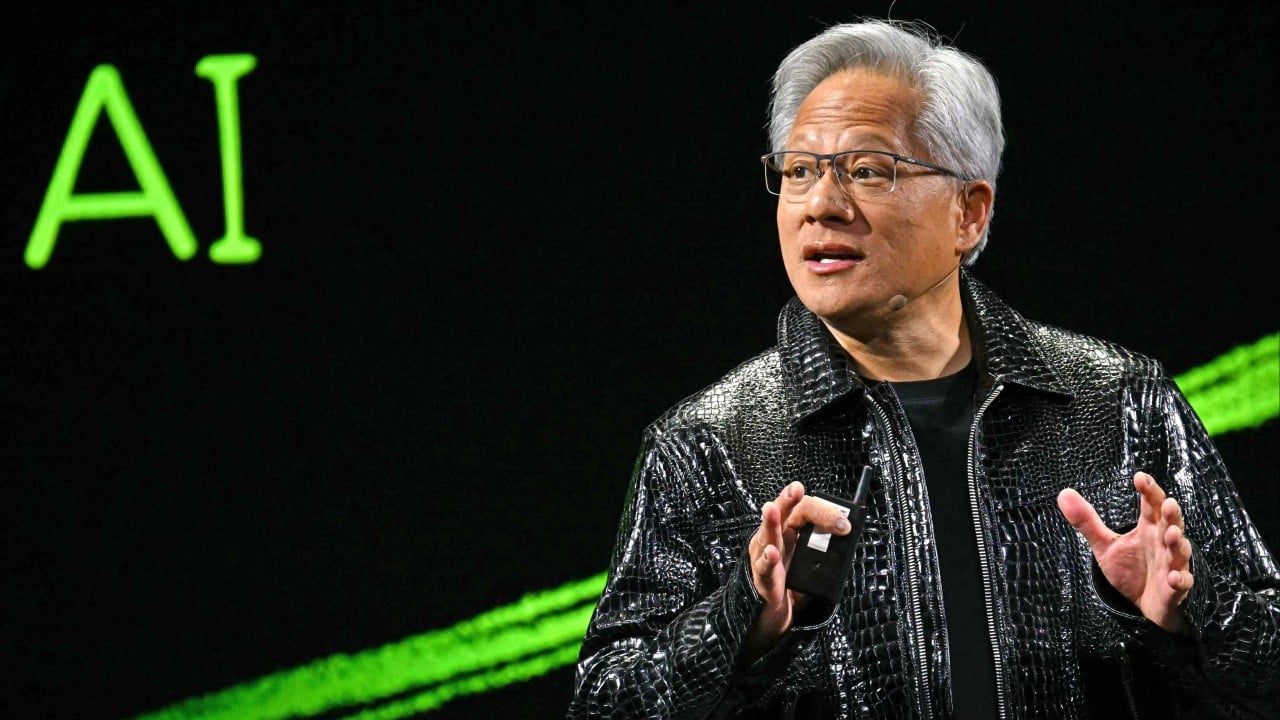
To understand why rare earths are on the table, look at what the U.S. Commerce Department has been doing. Over the past few years, Washington has rolled out sweeping restrictions designed to stop advanced artificial intelligence chips from reaching Chinese tech giants and military researchers. Nvidia, sitting at the center of the AI boom, has had to design stripped-down versions of its hardware—like the A800 and H800, and later the H20—just to legally sell into the Chinese market.
Every time Nvidia engineers a compliant chip, Washington moves the goalposts.
From Beijing's perspective, this isn't fair competition. It's technological containment. When you block a country from buying the computing power needed to train next-generation AI models, you threaten its economic growth and national security. China doesn't have an immediate domestic replacement that matches Nvidia's top-tier Blackwell or Hopper architectures at scale, even with Huawei pushing hard with its Ascend series. So Beijing looks for asymmetric leverage.
That leverage sits in mines and processing plants across Inner Mongolia and southern China. Analysts who track cross-border trade policy point out that China has already tested the waters. In 2023, Beijing slapped export controls on gallium and germanium—two critical minerals used in semiconductors and defense electronics. Then came graphite restrictions, vital for EV batteries. Later, antimony joined the list. Each move was a warning shot. Escalate on Nvidia, and heavy rare earths like dysprosium and terbium are next.
What Most People Get Wrong About Rare Earths
The name itself is a lie. Rare earths aren't actually rare in the Earth's crust. Cerium is more abundant than copper. You can find deposits in California, Australia, Brazil, and Vietnam.
The real bottleneck is processing.
Extracting rare earth elements from rock and separating them into pure, usable oxides requires nasty, complex chemistry. It generates toxic waste and radioactive byproducts like thorium. For thirty years, the U.S. and Europe let China take over this entire midstream phase because nobody wanted the environmental headaches at home. According to data from the International Energy Agency, China accounts for roughly 60% of global rare earth mining, but it controls nearly 90% of the processing and refining.
Think about that number for a second. Nine out of ten tons of refined rare earths on the planet pass through Chinese facilities.
Even when the U.S. mines ore at Mountain Pass in California—operated by MP Materials—a huge chunk of that concentrate has historically been shipped to China for processing because domestic refining infrastructure is still catching up. You can dig all the rocks you want, but if you can't separate the elements, you're stuck with expensive gravel.
The Specific Elements That Hurt the Most
Not all rare earths carry the same geopolitical weight. Light rare earths, like neodymium and praseodymium, are used in permanent magnets for wind turbines and electric vehicles. They're important, sure, and supply is tight.
Heavy rare earths are where the real panic sets in. Elements like dysprosium, terbium, and yttrium are essential for magnets that need to operate at ultra-high temperatures without losing their magnetism. Where do those magnets go?
- Guidance systems for precision missiles
- Electric motors in stealth fighter jets like the F-35
- High-efficiency cooling pumps and actuators in data centers
- Specialized optical glass and radar components
China and neighboring Myanmar—whose ore is almost exclusively processed in China—dominate the global supply of heavy rare earths. If Beijing restricts export licenses for dysprosium or terbium, defense contractors in Virginia and tech hardware manufacturers in Taiwan feel the squeeze within months.
Why China Hasn't Pulled the Trigger Completely Yet
If Beijing holds such a dominant hand, why hasn't it cut off the U.S. entirely? Because economic warfare cuts both ways, and Chinese policymakers aren't reckless.
First, an outright ban accelerates Western decoupling. Every time Beijing threatens export curbs, Washington throws millions of dollars in Defense Production Act funding at alternative supply chains. Lynas Rare Earths in Australia gets subsidies to build a processing plant in Texas. MP Materials builds out separation facilities in California. Researchers at universities and startups scramble to invent magnet motors that don't use rare earths at all. If China cuts off supply completely, it destroys its own long-term monopoly by forcing the rest of the world to build a parallel system.
Second, China's domestic rare earth industry needs foreign buyers. Companies like China Northern Rare Earth Group rely on global demand to stay profitable, especially when China's domestic property sector is sluggish and overall economic growth faces headwinds. Slashing exports hurts Chinese miners and refiners right alongside Western manufacturers.
That's why analysts expect targeted, bureaucratic friction rather than a loud, total embargo. Beijing prefers export licensing systems. Under a licensing regime, exports aren't technically banned—they just require government approval. Approvals can move smoothly one month and stall mysteriously the next. Customs shipments get held up for "inspections." Quotas tighten quietly. It gives Beijing plausible deniability while keeping Western executives awake at night.
How This Hits the Tech and Hardware Supply Chain
You might wonder how a mining restriction in China circles back to hurt Nvidia or the broader tech sector. After all, silicon chips themselves are made mostly from sand—silicon dioxide—not rare earths.
Look closer at the manufacturing process.
Semiconductor fabrication plants rely on ultra-precise machinery from companies like ASML, Applied Materials, and Lam Research. Those machines use high-performance permanent magnets in their lithography stages and actuators. Polishing wafers requires cerium oxide slurry. Beyond the fab itself, the massive AI data centers buying Nvidia GPUs require immense power infrastructure, backup generators, cooling systems, and high-speed fiber optics—all of which depend on rare earth components and specialty metals like gallium.
If China tightens the tap, prices spike. Lead times stretch from weeks to quarters. Smaller hardware suppliers get priced out of the market first, creating cascading delays across the electronics ecosystem. I've seen procurement teams spend months qualifying a single alternative magnet supplier, only to realize that the new supplier still buys its raw oxide powder from the exact same Chinese state-owned enterprise. You can't spreadsheet your way out of a physical monopoly.
What Investors and Supply Chain Managers Should Actually Do
Waiting for politicians in Washington and Beijing to kiss and make up is a terrible strategy. The friction between U.S. tech leadership and Chinese resource dominance is structural, not temporary. Whether the next round of Nvidia restrictions happens next month or next year, the direction of travel is clear.
If you're managing hardware procurement, manufacturing risk, or watching this space as an investor, focus on concrete actions instead of headlines:
- Audit Tier-2 and Tier-3 suppliers immediately. Most companies ask their direct component vendors where parts are made. That's useless if a motor assembled in Germany uses magnets sintered in Japan from oxides refined in China. Map the supply chain all the way back to the chemical separation plant.
- Build strategic buffer stock for heavy rare earth components. You don't need to hoard raw oxides in a warehouse. You do need extra inventory of finished actuators, specialized motors, and sensors that rely on dysprosium and terbium. Six months of buffer stock buys you time when export licenses suddenly freeze.
- Track non-Chinese refining capacity, not just mining announcements. When evaluating rare earth companies or alternative suppliers, ignore press releases about "massive new deposits discovered." Look strictly at who has commercial-scale solvent extraction and separation plants operating outside China, such as Lynas in Malaysia and Australia or MP Materials in the U.S.
- Watch the licensing language from China's Ministry of Commerce. Pay attention to announcements from MOFCOM regarding dual-use items. When Beijing adds an element to its export control list, the immediate price spike usually settles down within a few weeks—the real pain hits three to six months later when existing corporate inventories run dry and license delays compound.
Washington is betting it can starve China of high-end AI compute before Beijing builds a self-sufficient chip industry. Beijing is betting it can choke off the physical materials the West needs to build advanced hardware before alternative refineries come online. Neither side is bluffing, and the companies caught in the middle have to treat resource nationalism as a permanent cost of doing business.