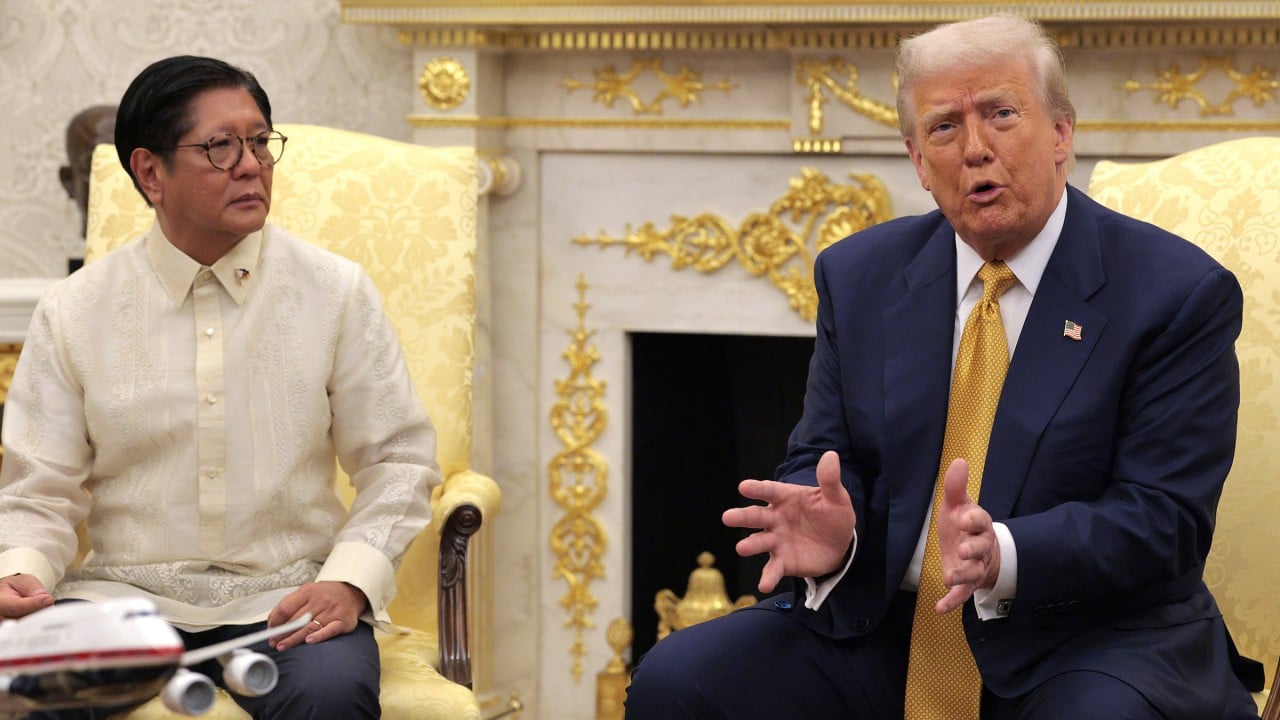
Geopolitical analysts love a neat, tragic narrative. The lazy consensus of the moment goes something like this: the Philippines, lured by empty economic promises from Washington, is recklessly poking the Chinese dragon. By cozying up to the West and trading Beijing’s favor for unmaterialized American investment "pledges," Manila is supposedly committing economic suicide while risking a hot war in the South China Sea.
It is a beautifully simple argument. It is also entirely wrong.
This hand-wringing narrative misses the fundamental mechanics of modern statecraft and capital deployment. It treats investment pledges as mere political theater and views defensive realignments as unprovoked aggression. The reality? Manila is executing a calculated, hard-nosed pivot born out of necessity, backed by a sophisticated diversification strategy that Beijing desperately wants to derail.
The Phantom Menace of China's "Ire"
The core premise of the conventional view is that the Philippines has everything to lose by upsetting China. This assumes China was a reliable economic partner to begin with.
Let us look at the actual data, not the diplomatic press releases. Under the previous administration of Rodrigo Duterte, Manila spent six years practicing appeasement. Duterte explicitly shelved the 2016 Hague arbitral ruling in exchange for a promised $24 billion bonanza of Chinese Belt and Road Initiative (BRI) investments.
What actually materialized? A fraction of that. Massive infrastructure projects like the Mindanao Railway and various multi-billion-dollar dam projects languished in bureaucratic limbo, choked by high interest rates, opaque terms, and environmental pushback. Beijing used these promises as geopolitical leverage, delaying deployment while continuing to aggressively encroach on the West Philippine Sea.
When you give an autocrat a concession for future cash, they keep the concession and keep the cash.
To argue that Manila is now risking China's "ire" ignores the fact that Beijing's economic coercion was already the status quo. The pivot under Ferdinand Marcos Jr. is not an emotional gamble; it is an economic eviction notice issued to a tenant that stopped paying rent years ago.
Dismantling the "Paper Pledges" Myth
Critics point out that foreign investment pledges from the United States and its allies—such as the commitments surrounding the Luzon Economic Corridor—are just numbers on a boardroom slide. "A pledge is not a factory," the skeptics cry.
True. But let us look at how private Western capital operates versus Chinese state-directed lending.
- Chinese BRI Funding: Driven by state-owned enterprises (SOEs). Decisions are top-down and political. When political winds shift or Beijing’s domestic property market collapses, the capital tap shuts off instantly.
- Western and Japanese Capital: Distributed across private equities, institutional investors, and multilateral bodies like the Asian Development Bank (ADB). The $1 billion-plus commitments from the US Presidential Trade and Investment Mission or Japan’s $3.4 billion infrastructure packages are anchor commitments designed to de-risk private capital.
I have spent years watching institutions weigh sovereign risk. Private money does not care about diplomatic speeches. It cares about structural guardrails. The trilateral partnership between the US, Japan, and the Philippines provides exactly that: a geopolitical insurance policy.
When Google invests in a subsea cable network or a semiconductor firm eyes Clark Freeport Zone, they are not doing it out of the goodness of their hearts. They are doing it because the physical and legal security of those assets is now implicitly guaranteed by the strongest military alliance in the Pacific. The pledge is not the end goal; it is the catalyst that lowers the cost of capital.
The Real Numbers of Decoupling
The fearmongers claim that turning away from China will paralyze the Philippine economy. Let us look at the actual trade dependencies.
| Economic Metric | China Dependency | Western/Allied Dependency |
|---|---|---|
| Primary Export Destination | High (Electronic components, minerals) | High (Semiconductors, consumer goods) |
| Foreign Direct Investment (FDI) | Historically low realization rates | Consistently high via Japan, US, and EU |
| Remittances & BPO Revenue | Negligible | Massive (Driven by North America and Europe) |
The economic engine of the Philippine middle class does not run on Chinese infrastructure loans. It runs on the Business Process Outsourcing (BPO) sector and overseas worker remittances. These two pillars are almost exclusively tethered to Western markets.
By upgrading its security ties with the US and integrating into the US-Japan-Philippines economic architecture, Manila is safeguarding its core economic drivers. It is securing its position in the global technology supply chain—specifically in semiconductor packaging and testing—at a time when Western nations are aggressively friend-shoring away from mainland China.
The Cost of the Contrarian Play
To be fair, this strategy is not without friction. There are valid structural critiques that the optimists ignore.
The Philippines remains a notoriously difficult place to do business. A 52.3 percent jump in foreign investment approvals in early 2026 is an encouraging metric, but the country still battles chronic structural bottlenecks: the highest electricity costs in Southeast Asia, bureaucratic red tape, and deficient regional logistics.
If Manila expects American and Japanese corporations to build the factories that Beijing only promised, it cannot rely solely on geopolitical goodwill. Security guarantees might bring investors to the table, but competitive power rates and predictable regulatory frameworks are what keep them from packing up and moving to Vietnam or Malaysia.
Changing the Premise
The media keeps asking the wrong question: Can the Philippines afford to anger China for the sake of Western promises?
The real question is: Can the Philippines afford to remain economically dependent on an aggressive neighbor that uses trade as a weapon?
Just ask Lithuania, Australia, or Taiwan how submissive economic compliance worked out for them. When a nation’s sovereignty is systematically challenged at sea, its economic independence is already on the clock.
Manila is not being used as a pawn in a superpower chess match. It is acting as a rational agent. It is leveraging its unmatched geographical position—sitting squarely at the maritime choke points of the Indo-Pacific—to extract premium economic and security concessions from the world’s wealthiest democracies.
The strategy is bold, confrontational, and fraught with near-term geopolitical turbulence. But it is infinitely superior to the alternative: waiting quietly for a check from Beijing that was never going to clear.