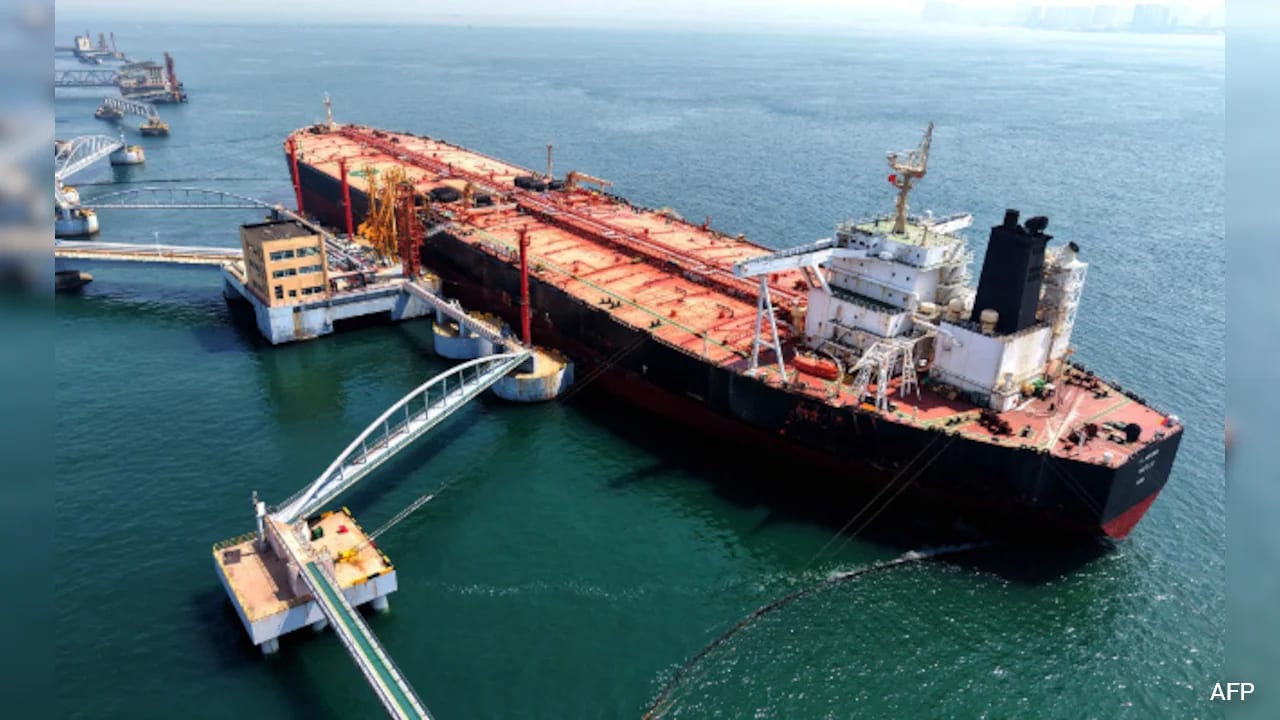
The financial press is currently congratulating itself on a narrative that is not only mathematically flawed but dangerously naive.
The prevailing consensus insists that China’s recent three million barrel crude production and import adjustment single-handedly stabilized global oil prices while the Middle East teetered on the brink of an all-out Iran war. It is a neat, comforting story. It suggests that Beijing acts as a responsible macroeconomic stabilizer, pulling levers behind the scenes to keep the global economy from fracturing.
It is also completely wrong.
To believe that a three million barrel adjustment by China saved the market is to misunderstand the fundamental plumbing of the global energy trade. Having spent two decades analyzing physical crude flows and watching trading desks navigate geopolitical shocks, I can tell you that the mainstream media is looking at the wrong ledger. China didn't stabilize the market. China capitalized on it. The real stabilization came from an entirely different, structural force that the talking heads completely missed.
The Flawed Math of the Three Million Barrel Savior Narrative
Let's dissect the lazy consensus. The narrative assumes that by cutting three million barrels of aggregate demand and refining throughput over a designated period, China threw a wet blanket on a roaring fire, offsetting the geopolitical risk premium triggered by the escalation in Iran.
This argument falls apart under basic structural analysis.
First, context matters. In a global market consuming over 100 million barrels per day, a three million barrel adjustment distributed over weeks or months is statistical noise. It is a rounding error, not a macroeconomic shield.
More importantly, this view fundamentally misinterprets Chinese state strategy. Beijing does not manage its state reserves or refining runs to do the Western financial system a favor. When China reduces its crude imports or taps the breaks on domestic refining, it is not an act of global stewardship. It is a reaction to collapsing domestic industrial margins and a calculated move to stop buying overvalued crude.
Look at the underlying physical indicators. During the height of the Iran tensions, the backwardation in the Brent crude curve—where prompt barrels trade at a premium to future delivery—steepened significantly.
Physical Crude Market Mechanics:
High Geopolitical Risk -> Steep Backwardation -> Expensive Prompt Barrels -> China Pauses Buying -> Media Mistakes This for "Stabilization"
For a price-sensitive buyer like Sinopec or PetroChina, a steep backwardation is a flashing red light to stop buying spot cargoes and draw down domestic commercial inventories instead. China didn't cut barrels to cool the market; they stopped buying because the market became too expensive for their bleeding refining margins. They acted out of pure, localized self-interest. To label this as a calculated move to "stabilize oil prices" is to mistake the symptom for the cure.
Who Actually Prevented an Oil Price Explosion
If China's marginal adjustment didn't stop oil from hitting triple digits during the Iran crisis, what did?
The answer isn't a state actor playing chess. It is the invisible, relentless pressure of structural shifts in global supply and the mechanics of physical commodity trading.
1. The Invisible Buffer of Non-OPEC+ Supply
While everyone was staring at the Middle East and Beijing, non-OPEC+ producers—predominantly the United States, Guyana, and Brazil—were quietly pumping at or near record highs. This structural surge acted as a massive, permanent shock absorber.
The market no longer panics the way it did a decade ago because the geographical concentration of spare capacity has shifted. The risk premium from the Iran conflict was structurally capped not by a Chinese slowdown, but by the relentless flow of light sweet crude from the Western Hemisphere that kept Atlantic Basin refiners completely insulated.
2. The Paper Market vs. The Physical Reality
During the escalation, Wall Street algorithmic funds attempted to bid up paper crude futures, anticipating a massive supply disruption. But commodity markets are ultimately governed by physical convergence.
While the paper market panicked, physical traders looked at the actual waterborne inventory. Ship tracking data showed that barrels were still moving. The Strait of Hormuz remained open. Insurance freights spiked, yes, but the oil never stopped flowing. The moment the algorithmic speculative bids realized that physical supply was not actually disrupted, the paper premium collapsed.
Dismantling the People Also Ask Flaws
The broader conversation around this event proves how deeply misunderstood the energy sector remains. If you look at the questions being asked across financial forums, the premises themselves are broken.
Did China's oil cut prevent a global recession?
This question assumes an immediate, linear causal link that simply does not exist in complex commodities. A temporary reduction in Chinese refining throughput does not dictate global GDP trajectories. What actually prevented a broader economic shock was the resilience of global supply chains and the fact that central banks had already signaled a pivoting macroeconomic stance, decoupling growth expectations from immediate energy volatility.
How does an Iran war affect gas prices if we import from elsewhere?
This is the classic localized fallacy. Oil is a fungible global commodity. It does not matter if a country imports zero barrels from the Persian Gulf; if 20% of the world's oil transit is threatened, every single barrel globally is re-priced to reflect that risk. The stabilization we saw was not due to localized insulation, but because global shipping routes adapted with brutal efficiency, proving that localized disruptions have a diminishing capacity to paralyze global trade.
The Hard Truth of the Contrarian Reality
Admitting this reality requires abandoning the comforting idea that global energy markets are managed by competent oversight or strategic interventions by major powers. The truth is far more chaotic, and for some, far more unsettling.
The downside of acknowledging that structural supply and physical market mechanics—rather than Chinese intervention—stabilized prices is that it strips away the illusion of control. It means acknowledging that we are riding a tiger bareback. If a true, catastrophic supply disruption occurs in the Middle East, no marginal inventory adjustment by Beijing or tactical release by Western governments will save the market. We are entirely dependent on the structural buffer built by private capital deployment in new production basins.
Stop Looking at Beijing for Energy Direction
If you are managing risk, allocating capital, or trying to understand where the global economy is headed, stop reading the mainstream analysis that treats every Chinese policy twitch as an act of global economic engineering.
When China cuts its crude intake, do not assume they are balancing the world. Assume their domestic economy is stuttering, their independent refiners are facing credit crunches, or they are simply waiting out a price spike because they refuse to overpay for wet barrels.
The real driver of price stability in the modern energy landscape is the decentralization of supply. The old paradigm where a single geopolitical actor or a single massive consumer could dictate the terms of global energy survival is dead. The market stabilized because the global supply apparatus has become too distributed, too fragmented, and too resilient to be broken by a localized conflict or saved by a face-saving statistical adjustment in Beijing.
The next time a geopolitical crisis hits and the media point to a single state decision as the savior of the global economy, ignore them. Look at the freight rates, look at the Western hemisphere production curves, and follow the physical barrels. The truth is always found in the cargo manifests, never in the political press releases.