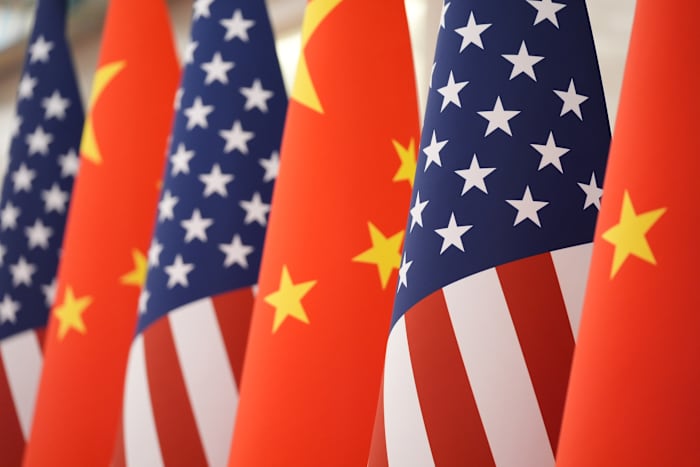
The mainstream media is running with a predictable, lazy headline: Washington squeezed Beijing on tech, so Beijing is punching back by choking off supply lines to American defense contractors. It sounds like a clean, cinematic geopolitical chess match. It is also entirely wrong.
Viewing China's latest export restrictions on critical minerals and dual-use technologies through the lens of pure, reactionary retaliation completely misses the structural shift happening under our noses. This is not a petulant tit-for-tat. It is a long-planned, highly strategic consolidation of domestic industrial capacity.
The Western press treats these export controls like a sudden declaration of trade war. In reality, Beijing is executing a playbook it drafted over a decade ago. If you think this is just about making Lockheed Martin or Raytheon sweat for a quarter or two, you are asking the wrong questions.
The Myth of the Sudden Retaliation
Let's clear up the timeline. For years, financial analysts and defense consultants have panicked every time China tweaks its export catalogs for rare earth elements, gallium, germanium, or antimony. The narrative is always the same: "China hits back."
But anyone who has actually managed supply chains in East Asia knows that these restrictions are not spontaneous outbursts. They are internal house-cleaning mechanisms disguised as foreign policy maneuvers.
Beijing’s primary goal is not to starve the US military-industrial complex; it is to force its own domestic industries up the value chain. For twenty years, China functioned as the world's low-margin mine and refinery. It absorbed the environmental degradation of processing raw materials while Western firms turned those materials into high-margin semiconductors, radar arrays, and precision-guided munitions.
By clamping down on raw exports, China is forcing foreign buyers to invest in Chinese processing facilities or face scarcity. More importantly, it is keeping those raw materials inside domestic borders to feed its own rapidly expanding advanced manufacturing sector. It is an act of aggressive economic self-interest, not a schoolyard grudge match.
Dismantling the Supply Chain Panic
Every time a new restriction drops, a wave of standard questions floods the industry:
- Can the US military survive without Chinese antimony?
- How fast can Western alternatives scale up?
- Will this destroy the global tech economy?
These questions rely on a flawed premise. They assume the Western defense apparatus is a helpless victim of a sudden supply shock.
Let's do a quick reality check on the mechanics of defense procurement. The Pentagon does not buy raw gallium on the open market. It buys finished components from prime contractors, who buy assemblies from subcontractors, who buy processed materials from specialized refiners.
When Beijing restricts an export, it does not instantly halt the production of fighter jets. Defense giants maintain deep, heavily guarded stockpiles of critical materials precisely because they anticipate geopolitical friction. Furthermore, the US Defense Logistics Agency has been actively funding domestic recycling and processing initiatives for years.
The real danger to the West is not a sudden shortage of rocks. It is the complacency born of relying on a singular, cheap processing hub for thirty years. China's export controls are simply shining a harsh, necessary light on the West's refusal to build its own processing infrastructure because the profit margins were too low.
The Cost of the Counter-Strategy
If you want an unconventional truth that defense insiders rarely admit publicly, here it is: these Chinese restrictions might be the best thing to happen to Western industrial capacity in a generation.
As long as China kept critical minerals cheap and abundant, there was zero financial incentive for private capital or Western governments to build domestic processing plants. It was impossible to compete on price with subsidized, state-backed operations in Inner Mongolia or Sichuan.
By choking the supply, China has achieved what decades of Pentagon warnings could not: it made domestic processing financially viable.
Imagine a scenario where a US-based mining company tries to raise $500 million to build a heavy rare earth separation facility in 2018. Investors would have laughed them out of the room. Today, thanks to Beijing's restrictions, that same project can secure government grants, guaranteed defense contracts, and private equity funding. China is effectively forcing the West to de-risk its own supply chains.
However, building this independence is a brutal, capital-intensive grind. The downside to this contrarian view is undeniable: the next decade will be incredibly expensive.
We are moving away from a highly efficient, globalized, single-source supply chain toward a fractured, redundant, and localized model. Redundancy costs money. Your smartphones, your electric vehicles, and yes, your nation's defense systems are about to get significantly more expensive to manufacture. We are trading economic efficiency for national security, and the bill is coming due.
The Value Chain Trap
Western analysts love to point out that China’s restrictions will hurt its own state-owned enterprises by cutting off lucrative export markets. This is a fundamental misunderstanding of how the Chinese state operates.
In a liberal market economy, cutting off your biggest customer is corporate suicide. In a state-directed economy, a loss of export revenue in the mining sector is a rounding error if it secures a dominant position in the next generation of aerospace, quantum computing, and green energy technology.
Beijing is perfectly comfortable sacrificing short-term export cash to secure long-term technological sovereignty. They are playing a game of industrial chicken, betting that Western democracies will lack the political will and the sustained capital to rebuild heavy industrial processing facilities before their existing stockpiles run dry.
Stop looking at the daily stock fluctuations of defense primes. Stop listening to pundits who treat international trade like a boxing match where every move is a direct response to the last punch. The export restrictions are not a temporary temper tantrum over US sanctions. They are a permanent fixture of the new industrial reality. The old world of frictionless procurement is dead, and it is not coming back.
Build your own processing plants, accept the margin hit, or get left behind.