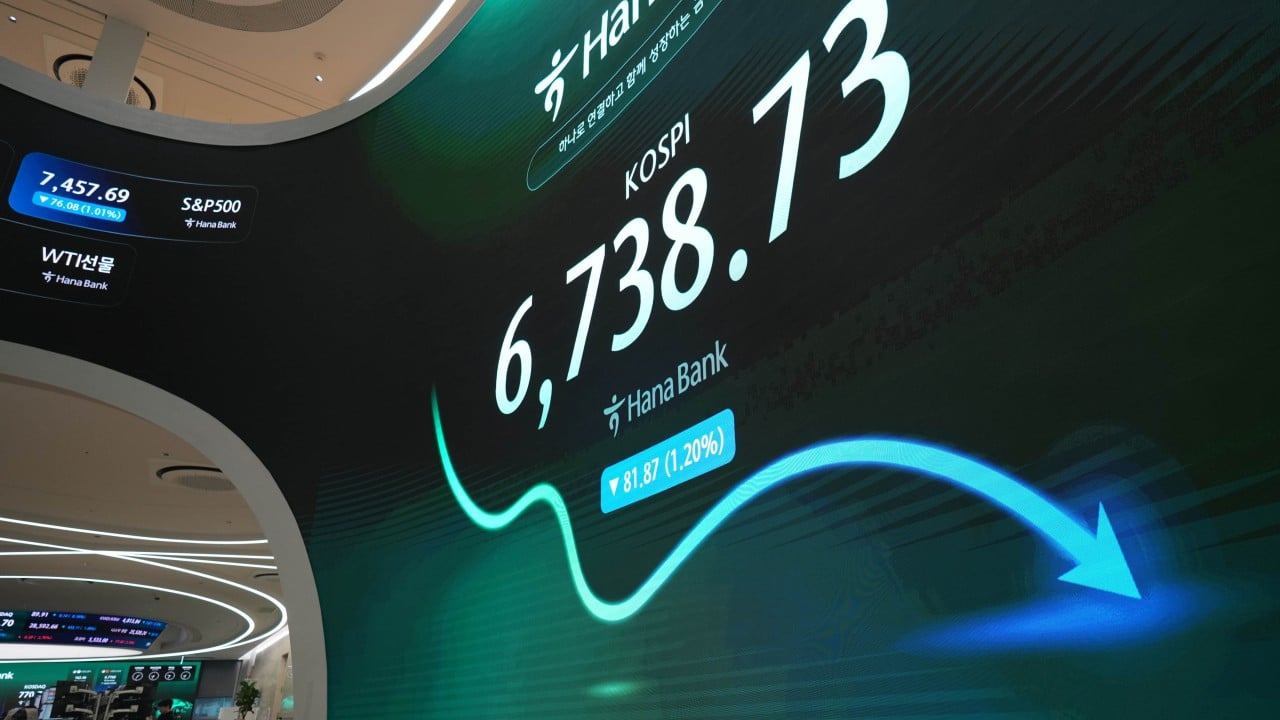
Blaming Seoul's stock market volatility for killing off a funds product is the classic Wall Street and Bay Street excuse for poor risk management.
When China Merchants Securities quietly pulled the plug on its South Korea ETF listing, financial headlines parroted the standard PR narrative: South Korean equities are simply too wild, too unpredictable, and too exposed to global macro headwinds. The consensus view suggests that retail investors and institutional funds are wise to run for the exit before the Kospi drags them down further.
That analysis is completely wrong.
Blaming volatility for shutting down a geographic fund misses the point entirely. Volatility is not an inherent flaw in an asset class; it is the price of admission for high-beta exposure. Fund houses do not liquidate products because the market moves up and down. They liquidate products because their own fee structures cannot sustain poor asset-gathering, their internal hedging strategies failed, and they lacked the conviction to ride out cyclical re-pricings.
South Korea's equity market isn't broken. The product structuring behind these thematic ETFs is.
The Volatility Fallacy
Every time an Asian thematic fund liquidates, asset managers roll out the same tired playbook. They point to currency fluctuations, geopolitical tensions across the 38th parallel, or the dominance of single conglomerates like Samsung Electronics over the broader index.
I have watched fund managers burn millions in seed capital launching hyper-niche regional ETFs at the absolute peak of a market cycle, only to pull the plug eighteen months later when retail enthusiasm cools. Then, without fail, they blame "unprecedented market conditions."
Let's dissect what volatility actually means in the context of the South Korean market:
- High Beta to Global Tech: South Korea's Kospi is essentially a leveraged bet on global semiconductor demand, supply chain liquidity, and consumer electronics cycles. Expecting it to trade like a low-yield consumer staples index is financial illiteracy.
- Retail-Dominated Liquidity: Domestic retail traders drive a massive portion of daily turnover in Seoul. This creates short-term price dislocations—dislocations that disciplined quantitative funds profit from, rather than run away from.
- The "Korea Discount" Myth: Skeptics love to cite corporate governance issues and low dividend payouts as structural dead weight. Yet, they ignore major regulatory pushes, such as South Korea’s recent "Corporate Value-Up Program," designed specifically to address underperformance and force higher capital efficiency.
When a major broker drops a fund under the banner of market turbulence, they aren't protecting retail capital. They are trimming operational overhead on a product that failed to reach critical Mass of Assets Under Management (AUM).
The Mathematics of ETF Liquidation
An ETF does not close because its underlying holdings lose 15% or 20% in a quarter. An ETF closes because the issuer's internal economics fall apart.
Consider the baseline mechanics. Running a cross-border ETF requires:
- Local custodian fees
- Cross-border tax reporting and compliance
- Market maker incentives to maintain tight bid-ask spreads
- Index licensing costs paid to providers like MSCI or FTSE
When an asset manager launches a specialized vehicle like a South Korea ETF, they need to cross a specific break-even threshold—typically around $25 million to $50 million in AUM, depending on their expense ratio. If institutional capital shifts toward broad-market Emerging Markets or Developed Asia products, the specialized single-country ETF becomes a money loser for the issuing firm.
Instead of admitting, "We misjudged retail demand and failed to market this fund effectively," firm management issues a press release pointing fingers at market swings. It is corporate misdirection at its finest.
The Misunderstood Dynamics of the South Korean Market
People also ask whether single-country ETFs are too risky for individual portfolios. The question itself exposes a fundamental misunderstanding of portfolio construction.
A single-country allocation to an export-driven economy is not meant to be a core buy-and-hold index fund for a conservative pension. It is a tactical execution tool.
When you purchase a South Korea fund, you are buying direct exposure to global trade volume. You are buying cyclical upside in memory chips, EV batteries, and heavy manufacturing.
If you buy a high-beta cyclical engine at the top of an economic expansion, you will experience drawdown. Blaming the engine for consuming gas while climbing an incline makes no sense. The asset class performed exactly as its underlying economics dictated. The manager running the vehicle simply couldn't monetize the trade long enough to see the cycle turn.
What Real Capital Discipline Looks Like
If you want to capitalize on regional market dislocations, stop taking fund closures as a signal to flee. History demonstrates that structural liquidations by major retail brokers frequently mark sentiment troughs rather than structural breakdowns.
When issuers start shutting down single-country vehicles, it signals that capitulation is complete. The weak hands—both retail investors and uncommitted institutional product creators—have cleared the floor.
Here is how smart capital actually approaches this asset class:
- Distinguish between structural decay and cyclical drawdowns: Structural decay happens when an economy loses its competitive advantage. Cyclical drawdowns happen when global inventory cycles clear out. Korea’s export strength remains central to advanced manufacturing.
- Ignore issuer sentiment: Fund managers launch products at market tops because that is when retail enthusiasm makes capital raising easy. They liquidate at market bottoms because retail enthusiasm vanishes. Doing the exact opposite of product-launch timing is historically one of the simplest contrarian signals available.
- Demand direct exposure: If an ETF issuer cannot handle tracking error or liquidity management during volatile stretches, move away from illiquid wrapper products and focus on broad regional access vehicles or direct equity stakes in global leaders.
The real downside to this contrarian lens? You have to sit on drawdowns while the financial media predicts total collapse. You have to endure months of negative tracking, media panic, and low liquidity before the cycle turns. It requires patience that quarterly-focused asset managers simply do not possess.
China Merchants Securities didn't drop its South Korea ETF because the market became unmanageable. They dropped it because their business model relies on riding easy momentum, and when the momentum stopped, they folded.
Stop confusing a broker’s operational exit with an asset class’s structural failure.


