You are probably used to checking the news for major military maneuvers around Taiwan. Huge fighter jet formations. Enormous naval drills. A massive blockade threat.
But you are looking in the wrong place. The real, dangerous escalation is happening quietly, right now, in places most people cannot find on a map.
Beijing is executing a deliberate strategy to choke off and delegitimize Taiwan’s remote outposts. They aren't using traditional warships for this. They are using coast guard cutters, research vessels, and maritime safety ships. By flooding the waters around tiny islands like Dongsha, Kinmen, and Matsu, China is erasing maritime boundaries without firing a single shot.
If you want to understand where the next major cross-strait flashpoint will erupt, you have to look at these isolated rocks and reef systems. Here is exactly what is happening on the water and why the old status quo is gone for good.
The Strategy of Creeping Jurisdiction
For decades, an unspoken understanding kept the peace around Taiwan’s offshore islands. Taiwan maintained "restricted" and "prohibited" waters around its territories, even those sitting just a few miles from the Chinese mainland. Chinese ships stayed out. Taiwanese forces stayed put.
Beijing has completely abandoned that playbook.
Instead of an overt invasion, China uses what security analysts call gray-zone coercion. The goal is simple. They want to create a legal illusion that China already exercises administrative control over these waters.
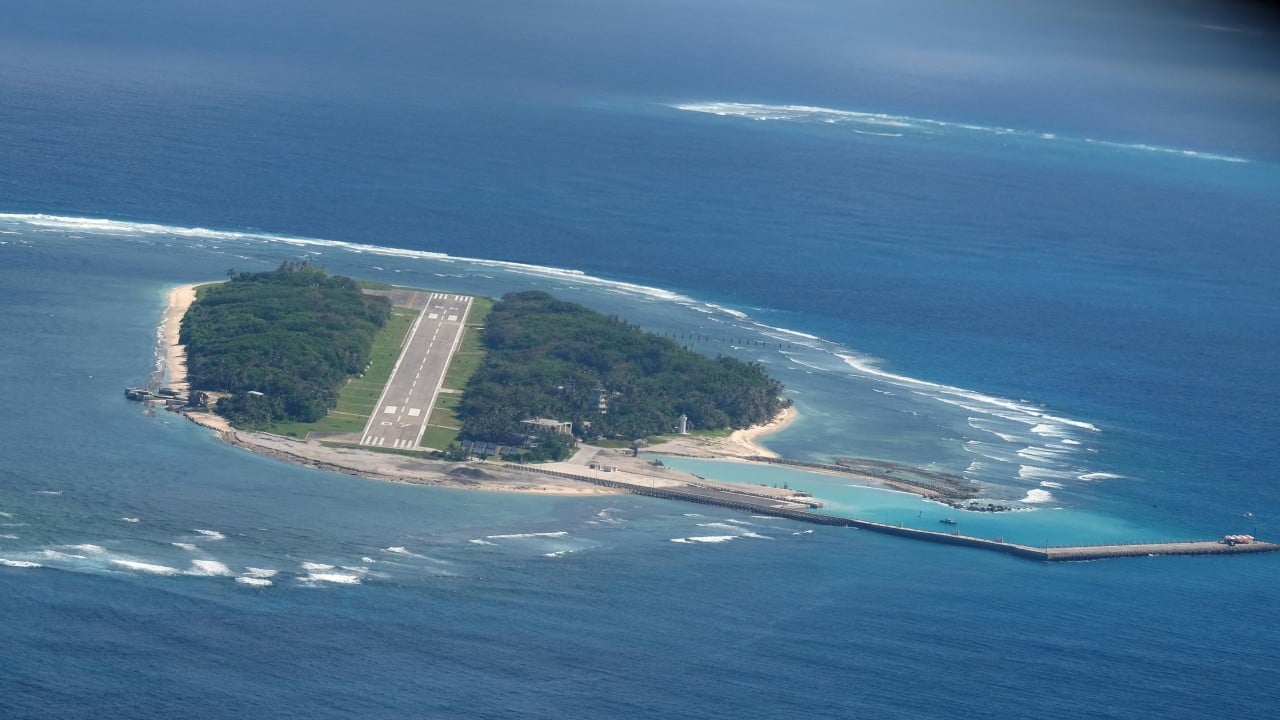
Take the recent standoff near the Dongsha Islands, also known as the Pratas Islands, at the northern edge of the South China Sea. In late May, China Coast Guard Vessel 3501 didn't just sail into Dongsha's restricted waters. It stayed there.
Taiwan’s Coast Guard Administration dispatched its own vessel, the Taichung, to intercept it. What followed was an intense, 30-hour radio shouting match. The Chinese ship openly broadcasted that it was on a routine domestic law enforcement mission under Chinese sovereignty and jurisdiction.
That specific language matters. It was not a military threat; it was a bureaucratic one. By framing its presence as domestic policing, Beijing is trying to normalize its presence and turn Taiwanese waters into Chinese lakes.
Shifting the Pressure to the East
Beijing isn't stopping at the South China Sea or the immediate coastal islands like Kinmen. They are expanding the map.
In June, China launched a coordinated "special maritime law enforcement operation" featuring government ships from Fujian and Guangdong provinces, alongside navigation support and rescue bureaus. They deployed these vessels into the waters directly east of Taiwan.
The pretext? Beijing claimed the deployment was a necessary response to maritime boundary talks between Japan and the Philippines.
It was a clever excuse, but the real target was Taipei. Taiwan's coast guard had to scramble five major patrol vessels—the Tamsui, Jian, Kaohsiung, Changbin, and Hualien—to monitor the influx.
National Security Council Secretary-General Joseph Wu went public with video footage of Taiwanese crews broadcasting warnings to the Chinese ships, telling them plainly: "These are not your waters. You do not belong here."
By forcing Taiwan to constantly deploy its limited coast guard fleet to the east, the south, and the west simultaneously, Beijing achieves a classic military objective. It thins out Taiwan’s resources. Taiwan's coast guard is highly capable, but it cannot be everywhere at once.
The Vulnerability of Isolated Outposts
Most people forget just how exposed these islands are. Dongsha is an atoll. It is home to a beautiful national park, but it is defended almost exclusively by lightly armed coast guard personnel, not heavy military units.
Further north sit the Wuchiu Islands. These two tiny islets cover just 1.2 square kilometers and sit roughly 30 kilometers from the Chinese city of Quanzhou. Fewer than 400 civilians live there, protected by a small garrison of soldiers and some remote-controlled gun systems.
Then you have Kinmen and Matsu, which are practically within spitting distance of the Chinese mainland. Ever since a tragic incident in February 2024—where two Chinese fishermen drowned while fleeing a Taiwanese patrol boat—Beijing has explicitly rejected the concept of Kinmen’s restricted waters.
Look at what this looks like from an operational perspective:
- Daily Incursions: Chinese coast guard vessels now enter these restricted zones as a matter of weekly routine.
- Coordinated Surveillance: Beijing pairs its coast guard cutters with scientific research vessels like the Tongji and survey ships like the Hai Si Lu 6 to map the seafloor and establish a permanent presence.
- Aviation Pressure: Unmanned reconnaissance drones regularly fly just outside the airspace of these islands, keeping them under constant surveillance.
This is not a random series of provocations. It is a systematic erosion of sovereignty. If Taiwan ignores the ships, it concedes its jurisdiction. If Taiwan reacts too aggressively, Beijing gets the perfect excuse to escalate, seize an island, and blame Taipei for the crisis.
What This Means for Global Security
This isn't just a local dispute over fishing rights or small rocks. The quiet escalation around these outposts has massive international consequences.
First, it directly tests the limits of international support. Washington has repeatedly called on Beijing to cease its coercive actions, but gray-zone tactics are notoriously difficult to counter. If a Chinese coast guard ship boards a Taiwanese civilian vessel in restricted waters—something they have already started doing—does that trigger a military response from the United States? Beijing is betting that it won't.
Second, it exploits political uncertainty. With shifting political rhetoric in Washington and fluctuating statements regarding the defense of Taiwan, Beijing smells an opening. They want to see how far they can push the line before anyone stops them.
The Next Practical Steps
Taiwan cannot afford to just play defense forever. To counter this creeping blockade, Taipei and its international partners need to alter their own approach immediately.
- Increase Transparency: Taiwan must continue to rapidly release radio transcripts, radar tracking data, and video footage of these encounters. Exposing China’s "law enforcement" as aggressive geopolitical maneuvering strips Beijing of its legal ambiguity.
- Integrate Allied Patrols: While the US and its allies conduct freedom of navigation transits through the Taiwan Strait, they need to expand surveillance and presence near the outer edges of the first island chain to deter sudden island grabs.
- Upgrade Outpost Resilience: Taiwan must continue to harden its offshore detachments with anti-ship missiles, advanced communication arrays, and drone counter-measures, making any potential physical seizure too costly for Beijing to contemplate.
The old status quo is dead. Beijing has rewritten the rules of engagement around Taiwan’s remote outposts, and the maritime lines on the map are blurring fast. Watch the coast guard cutters, not just the fighter jets. That is where the real battle for Taiwan is being fought.