The standard police bulletin reads like a cheap thriller designed to comfort the public. A violent crime occurs. Authorities panic, slap a teenager’s name and a grainy photograph across every screen, and pretend that wrapping cuffs on a child solves a societal hemorrhage. We treat youth violence as an isolated moral failure of an individual rather than the inevitable harvest of an institutional desert.
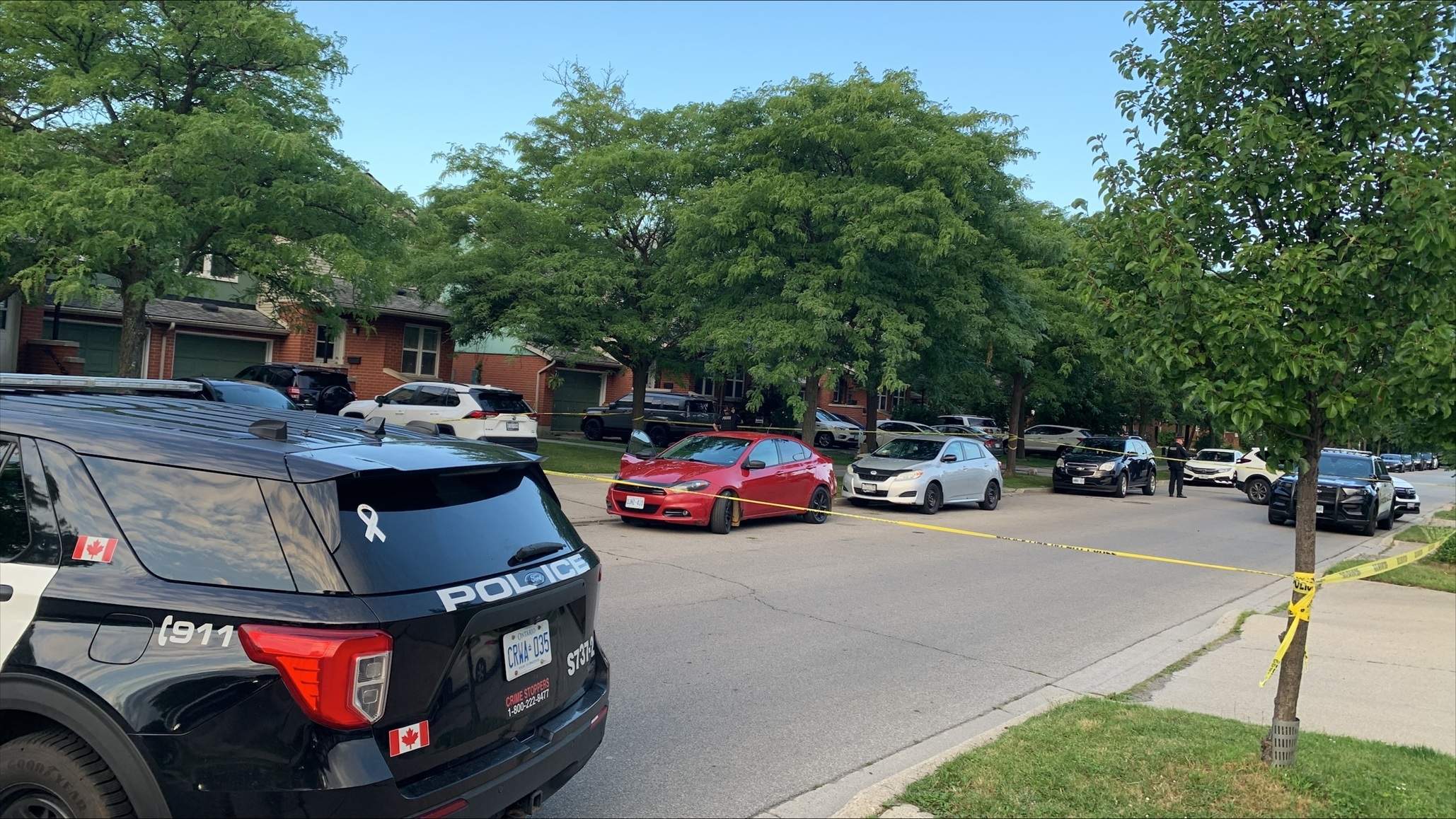
When Hamilton police hunt for a fifteen-year-old suspect in a double homicide, the lazy consensus demands a predictable performance. The public clamors for harsher punishment. Pundits pontificate about the moral decay of modern youth. Politicians promise more boots on the ground and tougher juvenile sentencing laws. Everyone gets to feel righteous for forty-eight hours, and nothing changes.
This entire framing is backwards. Focusing purely on the age of a suspect or the brutality of the act lets the adults who built the environment off the hook.
The Myth of the Monster Child
We love to label troubled minors as monsters because it spares us the labor of examining our own complicity. A fifteen-year-old brain is biologically incomplete, structurally incapable of long-range risk assessment, and hyper-reactive to perceived threat. That is not an excuse for homicide; it is a neurological baseline. When a society packs children into underfunded neighborhoods, strips away mental health infrastructure, starves public education, and treats poverty as a personal vice, violent outbursts are not anomalies. They are design features.
I have spent decades watching criminal justice systems treat symptoms while ignoring root causes. Pouring resources into manhunts while starving prevention programs is like bailing water with a sieve while refusing to plug the hole in the hull.
Catching the suspect satisfies the public’s primal need for vengeance. It closes the case file. It lets the mayor hold a press conference about swift justice. But it does zero to prevent the next double homicide waiting to happen in a zip code engineered for despair.
The Data We Refuse to Look At
Let us look at the empirical reality of youth crime. Violent crime committed by minors rarely happens in a vacuum of pure malice. It correlates almost perfectly with three systemic failures: chronic educational abandonment, acute household trauma, and the total absence of economic mobility.
When a kid drops out or gets pushed out of school by zero-tolerance policies, they enter an informal shadow economy where violence is the primary currency of dispute resolution. Criminologists have tracked this loop for decades. Introduce a child to the foster care pipeline or chaotic housing instability, and the probability of violent criminal involvement spikes exponentially.
Yet, when a tragedy strikes, the media and law enforcement ignore these structural vectors. They isolate the individual, freeze-frame a mugshot, and ask the public to focus entirely on the horror of the crime while ignoring the factory that manufactured the criminal.
Stop Asking the Wrong Questions
People ask: How could a teenager do something so cold-blooded? Why are kids getting more violent?
These questions are traps. They assume the child acted as a fully autonomous agent in a neutral universe.
The correct question is: What kind of community do we operate where a fifteen-year-old views lethal force as a viable problem-solving tool?
If you want to stop teenage homicide, stop investing exclusively in reactive policing. Reactive policing is the most expensive, least effective form of public safety ever devised. It operates entirely on the backend of tragedy. It is the equivalent of designing a car with no brakes and hiring better paramedics.
The Uncomfortable Solution
An effective intervention strategy looks nothing like a police manhunt. It looks like aggressive, early-stage community stabilization. It looks like universal mental health access for children living in trauma zones. It looks like holding property owners, school boards, and municipal leaders accountable for structural neglect.
The downside of this approach is obvious. It is slow, expensive, and unglamorous. It does not provide the immediate emotional high of a perp walk or a breaking news alert. You cannot arrest your way out of a social crisis, no matter how many handcuffs you manufacture.
Until we stop treating teenage criminality as a sudden plague and start recognizing it as a predictable tax on our collective neglect, we will keep running the same miserable playbook over and over again. The teenager in the crosshairs didn't just fall from the sky. We built the ladder that put him there.