History is rarely polite. It usually arrives as an earthquake, shattering borders, sinking ships, and rewriting maps while men in smoke-filled rooms shout over ticker tape. Yet sometimes, history decides to take a quiet breath. Sometimes, history looks like a woman sitting by a sunny window in Surrey, pouring tea at a pace that suggests the afternoon has nowhere else to be.
Ethel Caterham has turned one hundred and seventeen.
To understand that number, you have to strip away the sterile coldness of the statistics. One hundred and seventeen years do not stack up neatly like bricks in a wall. They stretch, bend, and warp across eras that seem impossible for a single human consciousness to bridge. When Ethel was born in a Hampshire village in the fading summer of 1909, the world was powered by coal smoke and horse-drawn drays. Edward VII sat upon the British throne, and the Wright brothers were still considered eccentric tinkerers playing with dangerous toys. There were no commercial flights, no antibiotics, no radios in the parlor, and no concept of a world connected by glowing glass screens in every pocket.
Consider what happens next: a life unfolds that outlasts almost everything it was ever promised.
Ethel was the second youngest of eight children. Her girlhood smelled of damp English grass and woodsmoke, untouched by the impending catastrophe of the First World War, which would soon bleed the continent dry. When she was eighteen, an age when modern teenagers are scrolling through feeds in their bedrooms, Ethel packed a trunk and boarded a ship bound for India. Imagine the sheer, terrifying vastness of that journey in 1927. Weeks on the water, steaming through the Suez, stepping off the gangway into the blinding, spice-heavy heat of the subcontinent to work as an au pair for a military family.
She did not seek history; history simply happened around her while she kept her balance.
She met her husband, Norman, at a dinner party in 1931. He was a lieutenant colonel in the British Army, a man carved from a vanished military mold. Together, their lives became an exercise in imperial geography—postings in Gibraltar, Hong Kong, and across the shifting landscape of a shrinking British Empire. In Hong Kong, she did not merely adapt; she built. She started a nursery school, gathering other people's children into her arms while the drums of a different global conflict began to roll.
Time takes things away. That is the unspoken contract of longevity. If you live long enough to see the twenty-first century, you must also watch the gallery empty out. Norman passed away in 1976. Her daughters, born into a world of propeller planes and wireless radios, eventually predeceased her—a quiet, crushing sorrow that the news articles reporting her milestone birthdays always seem to gloss over with polite abstraction.
Yet Ethel remained.
She kept driving until she was ninety-seven. Think on that specific detail. Ninety-seven years old, gripping a steering wheel, navigating English roundabouts and country lanes with eyes that had watched the dawn of aviation. When a global pandemic shuttered the earth in 2020, locking young and old alike behind closed doors, Ethel caught the virus at one hundred and ten. The disease that felled millions of the vulnerable simply bounced off her, a minor inconvenience to a woman who had already survived the Spanish flu, two world wars, and the entire crumbling architecture of the twentieth century.
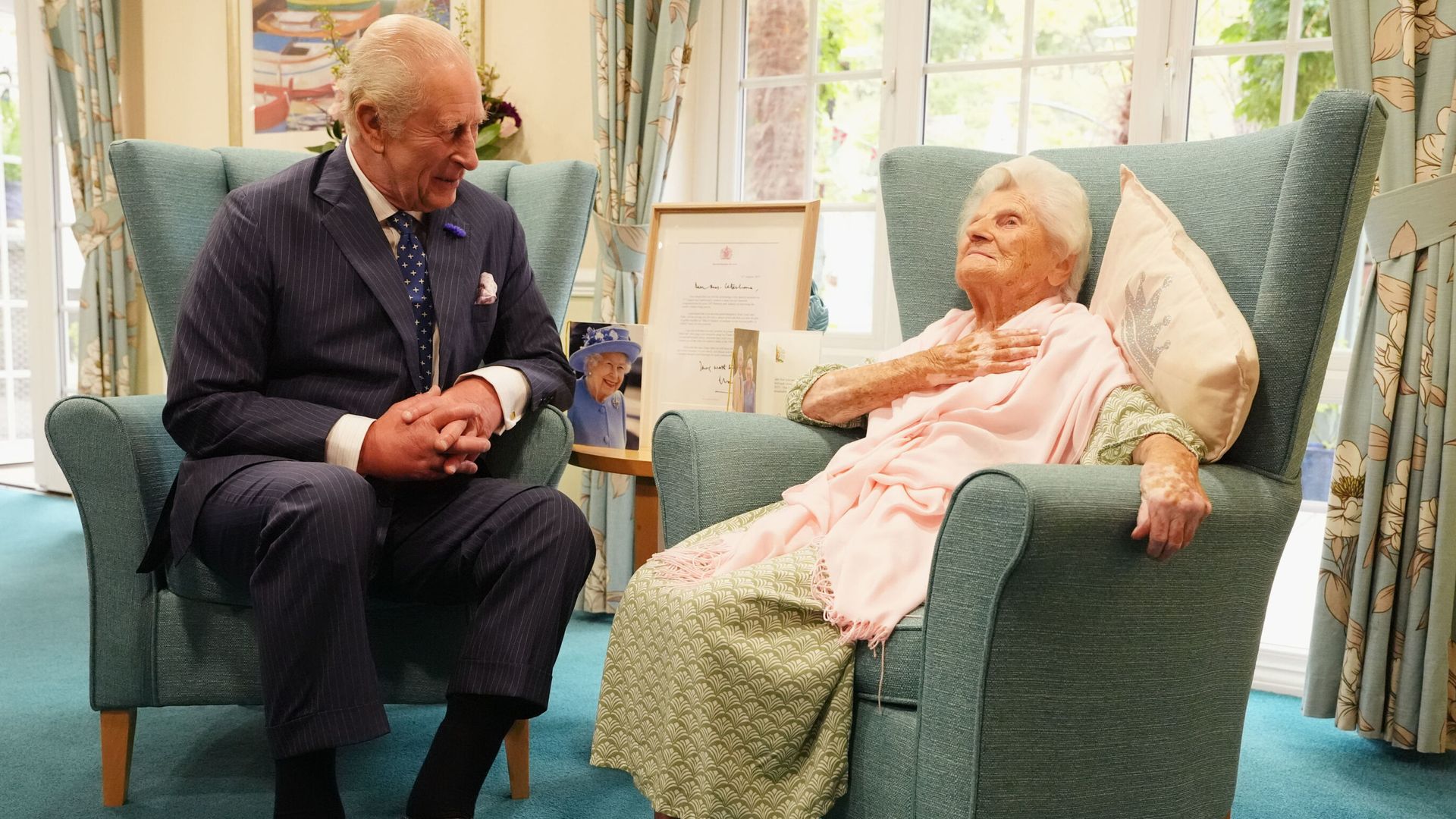
A year ago, she sat in a care home in Lightwater and reached out to hold the hand of King Charles. It was a strange, poetic inversion of time. She was the last surviving subject of Edward VII, greeting a monarch whose own grandfather was a toddler when Ethel was a young woman. As they spoke, she teased him about his 1969 investiture, reminding him that all the girls had been in love with him. The King laughed. For a brief moment, the centuries collapsed into a drawing room.
Longevity is often marketed today as a puzzle to be solved. Silicon Valley billionaires pour fortunes into biotech, searching for molecular switches, cold plunges, and synthetic compounds to squeeze an extra decade out of human biology. We treat aging like a technical malfunction in need of a patch.
But look at the quiet room in Surrey. Look at a woman who spent her life playing contract bridge, running a nursery school, and refusing to panic when the world caught fire. Ethel's secret wasn't a patented superfood or a Silicon Valley protocol. It was a fierce, steady refusal to rush. She lived at her own pace.
The world outside her window races faster every second, chasing algorithms and digital ghosts, desperate for the next distraction. But inside, a woman born when the twentieth century was still in its infancy marks another year, having touched a llama, held a king's hand, and outlived the very concept of the modern era.
The sun sets over the Surrey pines. The tea cools in the cup.