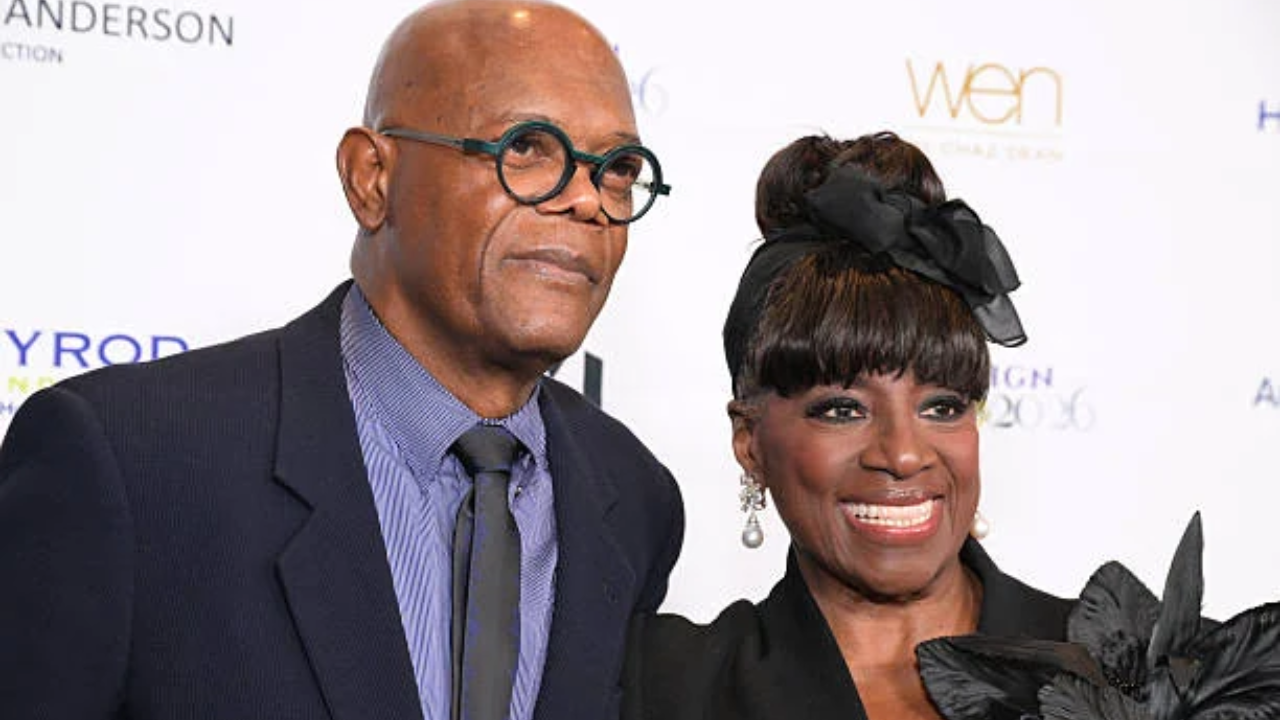
High-profile charitable recognition events function as capital acquisition mechanisms rather than mere public relations exercises. When an organization serving 50,000 families impacted by autism and Parkinson's disease honors cultural figures like Samuel L. Jackson and LaTanya Richardson Jackson, the transaction relies on converting reputational equity into liquidity for chronic care infrastructure. Standard media coverage frames these events around celebrity attendance and emotional resonance, missing the underlying operational economics that dictate how non-profit entities scale direct-to-family support systems.
The Structural Economics of Dual-Condition Nonprofits
Operating a support network across distinct neurological conditions—specifically Autism Spectrum Disorder (ASD) and Parkinson's disease—requires navigating divergent clinical timelines while consolidating administrative overhead. Autism is a neurodevelopmental condition requiring early intervention, behavioral therapy, and lifelong educational or vocational scaffolding. Parkinson's disease is a progressive neurodegenerative disorder demanding late-stage motor symptom management, caregiver respite, and adaptive physical environments.
At a surface level, combining these two populations within a single charitable mandate appears operationally fragmented. In practice, this architecture exploits shared back-office dependencies. Both conditions impose severe, multi-year financial and logistical burdens on family units rather than isolated individuals. By centering the operational model on the family unit as the primary recipient of aid, an organization amortizes fixed administrative costs across a larger addressable pool of donors and grant-makers.
The Three Pillars of Family-Centered Support Models
To sustain impact across 50,000 households without proportional linear increases in headcount, mature non-profit organizations deploy three specific operational mechanisms:
- Navigation and Triage Infrastructure: Families facing a new diagnosis encounter acute information asymmetry. They do not know which state waivers, insurance codes, or clinical trials apply to their specific presentation. Providing centralized case management reduces the friction cost of accessing existing public and private capital. One trained navigator can route hundreds of families toward third-party funding, multiplying the charity's direct financial impact without drawing down its own endowment.
- Micro-Grant Liquidity: Chronic neurological conditions generate recurring, uncovered expenses—specialized communication devices for non-verbal autism, or home mobility modifications for advanced Parkinson's. Traditional institutional grants move too slowly to address these immediate bottlenecks. Direct micro-grant programs bypass bureaucratic latency, deploying small sums of capital ($500 to $5,000) directly to vendors or families to resolve acute daily living barriers.
- Caregiver Retention Systems: The primary failure point in long-term home care is caregiver burnout, which forces premature institutionalization at massive systemic cost. Respite care funding and peer-support networks act as preventative maintenance for the household labor force.
Reputational Equity as a Fundraising Multiplier
Non-profit fundraising suffers from high customer acquisition costs (CAC). Direct mail, digital advertising, and cold grant writing yield diminishing returns as donor fatigue increases across the philanthropic sector. Honoring figures with deep, multi-generational cultural reach—such as Samuel L. Jackson and LaTanya Richardson Jackson—serves as a deliberate bypass of traditional donor acquisition funnels.
Mechanics of the Gala Revenue Engine
A fundraising gala built around high-tier honorees operates on a predictable financial architecture:
- Underwriting Fixed Event Costs: Corporate sponsors purchase tables and branding rights not out of pure altruism, but to associate their brand equity with respected cultural icons and gain access to high-net-worth peer networks. This corporate underwriting covers the venue, production, and catering overhead, ensuring that individual ticket sales and live auction proceeds flow directly to program reserves.
- Expanding the Donor Graph: An organization's existing board of directors possesses a finite network. Introducing external honorees with distinct professional spheres—film, theater, Broadway, and philanthropic leadership—grafts a new network onto the organization's existing donor graph. LaTanya Richardson Jackson's extensive background in theater and institutional philanthropy, paired with Samuel L. Jackson's global box-office visibility, bridges two separate capital pools: traditional arts patrons and mass-market entertainment executives.
- Signaling Institutional Legitimacy: High-profile honorees conduct due diligence before lending their names to a cause, as association with an inefficient charity carries reputational risk. Their public acceptance acts as a third-party audit for mid-tier and institutional donors, lowering the perceived risk of capital allocation.
Analyzing the 50,000-Family Scale Metric
When a charitable entity reports helping 50,000 families, analysts must disaggregate the metric to understand actual resource depth. In non-profit accounting, "families helped" is a broad denominator that encompasses radically different tiers of intervention intensity.
The Intervention Intensity Spectrum
Without granular financial statements, the 50,000-family figure must be evaluated across a standard three-tier service delivery curve:
- Tier 1: Broad-Reach Information and Digital Toolkits (High Volume, Low Unit Cost). The majority of the 50,000 metric typically resides here. This includes families downloading care guides, attending virtual webinars, or utilizing online resource directories. The marginal cost per family approaches zero once the intellectual property is developed, allowing rapid scaling of the top-line impact number.
- Tier 2: Direct Navigation and Community Programming (Moderate Volume, Moderate Unit Cost). This tier involves human capital—social workers answering helplines, local support group facilitation, and regional educational workshops. Scaling this tier requires linear increases in payroll, creating a hard ceiling on growth unless fundraising scales concurrently.
- Tier 3: Direct Financial Subsidies and Respite Care (Low Volume, High Unit Cost). Direct cash transfers, therapy scholarships, and funded respite hours represent the deepest level of intervention. Because these draw directly from unrestricted net assets, they serve the smallest fraction of the total 50,000 cohort, yet they generate the highest measurable improvement in household stability.
The strategic tension for any executive director lies in balancing Tier 1 growth against Tier 3 depth. Over-indexing on Tier 1 inflates public-facing impact metrics to impress gala sponsors, while starving Tier 3 leaves the most vulnerable households without material relief.
Structural Limitations of Celebrity-Anchored Philanthropy
Relying on high-profile honoree events to fund chronic neurological care introduces specific operational vulnerabilities that leadership teams must actively hedge against.
The Volatility of Event-Based Revenue
Gala revenue is episodic and heavily exposed to macroeconomic downturns. During periods of corporate belt-tightening, marketing and philanthropic sponsorship budgets are the first lines cut. If a charity relies on a single annual event for more than 30% of its operating budget, a sudden drop in corporate table sales forces immediate contractions in Tier 2 and Tier 3 programming—precisely when economic stress increases family demand for charitable subsidies.
Attention Spans Versus Chronic Timelines
Celebrity media cycles operate on a 24-to-72-hour news window. Autism and Parkinson's disease operate on multi-decade timelines. The publicity surge generated by honoring Samuel L. Jackson and his wife creates a brief spike in web traffic and small-dollar inbound donations. Without an automated donor-retention funnel—such as monthly recurring giving conversion workflows and targeted email onboarding—over 80% of first-time event-driven donors will churn within twelve months.
Mission Drift Risk
To attract A-list talent and major sponsors, organizations often tailor their messaging toward broad, uplifting narratives of "awareness" and "inspiration." However, families managing severe non-verbal autism or late-stage Parkinson's require unglamorous, complex interventions: incontinence supplies, behavioral crisis intervention, and legal guardianship assistance. Organizations risk distorting their program allocation toward easily marketable initiatives while underfunding critical, less photogenic necessities.
Capital Deployment and Donor Conversion Protocol
Organizations executing high-profile recognition events must treat the event not as a culmination, but as the top of an operational acquisition funnel. To convert transient celebrity publicity into durable funding for neurological care, leadership teams should execute four structural adjustments:
- Segregate Gala Proceeds into Multi-Year Reserve Tranches: Allocate 100% of net gala proceeds into a restricted 24-month rolling program fund rather than absorbing them into immediate annual payroll. This insulates direct family micro-grants from single-year event volatility.
- Deploy Immediate Post-Event Conversion Architecture: Capture all secondary traffic generated by the honoree press cycle within 48 hours using dedicated landing pages tied to specific, tangible unit costs (e.g., funding one hour of Parkinson's respite care or one assistive communication tablet for an autistic child).
- Publish Tiered Impact Accounting: Break down the 50,000-family metric in annual reports by explicitly separating digital resource reach from direct financial disbursements. Institutional foundations increasingly penalize blended metrics that obscure actual per-family capital deployment.
- Formalize Honoree Advisory Roles: Transition honorees from one-night ceremonial participants into targeted policy or corporate-introduction liaisons, utilizing their access to secure multi-year institutional grants from entertainment industry foundations rather than relying solely on individual ticket sales.