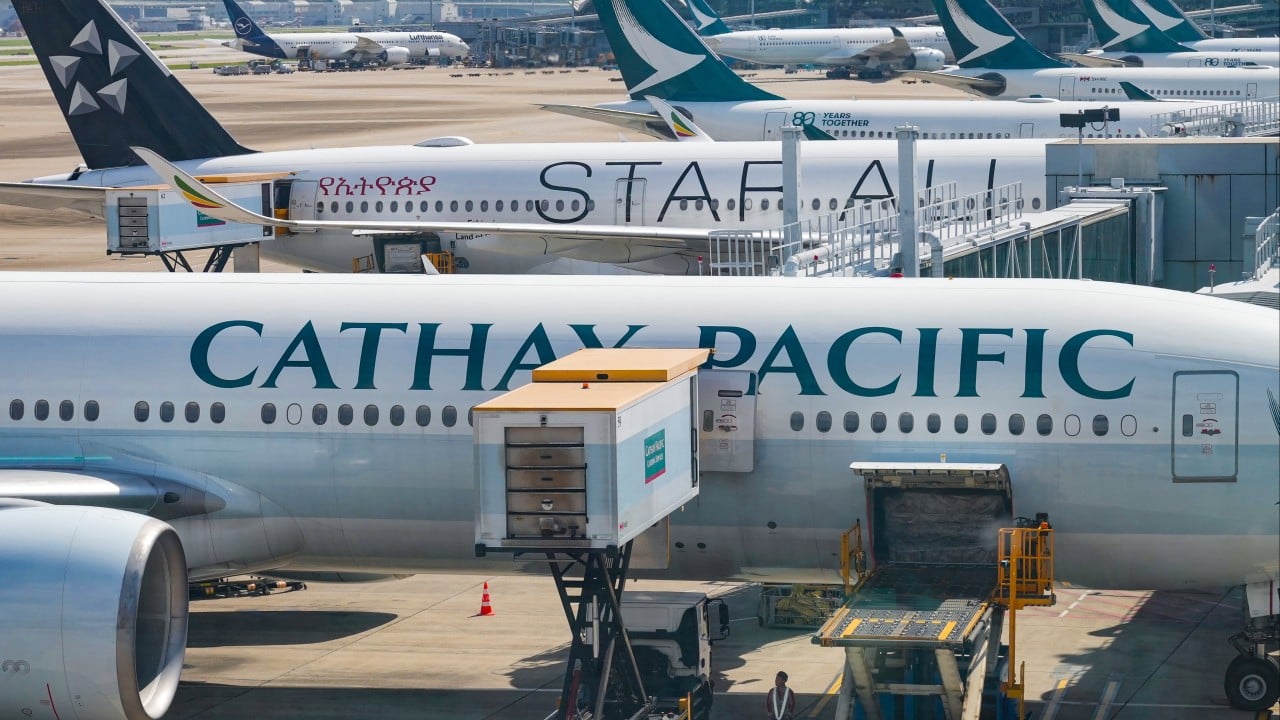
Industry rankings love a comfortable narrative. When the latest aviation scorecards drop and Crown Prince icons like Cathay Pacific secure yet another bronze medal for retaining their third-best airline title alongside shiny badges for cabin crew and lounges, the aviation press corps pops the champagne. They pen predictable paeans to service recovery, polished walnut bulkheads, and the return of the Cathay signature hospitality.
It is a comforting illusion. It is also completely detached from what is happening at thirty-five thousand feet.
If your primary metric for airline quality is how warmly a flight attendant hands you a glass of Billecart-Salmon while you sit in a newly minted business class suite, then yes, Cathay Pacific deserves its pedestal. But if your metric is operational reality, schedule reliability, network resilience, and the actual consumer value proposition delivered to paying passengers who aren't flying on corporate contracts or mileage redemption jackpots, the third-best ranking is a joke.
I have watched legacy carriers burn billions of dollars maintaining the theater of luxury while their core product rots from the inside out. Let's dissect the corporate consensus and look at the structural decay hidden behind shiny lounge awards.
The Lounge Trap and the Death of Network Density
Skytrax awards love real estate. If an airline spends eighty million dollars building a marble-clad sanctuary featuring a noodle bar at Hong Kong International Airport, judges swoon. The Cathay lounge experience is treated as an untouchable benchmark.
Here is the dirty secret of aviation: lounges are a distraction. They are sophisticated marketing budgets designed to divert attention from the decay of the actual journey.
When you praise an airline for its lounges, you are celebrating the fact that passengers have to spend more time waiting in them because the carrier's network density has collapsed. A passenger sitting for four hours in The Pier or The Wing is not experiencing elite service; they are experiencing schedule fragmentation.
Look at Cathay’s post-pandemic recovery timeline. For years, while competitors aggressively rebuilt frequencies and route options across secondary Asian and European markets, Hong Kong's hometown carrier crawled backward. Capacity constraints, pilot attrition, and sluggish fleet re-activation left massive gaps in their schedule. When you fly a trunk route twice a day instead of five times a day, a missed connection means twenty-four hours stranded. No amount of dan dan noodles in a designer lounge makes up for a lost day of your life because the airline lacks operational redundancy.
The lazy consensus says luxury masks operational mediocrity. The brutal reality is that luxury is often used as a smoke screen to justify reduced frequencies, inflated ticket prices, and deteriorated point-to-point utility.
Cabin Crew Perfection Versus Systemic Frustration
Let us talk about the cabin crew award. Cathay’s flight attendants are world-class professionals. They endure grueling training regimens, maintain immaculate composure during turbulence, and execute service flows with surgical precision. I have never experienced a genuinely rude crew member on a Cathay long-haul flight.
Yet, praising the cabin crew while ignoring the passenger experience outside the cabin is like praising the leather upholstery on a car with a cracked engine block.
Consider what happens before you ever step onto the aircraft. The customer service infrastructure—from automated call centers designed to stonewall refund requests to mobile apps that fail to process basic rebookings during routine weather disruptions—is hostile by design. When a typhoon hits the South China Sea or an air traffic control restriction ripples through the Pearl River Delta, the frontline crew bears the brunt of passenger rage because the back-end infrastructure is built to minimize corporate liability rather than solve human problems.
An award for cabin crew excellence in isolation rewards human sacrifice. It honors underpaid or overworked frontline staff who must absorb the shockwaves of corporate mismanagement and scheduling strain. When management points to a cabin crew trophy, they are celebrating their employees' ability to smile through systemic chaos.
The Myth of Premium Consistency
Another pillar of the third-best narrative is the hard product. The Aria Suite in business class, the refreshed regional narrowbodies, the first-class private rooms—these are marketed as triumphs of engineering and design.
Aviation consultants talk about these hard products as if they represent the baseline experience. They do not. They represent the top five percent of the airline's inventory, occupied disproportionately by corporate elites, cash-upgrade gamblers, and frequent flyer loyalists using points.
Meanwhile, look at the economy and premium economy cabins on high-density regional routes. The seat pitch shrinks, catering budgets get squeezed through aggressive margin management, and the high-density configurations on regional jets turn a four-hour flight into a test of physical endurance.
True airline quality is not measured by how comfortable the flatbed is on a midnight flight from London to Hong Kong. It is measured by how the airline treats every single passenger, regardless of ticket class, when things go wrong. When an airline maintains a pristine first-class image while its economy product resembles a low-cost carrier with a legacy price tag, the overall rating is an exercise in marketing fiction.
Dismantling the Skytrax Echo Chamber
Why do these rankings persist? Because aviation journalism is largely an echo chamber of press junkets, inaugural flight invitations, and recycled PR copy. Skytrax relies on passenger surveys that skew heavily toward frequent flyers who prioritize lounge access and elite status perks over operational reliability and baseline consumer fairness.
If you fly twice a year, buy a standard economy ticket, and need to get from point A to point B on time without your luggage ending up in Manila while you are in Taipei, Cathay Pacific’s ranking feels completely disconnected from your reality.
We need to stop evaluating airlines like restaurants. An airline is not a hospitality brand; it is a complex logistics utility that happens to serve champagne. If the logistics fail, the champagne is irrelevant.
Stop chasing the bronze medal narratives. If you want to know how good an airline actually is, look at their cancellation rates, their spare aircraft ratio, their cargo reliability, and how quickly their digital systems refund your money when they break their contract of carriage.
Until those metrics drive the headlines, third-best is just another way of saying nobody is looking at the engine room.