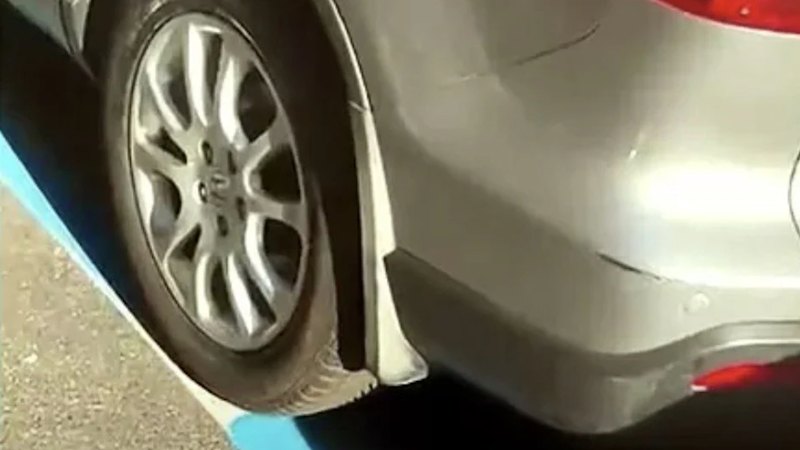
Picture this. You manage to find a rare parking spot on a chaotic street in Rome. You leave your car, go about your day, and return to find something bizarre. The city council decided to repaint the parking lines while you were gone. Instead of towing your vehicle or waiting for you to move, the maintenance crew simply painted the fresh blue lines right up to your tires, skipped the space under your chassis, and picked up the brush on the other side.
Then came the punchline. A traffic warden walked by and slapped a fine on your windshield. The reason? You were parked outside the freshly painted lines.
It sounds like a sketch from a comedy show, but it's a real slice of life from Italy's capital. Local residents recently documented this exact scenario, sharing photos of cars trapped in partially painted boxes, complete with parking tickets tucked under the wipers. It is peak Italian bureaucracy. It's funny, frustrating, and entirely predictable if you have spent any time driving in the Eternal City.
The Gridlock of Roman Rules
Driving in Rome is already an extreme sport. The city holds roughly three million residents in a space a fraction of the size of London or New York, and it feels like every single person owns a car. Space is at an absolute premium. When you add ancient, winding cobblestone alleys and strict Limited Traffic Zones (ZTL) into the mix, finding a legal parking space feels like winning the lottery.
But the real challenge isn't just finding a spot. It's understanding the color-coded trap you are walking into. Italy uses a strict color system for street parking, and mixing them up gets expensive:
- White Lines: Free parking, though usually with a strict time limit that requires a dashboard parking disc.
- Blue Lines: Paid parking zones where you must feed the meter and display your receipt.
- Yellow Lines: Strictly reserved for disabled permit holders, taxis, or official residents.
In this recent painting fiasco, drivers parked legally within old, fading blue lines. But when the city council decided to refresh the paint, they didn't bother placing temporary "No Parking" signs ahead of time. The crew showed up, painted around the obstacles, and left the traffic wardens to clean up the financial windfall.
When Logic Deserts the Eternal City
The irony here is brutal. The drivers didn't do anything wrong when they turned off their engines. They paid their fees, tucked their tickets neatly on the dashboard, and walked away. They only became code-breakers because the lines literally shifted beneath their tires.
This isn't an isolated incident of administrative weirdness. Anyone who has dealt with Italian municipal services knows that logic often takes a back seat to sheer compliance with the letter of the law. The painter's job description says to paint the street, not to move cars. The traffic warden's job description says to fine cars that are not fully inside the lines. Neither script accounts for the overlapping absurdity of the two tasks happening at the same time.
If you are renting a car or driving through Rome as a tourist, this kind of trap can cost you anywhere from €41 to over €80. Worse, if you are driving a rental, the agency will tack on a hefty administrative fee just to process the ticket and forward it to your home address months after your trip ends.
How to Protect Your Wallet From Curb Rules
You cannot always predict when a paint crew will target your parking space, but you can minimize your chances of getting caught in Rome's administrative crosshairs.
First, never trust a spot just because other cars are parked there. Romans are notorious for creative parking. You will see vehicles dumped on sidewalks, blocking pedestrian crossings, and double-parked in the middle of active lanes. Just because a local got away with it doesn't mean your rental car won't get targeted.
Second, look up. Always check the vertical signs on the sidewalk near your parking space. The painted lines on the tarmac are only half the story. The street signs tell you the exact hours the restrictions apply, when the street sweepers come through, and whether the space transforms into a loading zone at dawn.
If you want absolute peace of mind, skip street parking entirely in major Italian historic centers. Look for a public or semi-private parking garage (marked with a blue "P" sign). Yes, it costs more than a couple of euros in a blue zone. But paying a flat daily garage fee is much cheaper than dealing with a localized paint job and a surprise ticket from a warden who followed the rules way too literally.