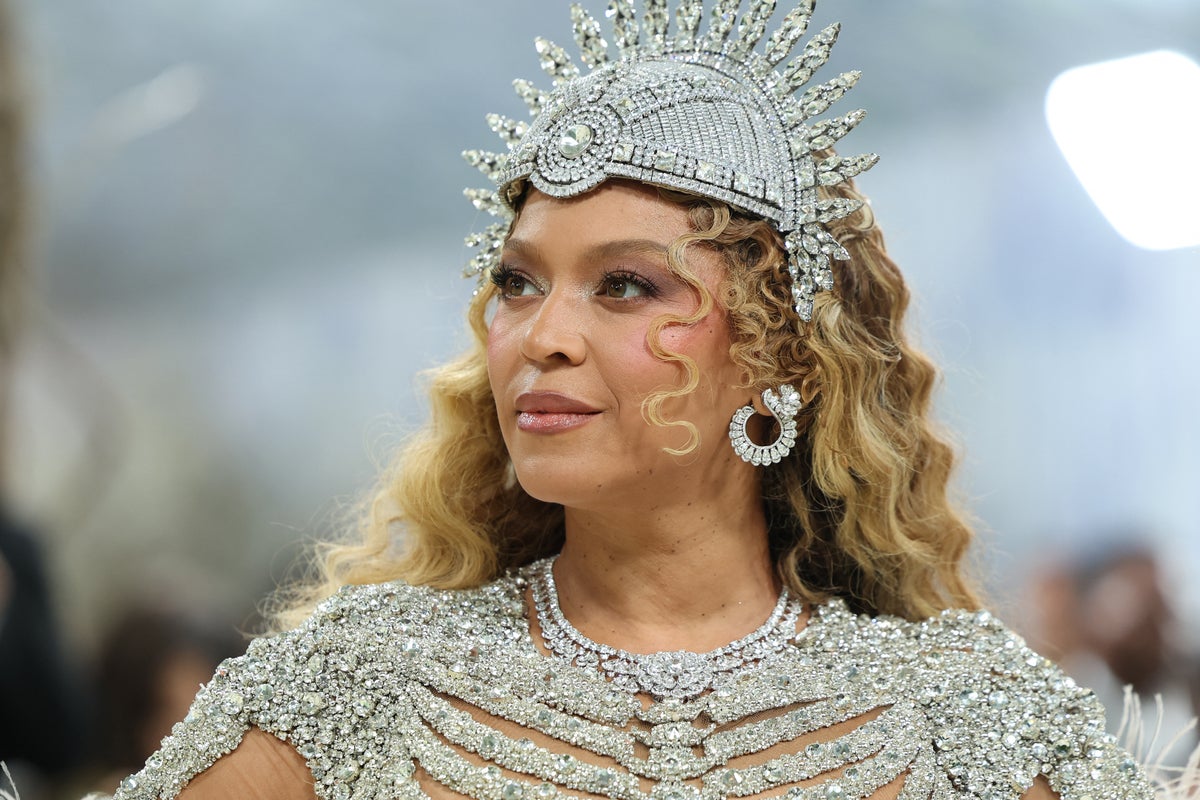
The red carpet at the Palais des Festivals serves as a barometer for the global film economy, and the 2026 opening ceremony just signaled a massive shift in how the industry hedges its bets. By positioning Jane Fonda and Gong Li as the dual faces of the festival’s commencement, Cannes organizers moved beyond mere nostalgia. They executed a calculated geopolitical play. This pairing bridges the gap between the waning dominance of the North American market and the indispensable, if volatile, influence of Chinese box office capital.
Fonda represents the enduring legacy of Hollywood activism and prestige, while Gong Li remains the undisputed bridge to the East. Their presence together on the steps of the Palais wasn't a coincidence of scheduling. It was a message to investors that the theatrical experience is fighting for its life by clinging to the few icons who still command universal recognition across borders. You might also find this similar coverage useful: The Cinerama Dome is finally coming back and it about time.
The Economics of the Red Carpet
Behind the flashbulbs and the couture lies a brutal financial reality. The film industry is currently fractured between streaming giants and a theatrical model that is struggling to regain its pre-pandemic footing. Cannes, long the gatekeeper of high-brow cinema, finds itself needing to prove that it can still generate the kind of "water cooler" moments that drive ticket sales and distribution deals.
Jane Fonda’s involvement is a masterstroke in demographic targeting. She appeals to the silver-dollar audience—the only demographic still reliably showing up to physical cinemas for non-superhero fare. But Fonda also carries the weight of "brand safety." In an era where new stars are often one "canceled" tweet away from a marketing disaster, a veteran like Fonda offers a predictable, high-value return on prestige. As extensively documented in detailed reports by IGN, the results are worth noting.
The Gong Li Factor
Gong Li’s role in this year's opening is even more strategic. The Chinese film market has become increasingly insular, with domestic productions often outperforming Hollywood imports. By elevating Gong Li, Cannes is effectively lobbying for continued access to Chinese screens. She is one of the few performers who commands respect from both the Beijing film establishment and Western critics.
Her presence is a diplomatic olive branch. It suggests that despite the trade tensions and the tightening of censorship, the cinematic world still views China as a central pillar of the creative community. For a festival that prides itself on being the "Olympics of Film," ignoring the world's second-largest economy is no longer an option.
The Death of the Traditional Star System
We are witnessing the final gasps of the traditional star system. Today, "fame" is cheap and easily manufactured through social media algorithms, but "stature" is increasingly rare. The decision to lead with two women whose careers span decades highlights a terrifying truth for the major studios: they have failed to cultivate a new generation of actors with comparable staying power.
Look at the current crop of talent. Many are famous for being famous, or for playing a specific character in a multi-film franchise. Few can carry a film on the strength of their name alone. Fonda and Gong Li are the exceptions. They represent a time when a lead actor was a guarantee of quality and a magnet for international distribution rights.
Risk Management in High-Stakes Cinema
The "why" behind this selection also stems from risk management. Producing a film that qualifies for a Cannes competition slot is an expensive gamble. Investors are no longer willing to back experimental projects unless there is a tether to a recognizable, authoritative face.
This creates a bottleneck. If every major festival and high-budget indie relies on the same rotating cast of ten to fifteen global icons, the "new voices" that Cannes claims to champion are pushed to the sidelines. We are seeing a "gentrification of the red carpet," where the entry price for relevance is a forty-year filmography.
The Streaming Shadow
Netflix, Apple, and Amazon have fundamentally changed the stakes for Cannes. These platforms don't need a red carpet to find an audience; they have data. Cannes, however, relies on the physical spectacle to maintain its status as the ultimate arbiter of taste.
The opening ceremony is a defensive maneuver against the algorithm. By emphasizing the tactile, the glamorous, and the historical, the festival is trying to sell the idea that some things cannot be replicated on a smartphone screen. Fonda and Gong Li embody the "theatrical experience." They belong to the era of the big screen, and their presence serves as a reminder of what is lost when movies are relegated to background noise in a living room.
The Problem with Curation
There is a growing tension between the festival's artistic goals and its commercial needs. To remain relevant, Cannes must showcase the most innovative films from around the world. But to stay funded, it needs the glitz that only Hollywood and international superstars can provide.
This year’s opening feels like a compromise. It is a beautiful, high-fashion shield intended to deflect criticism that the festival is becoming a relic. If you can keep the world's media focused on two legendary actresses, they might not notice that the mid-budget drama is effectively extinct.
Cultural Diplomacy or Marketing Stunt
Critics will argue that pairing Fonda and Gong Li is a hollow gesture toward diversity and longevity. They will say it is a marketing stunt designed to generate "prestige" by association. However, this ignores the practical necessity of such alliances.
Cinema is a soft power tool. When Fonda speaks about environmental issues or Gong Li speaks about the evolution of Asian storytelling, they are doing more than promoting a movie. They are shaping the narrative of what "global culture" looks like. In 2026, that narrative is being tugged in two directions: toward the hyper-local and the hyper-global.
The North-South Divide
The industry is also grappling with a shift in where the money is coming from. While the US and China dominate the conversation, the "Global South" is becoming an increasingly important player in production and consumption. Cannes is trying to position itself as the neutral ground where these different worlds can meet.
The opening ceremony is the pitch deck for this vision. It says that Cannes is still the place where the West (Fonda) and the East (Gong Li) can find common ground, even if that ground is just a carpeted staircase in the south of France.
The Reality of Aging in the Spotlight
One cannot ignore the optics of two women in their 60s and 80s commanding the most prestigious stage in film. In an industry notoriously hostile to aging women, this is a significant statement. But we must be careful not to mistake it for a systemic change in Hollywood's DNA.
Fonda and Gong Li are allowed to age because they have become "brands." They are safe. The industry is happy to celebrate them because they represent a known quantity. The real test is whether the industry will extend this same grace to the women who don't have a shelf full of awards or a global fan base.
Moving Beyond the Flashbulbs
The success of the 2026 festival won't be measured by the photos of the opening night. It will be measured by the deals signed in the backrooms of the Marché du Film. It will be measured by whether a director from South America or West Africa can find the funding to finish their next project because a major distributor was lured to the festival by the promise of seeing Jane Fonda.
The stars are the bait. The business is the hook.
The Future of the Festival Circuit
If Cannes wants to survive another decade, it has to decide if it is a museum or a marketplace. Currently, it is trying to be both, and the strain is showing. The reliance on the "Old Guard" is a temporary fix for a much larger problem: the disconnect between how films are made and how they are actually watched.
The festival is betting that the aura of the "Movie Star" is enough to keep the lights on. It is a high-stakes play that assumes the public still cares about the hierarchy of fame. If the 2026 opening proved anything, it's that the industry is desperate for a return to the days when a single face could unite a global audience.
The industry needs to stop treating diversity and age as a biennial celebration and start treating them as the baseline for a sustainable business model.