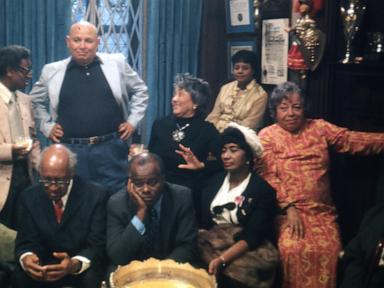
The international press corps is currently swooning on the Croisette over Once Upon a Time in Harlem, a film that sat in a vault for five decades before being dusted off for a celebratory screening. The collective narrative pouring out of the festival is utterly predictable. Critics are weeping over the "belated justice" served to a forgotten work of Black cinema. They are patting themselves on the back for celebrating a movie fifty years after the final clapboard snapped shut.
It is a comforting, self-congratulatory fairy tale. It is also an absolute sham.
Let us stop pretending that a retrospective screening at a European festival undoes a half-century of systemic neglect, or worse, that it represents a functional model for film preservation and distribution. The sudden reverence for Once Upon a Time in Harlem does not prove that the industry is changing. It proves that the industry loves the aesthetics of a resurrection far more than it cares about sustaining living artists.
I have spent twenty years navigating the film distribution racket, watching executives shell out millions on vanity restoration projects while denying micro-budgets to contemporary directors who are trying to shoot in upper Manhattan today. The celebration of this film isn't a victory for Black cinema. It is a masterclass in low-stakes institutional guilt alleviation.
The Anatomy of the Half-Century Hype
The current consensus surrounding Once Upon a Time in Harlem relies on a deeply flawed premise: that a film's delayed validation makes its eventual discovery more poetic.
This is a dangerous romanticization of failure.
When a movie sits unreleased for fifty years, it isn't "waiting for its moment." It was strangled by a distribution system that historically viewed Black art as either a hyper-regional novelty or an unprofitable risk. The fact that audiences in 2026 can finally watch a film shot in 1976 is a tragedy of lost cultural momentum, not a triumph of preservation.
Think about what actually happens when a piece of cinema is buried for five decades:
- The cultural conversation is permanently stunted. A film interacts with the world it was born into. Once Upon a Time in Harlem was meant to speak to the post-Civil Rights era, to the economic realities of New York City in the mid-seventies, and to the immediate peers of its creators. Screening it now turns vital, immediate art into a historical artifact.
- The economic loop is broken. The filmmakers, actors, and crew members were denied the residuals, the career leverage, and the immediate funding for subsequent projects that a successful 1970s release would have generated. A standing ovation in a French theater cannot retroactively fund a director’s sophomore or junior feature that never got made.
- The industry shifts the blame to time. By treating the film's disappearance as a quirk of history—a "lost gem discovered in an attic"—festivals absolve the actual structures that buried it. It wasn't time that hid this film. It was a conscious choice by exhibitors, distributors, and financiers who locked the gates.
The Cannes Alibi: Why Festivals Love Dead Art
The major European film festivals have perfected the art of the prestige resurrection. It is an incredibly efficient strategy for building progressive cultural capital without taking any actual financial or creative risks.
Screening a newly restored masterpiece from 1976 costs a festival virtually nothing in terms of reputation. The artistic merit of the film has already been vetted by time and curation. The political messaging is safe because the villains of the story—the studio executives who originally rejected the film—are either dead or long retired. The festival gets to position itself as a heroic archivist, a savior of lost culture, without having to program a messy, controversial, unpolished film by an unknown director from contemporary Harlem who is currently begging for a fraction of that restoration budget.
Imagine a scenario where the money spent on the complex physical restoration, the international shipping, the PR campaigns, and the red-carpet travel for Once Upon a Time in Harlem was instead pooled into a blind grant for three teenage filmmakers currently living on 125th Street. The industry won't do that because living filmmakers are unpredictable. They make demands. They criticize current executives, not past ones. Dead or dormant projects, by contrast, are perfectly compliant. They allow institutions to claim allyship with the past while ignoring the crises of the present.
Dismantling the Distribution Myth
The standard question asked by film journalists this week is: How can we ensure more lost films like this are found?
That is the wrong question. It accepts the premise that the primary problem facing marginalized cinema is an archival one. The real question we should be asking is: Why are we still using a distribution model that guarantees current independent films will face the exact same fate fifty years from now?
The current independent film market is a graveyard. The streaming monopolies have choked out traditional theatrical windows for mid-budget dramas. The algorithmic discovery engines prioritize homogenized content designed for passive consumption. Right now, as you read this, there are dozens of brilliant, completed features by Black, Indigenous, and working-class filmmakers sitting on hard drives, unable to secure a distribution deal because they don't fit the rigid formatting requirements of major subscription platforms.
We are actively creating the "lost films" of 2076 right now.
The hypocrisy is staggering. The same industry figures who applaud a 50-year-old independent film in a 1,000-seat theater are the ones signing off on algorithms that bury contemporary independent films under mountains of intellectual property reboots and superhero spin-offs. They treat Once Upon a Time in Harlem as an anomaly, an exception to the rule, rather than the inevitable result of their own business practices.
The Cost of the Curatorial Gaze
There is a distinct downside to this contrarian view, and it is worth acknowledging. The restoration of Once Upon a Time in Harlem is a technical marvel. The colors are vibrant; the sound design has been meticulously cleaned; the performances are undeniably brilliant. The film deserves to be seen, and the archivists who physically labored over the celluloid did incredible work.
But we must separate the technical preservation of art from the cultural exploitation of its recovery.
When we allow the industry to turn these events into celebratory milestones, we accept a narrative of progress that does not exist. We look at a single film that escaped the vault and conclude that the system works, albeit slowly.
It does not work.
The reality of independent film distribution is a brutal numbers game. For every film like Once Upon a Time in Harlem that gets a glamorous festival revival, hundreds of others decompose in storage facilities, their soundtracks vinegarizing and their magnetic tapes demagnetizing into oblivion.
Stop Applauding the Bare Minimum
If the film community actually wants to honor the legacy of Once Upon a Time in Harlem, it needs to stop crying in the dark at Cannes and start changing how money moves in the real world.
Stop treating the discovery of neglected art as a miracle. Treat it as an indictment.
Every time a film like this is unearthed, it should be met with anger, not just applause. It should spark hard, uncomfortable questions about who holds the keys to the vaults, who decides what constitutes "commercial viability," and why the industry only seems to value Black cinematic genius once it has been safely neutralized by the passage of five decades.
We do not need more anniversary screenings of films that should have been hits during the Carter administration. We need immediate, aggressive funding for the filmmakers who are trying to capture the world today. We need distribution mandates that force platforms to exhibit independent art. We need to dismantle the curatorial monopoly that allows a handful of European festival programmers to decide which historical wrongs are trendy enough to correct.
The standing ovation in Cannes wasn't for the filmmakers of Once Upon a Time in Harlem. It was the industry clapping for itself for being brave enough to watch a movie that should have been in theaters when Gerald Ford was in office.