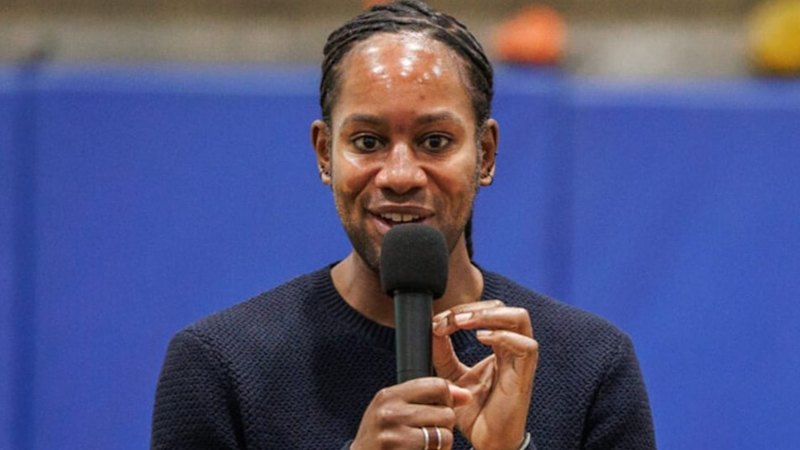
The academic establishment just shot itself in the foot and called it progress. When a star scholar at Cambridge steps down amid a flurry of plagiarism accusations, the herd immediately reaches for the pitchforks. They cry foul. They demand academic integrity. They act as if science and literature are pristine laboratories where ideas emerge immaculate, fully formed from the ether like Athena from the head of Zeus.
It is a comforting fantasy for mediocrity. It is also completely detached from how intellectual progress actually happens.
I have spent decades watching institutions panic the moment a high-profile academic gets caught blurring the lines of attribution. I have seen universities burn millions of dollars in legal fees and PR management to sanitize their brands, sacrificing brilliant minds on the altar of bureaucratic compliance.
Let us stop pretending that modern citation culture has anything to do with honoring intellectual property. It has everything to do with risk mitigation, administrative paranoia, and a system terrified of its own irrelevance.
The Myth of Original Thought
The standard narrative surrounding academic dishonesty rests on a fundamental falsehood: that original thought is common, easily traceable, and cleanly bounded.
It is none of those things.
Human knowledge is a sprawling, collective soup. We read thousands of books, absorb hundreds of conversations, listen to podcasts, scroll through research papers, and forget where half our opinions originated. When a prolific researcher produces millions of words across a career, the boundaries between internalized influence and direct transcription begin to blur.
Yet, institutional committees apply a mechanical standard of perfection to human cognition. They run software designed to flag matching strings of text, treating a shared phrase the same way they treat intellectual theft.
Imagine a scenario where a mathematician working on topology independently derives a proof that bears a 90 percent linguistic and structural resemblance to an obscure paper published in a regional journal twenty years prior. Did they steal? Or did two minds operating under the same constraints arrive at the inevitable conclusion of the math?
Current institutional frameworks treat both scenarios as a capital offense. That is not justice. That is intellectual illiteracy disguised as rigor.
The Bureaucracy of Bureaucrats
Why do universities react with such disproportionate fury to plagiarism scandals? Follow the incentives.
Cambridge does not panic because a footnote was misplaced. Cambridge panics because of ranking agencies, donor relations, and brand perception. Modern universities function less like monasteries of thought and more like risk-averse multinational corporations.
When a star scholar brings in millions in grant funding and dominates public discourse, the administration loves them. But the moment that same scholar becomes a liability on Twitter or triggers a compliance review, the institution pivots instantly. They throw the researcher under the bus to protect the endowment.
The hypocrisy is breathtaking. These same institutions routinely appropriate the uncredited labor of graduate students and adjunct professors, wrapping it in the university crest and calling it institutional output. But let a tenured professor misattribute a paragraph of background context in a secondary monograph, and the hounds are released.
We have created an administrative class that values the correct formatting of a bibliography far more than the generation of breakthrough insights.
The Real Cost of Academic Puritanism
When you penalize high-output researchers for sloppy citation mechanics rather than intellectual fraud, you alter the behavior of every ambitious mind in the system.
You incentivize playing it safe.
Researchers stop pushing boundaries. They stop synthesizing massive, cross-disciplinary arguments because the risk of missing a quotation mark becomes too high. Instead, they produce hyper-niche, hyper-defensive micro-papers that nobody reads, cites, or cares about. They pad their bibliographies with unnecessary citations just to appease automated checkers, turning scholarship into an exercise in bureaucratic compliance rather than truth-seeking.
This is why modern academia feels increasingly stagnant. We have traded intellectual audacity for clerical safety.
True scholarship is messy. It is aggressive, iterative, and frequently borrows heavily from the past to construct the architecture of the future. Isaac Newton famously admitted that if he had seen further, it was by standing on the shoulders of giants. He did not spend his time worrying whether his boots were scuffing their shoulders.
What Real Accountability Looks Like
None of this is an endorsement of intellectual theft. Actual plagiarism—stealing the novel empirical findings, structural breakthroughs, or unique analytical frameworks of another researcher and passing them off as your own original labor—is a cancer on the scientific method. It undermines trust and poisons the well.
There is a vast, unbridgeable chasm between stealing someone's life work and messing up the citation of a standard historical background paragraph.
Our current systems refuse to acknowledge that distinction. They treat a misplaced citation mark with the same moral outrage as data fabrication.
Until academic institutions learn to distinguish between administrative sloppiness and actual intellectual dishonesty, they will continue to purge their best minds while protecting the gray bureaucrats who never risked an original thought in their lives.
Cambridge lost a great scholar this week. The university thinks it defended its honor. It just proved it cares more about paperwork than progress.
Stop policing footnotes. Start funding courage.


