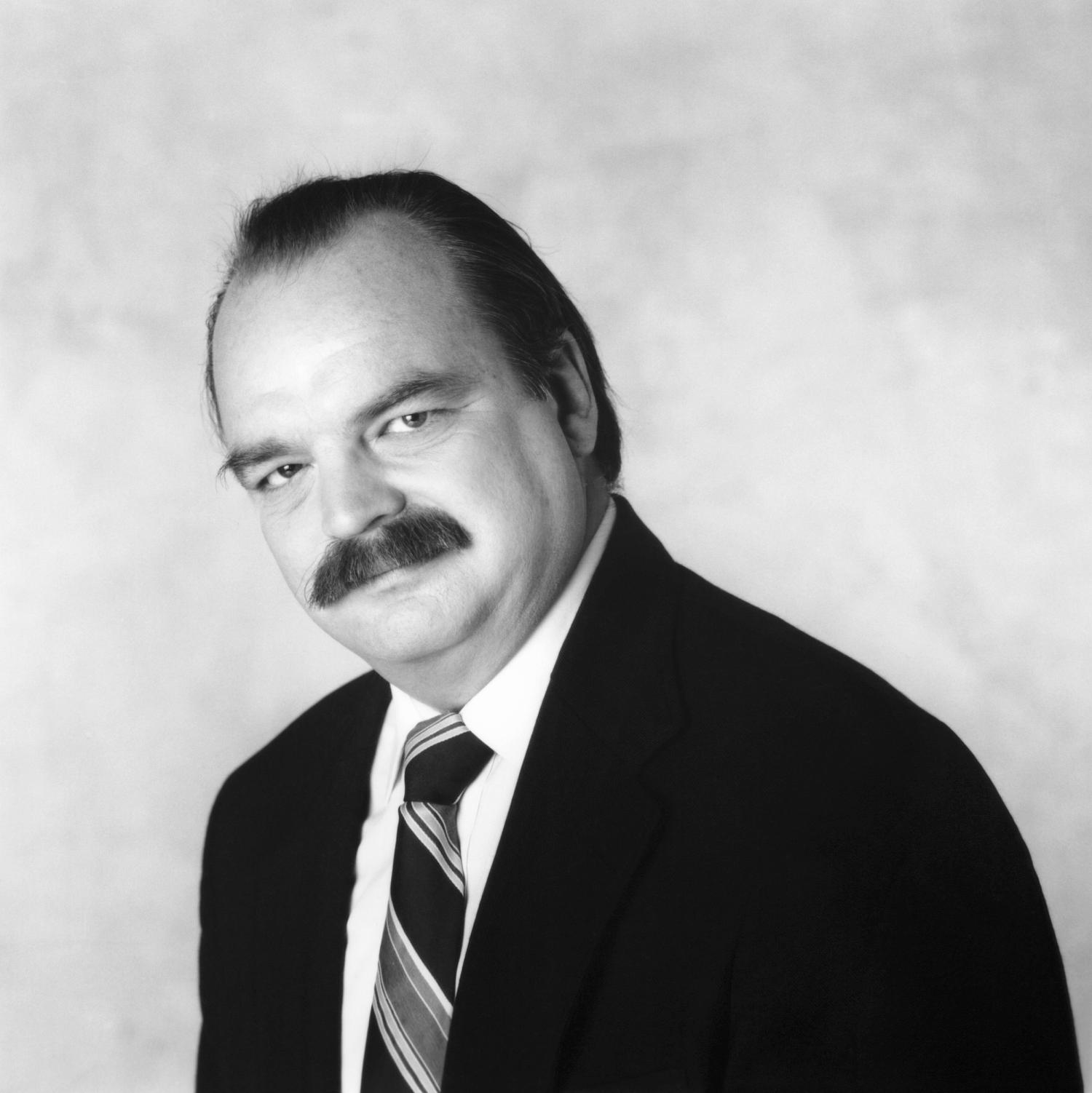
Call Richard Riehle a character actor. Go ahead. Watch how fast the industry's lazy consensus collapses.
A headline hits the wire announcing that Richard Riehle has died at 78. Within five minutes, a dozen outlets slap the exact same label onto him. Character actor. Best known for Office Space. Cue the predictable tribute montage: Tom Smykowski explaining that he has "people skills," a brief nod to Casino or The Fugitive, maybe a line about how he popped up everywhere.
Lazy. Shallow. Backwards.
Calling Riehle a character actor is how entertainment writers pat themselves on the back while ignoring how movies and television actually work. In industry shorthand, a "character actor" is often treated as a polite consolation prize for someone who didn't get the poster billing. Eccentric. Quirky. Flavor on the side.
That framing gets the mechanics of screen storytelling completely wrong. Riehle wasn't seasoning poured over a main course. He was structural load-bearing concrete. When a scene needed weight, institutional friction, or ordinary human dread without a leading man's vanity getting in the way, casting directors didn't look for "quirk." They looked for authority that looked lived-in.
The Lazy Consensus Around "Character Actors"
Entertainment coverage loves neat boxes because neat boxes require zero reporting. When a working actor passes away, the template is already half-written before the writer checks the filmography. Find the most meme-friendly credit, attach "character actor," and file before lunch.
Look at what that shorthand hides. Over a career spanning decades across film and television, Riehle amassed hundreds of screen credits. You don't survive in Hollywood for forty-plus years on novelty alone. Novelty burns out in two pilots and a straight-to-video sequel. Longevity in working screen acting comes from reliability under tight schedules, sharp comic timing that doesn't step on the punchline, and the ability to make bureaucratic absurdity feel terrifyingly real.
Compare how critics talk about leading stars versus supporting staples. A lead actor gets credited with "carrying" a picture. A supporting player gets described as "stealing" a scene. That vocabulary is broken. Stealing implies taking something that doesn't belong to you. Good supporting work doesn't rob the scene; it anchors it so the scene has somewhere to land.
I've watched production budgets bleed tens of thousands of dollars when a director casts a flashy, unpredictable name in a small role just to get a buzzier press release. The actor tries to reinvent a three-page day-player part into a career reel. Retakes pile up. Editors scramble in the cutting room to trim ego out of the rhythm. By contrast, a seasoned professional who understands camera blocking, eye-lines, and economy of line delivery saves hours on set and makes the entire sequence sing.
What "Typecasting" Actually Means in Casting Rooms
Outsiders think typecasting is a prison sentence. Inside a casting office, it's a shorthand language built on trust.
When a casting director brings in someone with Riehle's physical presence, voice, and cadence, they aren't limiting the story. They're skipping twenty minutes of exposition. A sheriff, a union guy, a middle-management lifer, a weary official—the audience reads the social ecosystem in two seconds. That leaves the writer and director free to push the plot forward instead of explaining who holds power in the room.
There is a massive difference between a caricature and a type. A caricature exaggerates a trait until it stops being human. A sharp working actor takes a recognizable social role—the guy stuck between corporate policy and human decency—and makes you feel the squeeze.
Why Office Space Is Both His Biggest Hook and a Distraction
Mike Judge's Office Space is the obvious anchor in any obituary about Riehle, and it's easy to see why. Tom Smykowski isn't a flashier villain like Bill Lumbergh. Lumbergh gets the coffee mug quotes and the red-pen obsession. Smykowski gets something much sadder and sharper: the pathetic, earnest delusion of a guy trying to justify his own existence inside a soul-crushing corporate machine.
His famous monologue—explaining that he deals with the customers so the engineers don't have to—is funny because it's pathetic, and pathetic because millions of people have heard some version of it in a conference room. Riehle plays it without winking at the camera. If he plays it like a joke, the scene dies. Because he plays it like a man fighting for dignity in a cubicle farm, the comedy lands like a gut punch.
Yet reducing a massive, varied career to a single cult classic distorts how a body of work is built. A cult hit gives an actor a permanent calling card, sure. It also blinds casual viewers to the sheer volume of television procedurals, dramas, comedies, and features where Riehle showed up, hit his marks, shifted the temperature of a room, and moved on to the next set.
Imagine a scenario where a young actor watches Office Space twenty times and assumes the secret to longevity is finding one catchphrase or one quirky speech pattern. They copy the surface mannerism—the posture, the cadence, the deadpan—and miss the real craft underneath: listening intently to the other person in the scene, adjusting to the exact lens size, and knowing when to hold back so the cut feels natural. Surface mimicry gets you noticed once. Craft gets you rehired for thirty years.
The Wrong Question Everyone Asks After an Actor Dies
Whenever a familiar face dies, search bars fill up with predictable questions:
- What was Richard Riehle's net worth?
- Was Richard Riehle in [insert obscure movie or TV show]?
- What was Richard Riehle's most famous role?
Start with the net worth question. It's a classic trap. People look up celebrity net worth estimates like they're reading audited tax returns. In reality, public net worth figures for working character and supporting actors are largely guesswork—aggregators guessing at residual streams, real estate, and day rates without seeing a single contract. Chasing a rough estimate tells you nothing about how the business actually pays.
Working actors in film and TV live inside a patchwork economy of scale rates, above-scale negotiations, SAG-AFTRA minimums, foreign sales, and residuals that trickle in long after the initial air date. A steady working actor can build a solid, comfortable middle- or upper-middle-class life over decades without ever hitting tabloid yacht territory. Obsessing over a made-up number misses the real story: sustaining a creative livelihood in an industry where most people flame out after their first year.
Now look at the "most famous role" question. That question is flawed on arrival because fame is not a single metric. Office Space gave him cultural immortality among a generation of office workers. Other projects gave him visibility with crime-drama fans, comedy audiences, or theatergoers. Asking for "the one" role forces a complex career into a single-point failure.
How to Actually Judge a Supporting Career
If you want to understand what a career like Riehle's meant to screen entertainment, stop counting top-billed leads and look at three real indicators instead:
- Repeat callbacks from the same creators and studios. When writers, directors, and casting teams bring someone back across different projects, it means the work holds up under pressure.
- Scene transitions. Watch what happens right before and right after a supporting actor speaks. Great ones reset the energy of a scene without hijacking the narrative arc.
- Credibility across genres. Moving between dry comedy, tense drama, and procedural television without breaking tone requires technical control that rarely gets praised in headlines.
What Heavy Hitters Teach Us About Supporting Craft
Great filmmakers and actors have spent decades pointing out how much weight rests on non-star roles. Think about classic ensemble directors like Martin Scorsese or the Coen brothers, or look at long-running television showrunners who rely on deep benches of seasoned performers. When a showrunner builds a cast, the lead sets the gravitational pull, but the supporting cast determines whether the world feels inhabited or staged on cardboard.
Acting theorists from Constantin Stanislavski to Sanford Meisner emphasized truth in given circumstances—reacting honestly to what is actually happening in the moment rather than performing an idea of emotion. That principle matters even more in smaller roles. You don't get twenty minutes to warm up the audience. You have thirty seconds to establish stakes, relationships, and reality.
That takes discipline. A star can sometimes coast on charisma and camera coverage. A supporting player who coasts disappears on the cutting room floor.
The Catch With Contrarian Takes on Fame
Being contrarian has its own blind spots, and I'll own mine right here.
If you push too hard against calling someone a "character actor," you risk erasing a label that many performers genuinely embrace. Some actors love the freedom that comes with playing distinct characters rather than playing versions of themselves under different names. For them, the term isn't an insult; it's a badge of range and utility.
There's also a practical downside to taking a purely industry-craft view of a death notice. Regular fans grieving or remembering a familiar face don't always want a lecture on casting economics or scene transitions. Sometimes people just want to remember a laugh they shared twenty years ago watching a movie on a Friday night.
Still, sentimentality shouldn't excuse lazy analysis. You can honor an actor's humanity and still tell the truth about why their work mattered behind the scenes.
Actionable Advice for Anyone Trying to Survive in Creative Work
Whether you're an actor, writer, designer, or operator in a volatile industry, there is a hard lesson sitting right inside Riehle's kind of career:
- Stop chasing the spotlight and master the hinge. Every system has hinge moments—the transitions where plans break, middle management speaks, or pressure spikes. Become the person who handles hinge moments cleanly.
- Build for repeat trust, not viral spikes. Viral attention fades fast. Being the dependable professional who delivers on schedule compounds over decades.
- Learn the room's real constraints. Understand budgets, timelines, and incentives instead of complaining about them. People who respect real-world constraints get trusted with bigger responsibilities.
Hollywood will keep recycling the same tired obituary templates every time a veteran dies. Let them. The real value in a career like Richard Riehle's wasn't a neat label—it was proving, scene after scene, that steady craft keeps the whole machine moving.