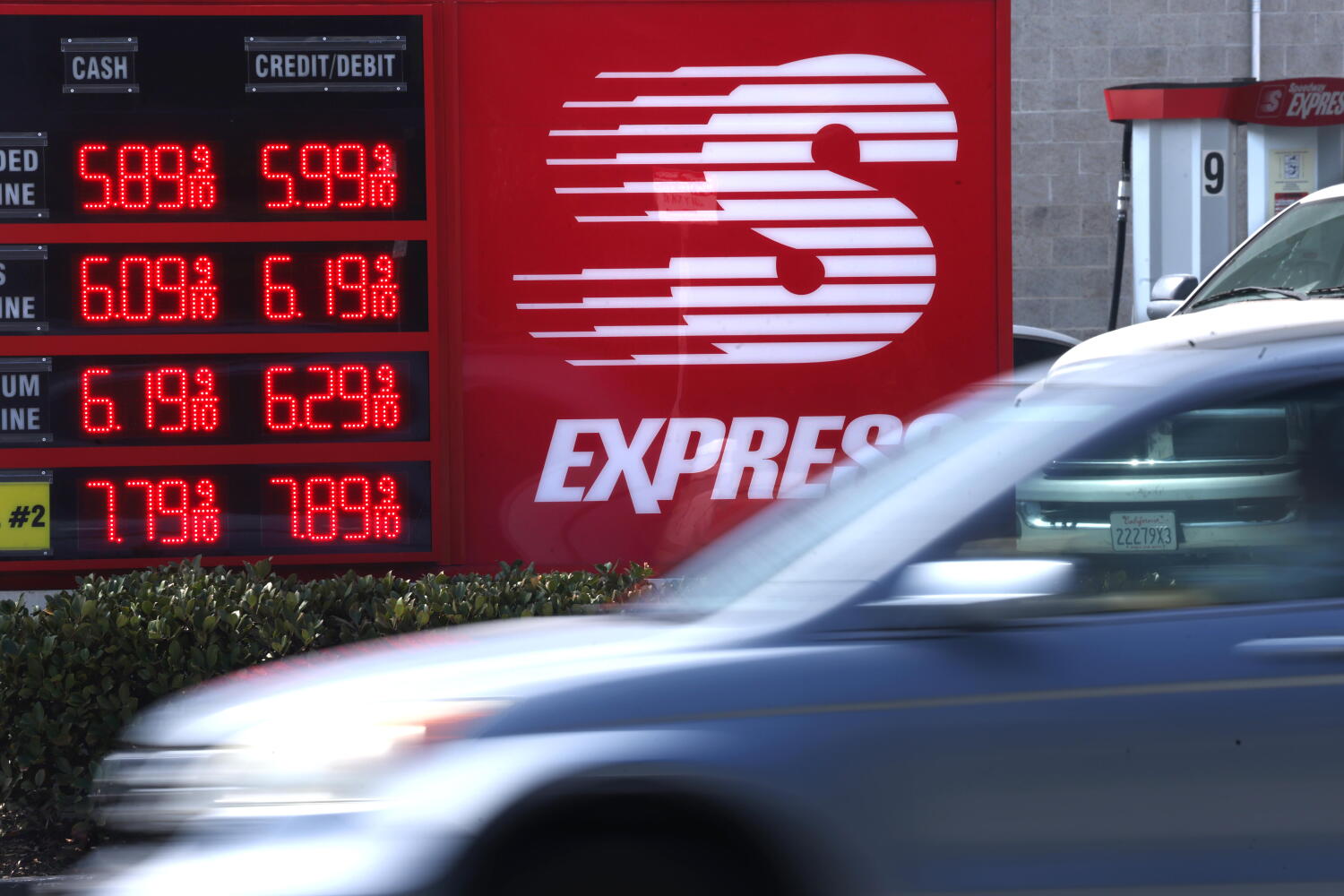
Every four years, California voters step into the ballot box with the exact same three headaches sitting right on their dashboards. You're paying the highest gas prices in the continental United States, watching state mandates push you toward an electric vehicle you might not be able to charge at your apartment, and reading endless headlines about a bullet train in the Central Valley that still hasn't carried a single paying passenger. If you're trying to figure out where the 2026 California governor candidates actually stand on gas prices, EVs, and high-speed rail, the campaign trail talking points won't give you the full picture.
Let's cut through the noise. With Gavin Newsom termed out, the race to run the Golden State has turned into a referendum on California's aggressive climate policies versus everyday affordability. Democratic contenders are trying to protect the state's environmental legacy without sounding tone-deaf to working families getting crushed at the pump. Republicans are hammering the exact same pocketbook issues, promising to tear down regulations on day one.
Here is how the major candidates—including Democrats like Katie Porter, Eleni Kounalakis, Tony Thurmond, Xavier Becerra, and Betty Yee, alongside Republicans like Chad Bianco and Steve Hilton—actually plan to handle your commute, your wallet, and the state's biggest infrastructure gamble.
The Reality Behind California Gas Prices
Before looking at what any candidate promises, you have to understand why you're paying so much at the Chevron or Arco down the street. It isn't just one single tax. According to data from the U.S. Energy Information Administration and the California Energy Commission, California drivers pay a combination of the nation's highest state excise tax, cap-and-trade compliance costs, Low Carbon Fuel Standard (LCFS) fees, and the cost of refining a special cleaner-burning summer fuel blend that almost nobody else in the country uses.
When a refinery goes offline for unplanned maintenance, supply tightens instantly. Prices spike within days.
The Democratic Split on Oil and Refineries
For years, Sacramento's default position was simple. Squeeze the oil industry, cap profits, and transition away from fossil fuels as fast as possible. Now, that consensus is cracking under economic pressure.
Katie Porter built her national reputation in Congress grilling oil executives with her famous whiteboards, and she hasn't softened her stance on corporate accountability. She backs aggressive oversight of refinery profit margins and supports the state's price-gouging penalty laws. At the same time, she knows voters are angry about inflation, so her pitch centers on stopping market manipulation rather than hiking consumer-facing taxes.
Eleni Kounalakis, the current Lieutenant Governor, walks a much finer line. Having served inside the Newsom administration, she defends California's climate leadership and the cap-and-trade system that funds billions in state programs. Yet she also recognizes that sudden refinery closures—like Phillips 66 announcing plans to shutter its Los Angeles-area refinery—create massive supply risks. She favors tighter regulatory monitoring of refinery inventories to prevent artificial price spikes while keeping long-term decarbonization goals intact.
Xavier Becerra, bringing his background as both California Attorney General and U.S. Health and Human Services Secretary, frames energy policy around consumer protection and environmental justice. He has consistently supported using antitrust and state regulatory power to investigate sudden pump price surges, arguing that low-income communities bear the brunt of both high fuel costs and refinery pollution.
Betty Yee, the former State Controller, looks at gas prices through a fiscal lens. She points out that California's transportation infrastructure depends heavily on gas tax revenues—revenues that are shrinking as more people buy EVs. Yee argues the state needs an honest overhaul of how it taxes road usage rather than relying on patchwork fixes at the pump.
Tony Thurmond, the State Superintendent of Public Instruction, ties energy costs directly to working-class survival. He supports windfall profit penalties on oil companies and wants revenue from climate programs routed directly back to lower-income households as rebates.
The Republican Playbook for Immediate Relief
If a Republican wins in November, the state's entire regulatory apparatus around fossil fuels gets flipped upside down.
Chad Bianco, the Riverside County Sheriff, makes kitchen-table affordability the centerpiece of his campaign. His approach is blunt. He wants to suspend the state gas tax, roll back the Low Carbon Fuel Standard updates that analysts warn could add significant cents per gallon, and halt Newsom-era refinery regulations that he argues are driving oil companies out of California entirely.
Steve Hilton, the former Fox News host and policy advisor, takes a free-market deregulatory approach. Hilton blames Sacramento's green mandates for manufacturing an artificial energy crisis. He advocates scrapping California's unique fuel blend requirements so the state can import cheaper gasoline from out-of-state refineries, ending the ban on new oil drilling permits, and eliminating cap-and-trade fees that pass directly onto drivers.
Honestly, even if a governor wants to slash regulations overnight, California's Air Resources Board (CARB) wields massive statutory power, and environmental groups will sue over every rollback. Any governor promising 30-cent-a-gallon drops in week one is selling you a fantasy.
Electric Vehicles and the 2035 Mandate Showdown
California's Advanced Clean Cars II rule is the elephant in every room. Under this regulation, 100% of new cars and light trucks sold in the state must be zero-emission by 2035, with escalating benchmarks hitting 35% for the 2026 model year and 68% by 2030.
You can still drive your used gas car after 2035. You can still buy a used gas car. Nobody is coming to confiscate your Honda Civic. Still, the mandate forces automakers and consumers into a rapid transition that feels wildly uneven depending on where you live.
Protecting the Mandate vs. Fixing the Grid
Every major Democratic candidate supports keeping the 2035 zero-emission target alive, though they emphasize different weak spots in the rollout.
- Eleni Kounalakis strongly defends the 2035 timeline as essential for meeting federal air quality standards and cutting tailpipe emissions. She focuses heavily on accelerating permitting for utility-scale solar, battery storage, and public charging networks so the electrical grid doesn't buckle under new EV demand.
- Katie Porter focuses on consumer affordability and grid reliability. She points out that middle-class families can't easily drop fifty grand on a new electric SUV, especially after federal EV tax credit rules tightened. Porter pushes for stronger state-level point-of-sale rebates for used EVs and stricter accountability for investor-owned utilities like PG&E and Southern California Edison, whose soaring electricity rates actually make charging an EV more expensive than buying gas in some zip codes.
- Betty Yee zeroed in on that exact utility rate problem early on. She argues that California's EV transition fails if electricity rates keep climbing faster than inflation. Her platform emphasizes reforming utility rate structures and expanding charging access in multi-family apartment complexes, where millions of renters currently have zero way to plug in overnight.
- Tony Thurmond emphasizes equity in the EV rollout, pushing for targeted grants so school districts can electrify bus fleets and working-class commuters in inland regions—like the Inland Empire and Central Valley—aren't left behind while coastal tech workers scoop up all the incentives.
Scrapping the Mandate
Both Chad Bianco and Steve Hilton view the 2035 gas-car ban as government overreach at its worst.
Bianco argues that forcing working families, contractors, and rural residents into electric vehicles ignores real-world limitations—from towing capacity to long-distance commutes in areas with sparse charging stations. He pledges to repeal the 2035 mandate immediately and let consumer demand, not CARB bureaucrats, decide what cars dealerships sell.
Hilton goes even further. He frames the EV mandate as a regressive tax on working people that props up green subsidies while straining an electrical grid that already struggles during summer heatwaves. Hilton wants to strip CARB of its authority to ban internal combustion engines and redirect state clean-energy subsidies toward traditional infrastructure and wildfire prevention.
What most voters miss here is the federal factor. California needs a Clean Air Act waiver from the federal Environmental Protection Agency to enforce its 2035 EV rules. Depending on federal court battles and Washington's posture, the next governor could spend half their term fighting lawsuits just to keep the rule legal.
High-Speed Rail Is Still the Ultimate Litmus Test
Nothing divides California voters quite like the California High-Speed Rail project. Approved by voters way back in 2008 as Proposition 1A with a promised price tag of $33 billion for a San Francisco-to-Los Angeles line by 2020, the project has become a textbook case of cost overruns, land acquisition nightmares, and political compromises.
Today, the California High-Speed Rail Authority estimates the full San Francisco-to-LA system could cost upwards of $100 billion or more, with no firm completion date for the full route. Currently, active construction is focused on the 171-mile Central Valley segment connecting Merced, Fresno, and Bakersfield—a stretch that still faces a multi-billion-dollar funding gap just to finish laying track and buying trains.
Stay the Course or Cut the Cord?
If you ask the candidates what to do with the bullet train, you get three very distinct answers.
The Full-Speed-Ahead Camp
Tony Thurmond and Xavier Becerra generally view high-speed rail as a generational infrastructure investment worth seeing through. They point out that canceling the project now would waste billions already spent, forfeit massive federal transportation grants, and abandon Central Valley communities that desperately need economic development and cleaner transit links to coastal job centers.
The Pragmatic Oversight Camp
Eleni Kounalakis, Katie Porter, and Betty Yee all support clean mass transit in principle, yet none of them want to write blank checks without strict accountability.
Porter brings her signature oversight mindset to the rail authority, demanding transparent cost controls, realistic timelines, and clear milestones before committing new state general fund dollars. Yee approaches it like a CPA—she wants a clear financial blueprint showing how the state closes the funding gap between Merced and Bakersfield without cannibalizing other local transit agencies like BART, Caltrain, or LA Metro, which are facing their own post-pandemic fiscal cliffs. Kounalakis favors finishing the Central Valley operating segment first to prove the system actually works before debating expensive tunnels through the Pacheco Pass or Tehachapi Mountains.
The Pull-the-Plug Camp
Chad Bianco and Steve Hilton want to kill the project dead.
Bianco calls high-speed rail a massive boondoggle that drains taxpayer money while basic freeways like Interstate 5, Highway 99, and Interstate 15 sit congested and crumbling. He wants to halt all state funding for the bullet train immediately and redirect every available dollar toward widening highways, fixing potholes, and building water storage reservoirs.
Hilton shares that exact goal. He argues that throwing another dime into the Central Valley rail corridor is the textbook definition of the sunk-cost fallacy. Hilton's plan involves formally terminating the high-speed rail authority's mandate, salvaging whatever completed bridges and viaducts can be repurposed for freight or conventional commuter rail, and shifting state transportation funds back to roads and local transit projects that commuters use today.
How to Weigh Your Vote Before Casting Your Ballot
Don't fall for soundbites on television ads. Every candidate sounds great in a 30-second spot, whether they're promising cheaper gas or a cleaner planet. Instead, match their actual policy levers to the reality of how Sacramento works.
Look closely at three things when making your final call:
- Check their stance on the California Air Resources Board. A governor appoints the board members who write the rules on fuel standards and EV mandates. If you want those rules rolled back or softened, look for candidates explicitly promising to overhaul CARB's leadership and statutory reach.
- Watch how they talk about utility rates, not just gas prices. Buying an EV only saves you money if electricity stays affordable. Candidates like Betty Yee and Katie Porter who connect EV mandates directly to PG&E and Edison rate reform understand the whole equation.
- Demand specifics on transportation funding. Slashing the gas tax or killing high-speed rail sounds simple until you ask how the state pays for road repairs or replaces lost federal matching grants.
Before you fill out your mail-in ballot, pull up the nonpartisan voter guide from CalMatters or the California Secretary of State to cross-check each candidate's campaign finance disclosures—seeing whether a candidate takes heavy donations from oil companies, utility giants, or construction unions tells you far more about their first hundred days in office than any debate answer ever will.


