The server room in Cyberjaya hums with a deep, throat-clearing bass that you feel in your molars before you hear it.
I remember standing there last winter, watching a young engineer named Faris wipe condensation from a glass rack housing rows of sleek, obsidian-dark processors. Outside those climate-controlled walls, the tropical humidity of Malaysia pressed hard against the tinted glass, but inside, the air was sharp, artificial, and cold enough to frost your breath. Faris wasn't looking at the weather. He was staring at a blinking amber light on a motherboard, tracing a fiber-optic cable with his thumb as if it were a pulse.
That cable carries more than data. It carries a choice.
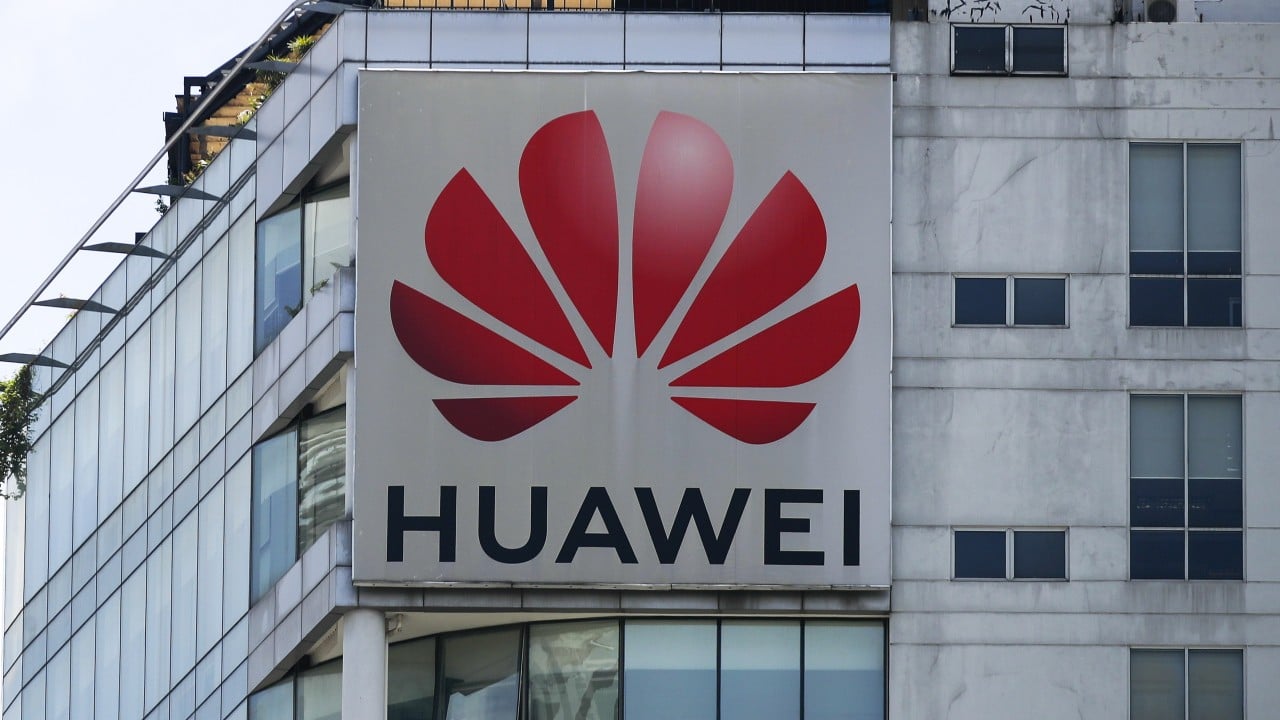
Malaysia stands today at the exact intersection of two competing empires, holding a copper wire that both sides want to plug into. On one side sits the United States, anxious about the quiet, relentless spread of Chinese digital infrastructure across the Global South. On the other side sits Huawei, offering hyper-efficient artificial intelligence architecture, smart city frameworks, and cloud computing deals at a fraction of Western costs.
For a country racing toward its digital future, the math seems simple. You buy the tool that works best and costs the least. But nothing in geopolitics is ever just a hardware purchase. It is a signature on a long-term lease.
Consider what happens next.
When a nation integrates Huawei AI systems into its traffic grids, hospital databases, and financial networks, it is not merely installing microchips. It is buying an entire ecosystem of maintenance, updates, and unseen digital gravity. The chips learn from local traffic patterns, local voices, local security feeds. They optimize themselves. And in doing so, they tie the host nation closer to Beijing’s technical orbit.
Washington watches this dance with a hand hovering over the panic button.
Trade pacts like the Indo-Pacific Economic Framework are not designed merely to encourage friendly shipping lanes. They are invisible fences. They carry unwritten clauses about supply chain purity, security alignment, and technological exclusion. If Kuala Lumpur signs a major artificial intelligence agreement with a blacklisted Chinese giant, the whispers from Capitol Hill turn into diplomatic friction. Tariffs shift. Access to Western financial markets grows complicated. Joint ventures stall in conference rooms thousands of miles away.
Faris didn't know about trade pacts when he was plugging in that rack. He just knew his local clients needed faster deep-learning models to process agricultural yields and logistic routes. He wanted to solve problems today. The politicians in Putrajaya have to worry about tomorrow.
This is the hidden cost of modern sovereignty. We used to measure a country's independence by its borders, its army, its currency. Now, we measure it by its stack. Who built your cloud? Whose silicon powers your algorithms? Whose engineers hold the administrative keys to your national nervous system?
The temptation is real. Western AI infrastructure is notoriously expensive, encumbered by strict export controls, high licensing fees, and bureaucratic delays. Huawei arrives with a solution that is fast, affordable, and immediately deployed. For a developing digital economy trying to leapfrog decades of lag, turning down that kind of computational power feels like refusing oxygen.
Yet, stepping onto that path means accepting a certain kind of vulnerability. It invites the watchful eye of a superpower that views every server rack as a potential listening post. It risks triggering punitive measures from a West that holds the keys to global capital.
Malaysia is not alone in this tightrope walk. Across Southeast Asia, governments are quietly playing a double game, keeping one foot in the American security umbrella while buying affordable Chinese digital scaffolding with the other. It is a high-stakes poker hand played with billions of dollars of national infrastructure.
Back in that Cyberjaya data center, Faris finally got the amber light to turn green. The server whirred into a higher register, swallowing terabytes of data in a fraction of a second, silently processing the ambitions of a rising nation. Outside, the rain began to fall in heavy, tropical sheets, blurring the lights of the highway. The wire was hot. The deal was moving forward. And the rest of the world was watching to see who would flinch first.


