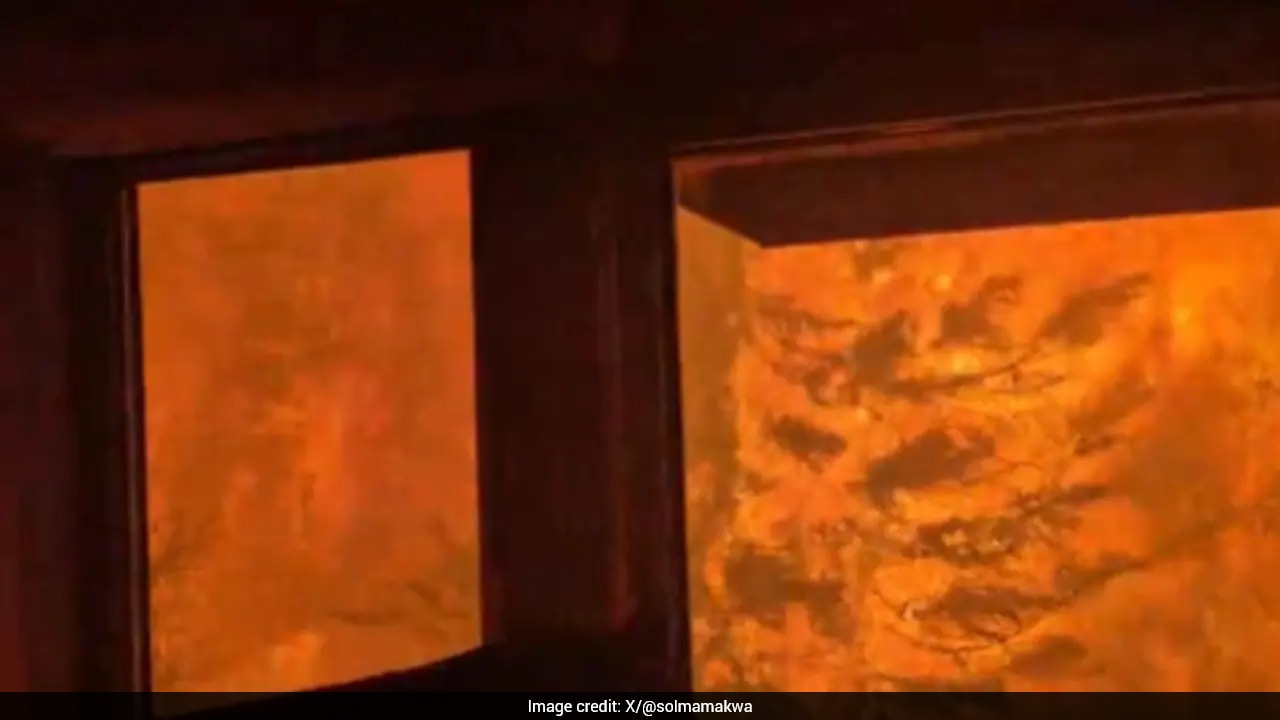
In the summer of 2021, a Canadian Pacific Kansas City (CPKC) freight train plowed through a wall of fire in Lytton, British Columbia, capturing viral video footage that shocked the public. While the footage of a massive train surrounded by orange embers looks like an isolated, freak incident of nature, the reality is far more systemic. The Canadian rail network is increasingly operating on a knife-edge as climate-fueled wildfires collide with intense freight demands, exposing a deeply compromised regulatory framework and a severe lack of protection for the crews operating these multi-million-dollar rolling targets.
This is not just a story about extreme weather. It is an indictment of a system where private rail giants are left to self-regulate, while their front-line workers are forced to make split-second survival decisions inside steel cabs that offer little defense against toxic smoke and extreme heat.
The Illusion of Control on the Fire Line
When a wildfire threatens a community, highways are closed almost immediately. Police blockades go up, and traffic is diverted.
The rails operate under a different set of rules.
Under the Canadian Railway Safety Act, railway companies largely manage their own risk mitigation plans. When a fire breaks out near a track, the decision to halt operations rests primarily with the rail operators—not local fire chiefs or provincial wildfire services. This creates an inherent conflict of interest.
Every hour a transcontinental freight train is delayed costs operators tens of thousands of dollars. The supply chain pressure is immense. Consequently, trains continue to roll through active fire zones until the threat is literally licking at the steel of the locomotives.
How Heat Weakens Steel and Stone
A freight train cannot simply swerve or make a sudden stop. A fully loaded grain or oil train traveling at 40 miles per hour can take over a mile to come to a complete halt. When these massive columns of weight encounter wildfire conditions, several physical vulnerabilities emerge:
- Thermal Expansion of Rails: Steel tracks are laid with specific temperature tolerances. Direct exposure to intense wildfire heat causes the rails to expand rapidly. This leads to track buckling—sometimes called "sun kinks"—which can derail a train instantly.
- Wooden Tie Ignition: Despite the rise of concrete ties, hundreds of thousands of wooden ties, treated with highly flammable creosote, remain in active service across remote Canadian corridors. Once ignited, they burn hot and long, destabilizing the entire track bed.
- Signal System Failure: Wildfires routinely melt the copper wiring and battery boxes that power trackside signaling and automated warning systems. When these systems fail, dispatchers lose real-time visibility, forcing crews to navigate blind through smoke-choked corridors.
The Crew Cabin is Not a Shelter
In the viral video captured near Lytton, the voices of the locomotive engineers convey a cold, mounting panic: "Could overtake us here."
They were right to be terrified.
Locomotive cabs are not airtight environments. They are designed with ventilation systems that pull in outside air to cool electrical components and provide air conditioning to the cab. When a train enters a heavy smoke plume, these systems draw carbon monoxide, particulate matter, and volatile organic compounds directly into the workspace.
[Outside Environment: Wildfire Smoke & Heat]
       │
       ▼ (Intake Fan)
┌────────────────────────────────────────┐
│  Locomotive Cab                        │
│  - No Positive Pressure Filtration      │ --> Crew inhales CO, NOx,
│  - Standard Air Filters Clog Rapidly   │     and toxic particulates.
└────────────────────────────────────────┘
Standard locomotives are not equipped with self-contained breathing apparatus (SCBA) for crews. If a train stalls due to a power loss or a heat-induced brake failure in the middle of a burning forest, the crew is trapped in a metal oven.
The Regulatory Void
In Canada, the Transportation Safety Board (TSB) investigates accidents after they occur, but Transport Canada is the body responsible for enforcing safety rules. Historically, Transport Canada has favored a hands-off approach, relying on "Safety Management Systems" (SMS) drafted by the rail corporations themselves.
This self-policing model has drawn sharp criticism from labor unions, including the Teamsters Canada Rail Conference. Union representatives have repeatedly pointed out that locomotive engineers and conductors are routinely asked to operate through areas where local residents have already been evacuated.
The industry defense is that trains are safer moving than stationary. A moving train, the argument goes, can pass through a fire front in a matter of minutes. However, this logic assumes that the tracks ahead are clear, unbuckled, and free of fallen debris—a massive gamble when winds are driving fires at speeds of up to 6 miles per hour through dry pine forests.
The High-Stakes Economics of Moving Dangerous Goods
The risk profile rises exponentially when you look at what these trains are carrying.
The Canadian rail network is a primary artery for the transport of crude oil, liquefied petroleum gas (LPG), anhydrous ammonia, and other highly volatile chemicals. When a train carrying these materials passes through an active wildfire zone, the margin for error drops to zero.
The oil-by-rail boom over the past decade means that 100-car "unit trains" filled with flammable bitumen or light sweet crude regularly traverse the rugged, fire-prone terrain of British Columbia and Alberta. While modern tank cars (such as the DOT-117 standard) feature thermal protection blankets designed to delay a catastrophic explosion when exposed to external pool fires, these shells are only rated to withstand direct flame exposure for a limited time—typically around 100 minutes.
If a train derails in a wildfire zone due to heat-damaged tracks, emergency response teams cannot access the site. The fire itself prevents heavy equipment from reaching the derailment, leaving the cargo to burn uncontrollably, potentially triggering BLEVEs (Boiling Liquid Expanding Vapor Explosions) that can devastate entire valleys.
Better Protection is Tech-Ready but Untapped
The technology to prevent these close calls exists. European and Australian rail networks, which face similarly harsh wildfire seasons, have implemented more aggressive defensive measures.
Automated Thermal Monitoring
Instead of relying on visual reports from crews or passing aircraft, rail corridors can be outfitted with specialized infrared sensors mounted on wayside detection stations. These sensors measure the ambient heat of the tracks ahead and automatically trigger speed reductions or halts before a train enters a danger zone.
Positive-Pressure Cab Filtration
Installing military-grade, positive-pressure air filtration systems on locomotives would protect crews from toxic smoke inhalation. By keeping the air pressure inside the cab slightly higher than the outside pressure, toxic gas is prevented from leaking through door seals and window gaps.
Direct Integration with Wildfire Data
Currently, there is a distinct communication gap between provincial wildfire agencies (like BC Wildfire Service) and private railway dispatch centers. Real-time satellite fire-mapping data must be integrated directly into railway CAD (Computer-Aided Dispatch) systems, stripping away the subjective, profit-influenced decision-making of whether a corridor is safe to traverse.
The Reality of the Path Forward
Canada’s boreal forest is burning more frequently and with greater intensity. The rail corridors carved through these forests are vital economic lifelines, but they are also structural vulnerabilities.
Continuing with a self-regulatory framework that allows freight operators to run trains through active fire zones is a gamble played with human lives and environmental safety. Until Transport Canada establishes clear, legally binding triggers that automatically halt rail traffic when a wildfire reaches a designated perimeter, crews will continue to find themselves in the terrifying position of piloting multi-ton tinderboxes through walls of flame, hoping the tracks beneath them haven't already begun to warp.