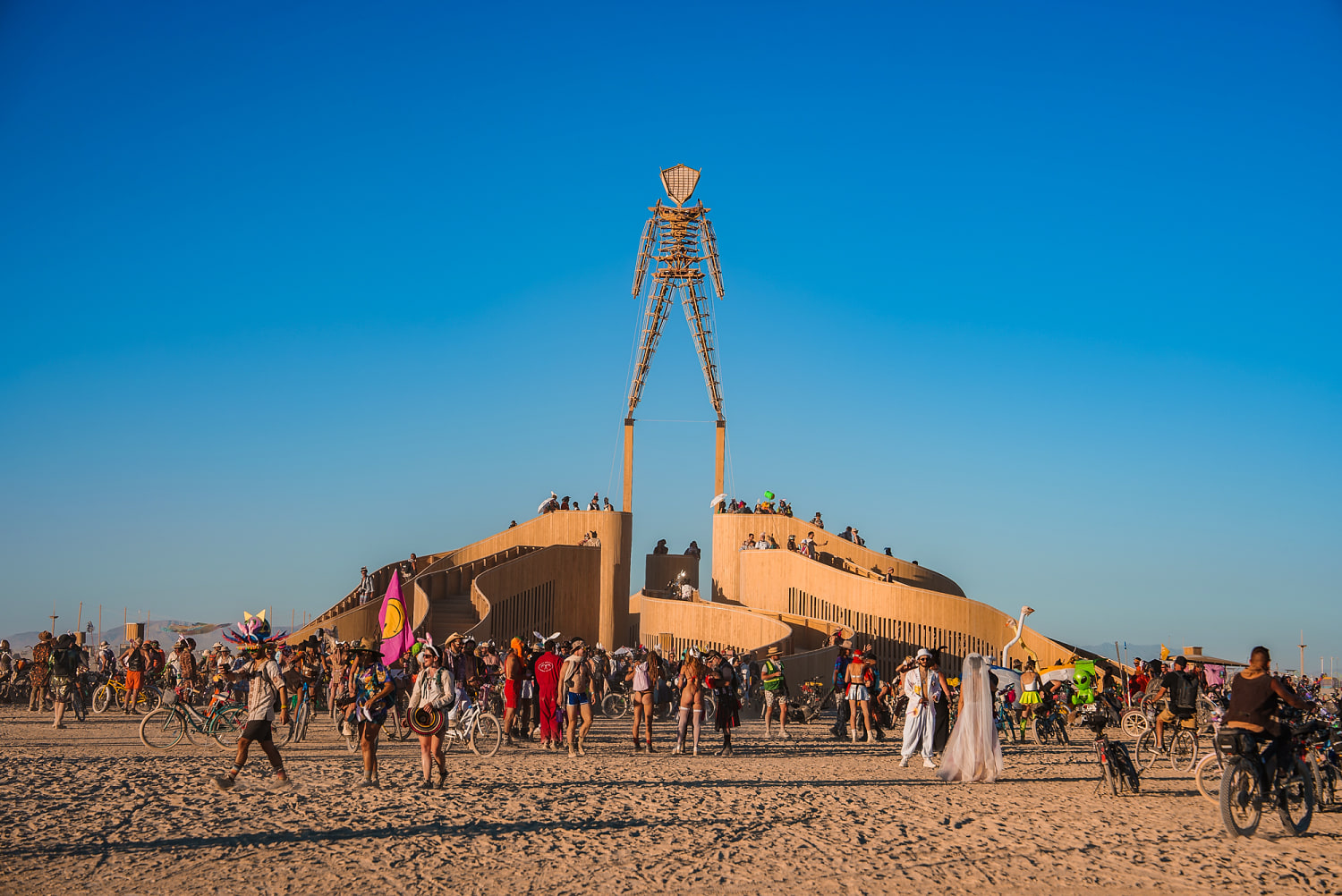
Every late summer, tens of thousands of people pack themselves into the alkaline crust of Nevada’s Black Rock Desert to build a temporary metropolis driven by radical self-reliance. They also build an environment where institutional safety nets are intentionally stripped away. When fatalities occur on the playa, mainstream media outlets rush to publish uniform bulletins about festival casualties. These reports treat each incident as an isolated tragedy or an anomaly in an otherwise utopian playground. They miss the broader structural reality. Black Rock City is an extreme wilderness experiment operating under hyper-permissive conditions. Death and severe injury are not aberrations within this system. They are the high-stakes friction points of a society designed to test the limits of personal responsibility.
The fundamental tension of the gathering lies in its foundational paradox. Participants are told they must bring everything required to survive a brutal desert climate where temperatures swing wildly and dust storms reduce visibility to zero. Yet the culture simultaneously encourages radical experimentation, extreme sleep deprivation, heavy substance consumption, and structural boundary-pushing. When a participant collapses inside a tent or suffers a fatal medical emergency, observers ask how it could happen in a place serviced by multi-million-dollar emergency medical services. The better question is how a temporary city of seventy thousand people manages to record so few formal fatalities given the sheer volatility of the raw elements.
Examining the mechanics of risk on the playa requires looking past the shocking headlines and analyzing the logistical architecture of the event. The organization deploys sophisticated medical infrastructure, including the Rampart urgent care facility equipped with advanced diagnostics, trauma stabilization bays, and psychiatric crisis teams. Hundreds of professional doctors, nurses, and emergency responders work shifts alongside the Black Rock Rangers. Despite this robust internal response, the scale of the physical layout creates inherent response delays. A medical crisis unfolding in a remote deep-playa camp requires navigating shifting terrain, gridlock, and blinding dust. Minutes matter when a heart gives out or an airway closes, and the desert does not forgive logistical friction.
Substance use and exhaustion compound these baseline environmental hazards. While the event culture prizes alter-egos and sensory expansion, the physiological toll of combining intense physical exertion with dehydration and unmeasured intoxicants creates a quiet health crisis every season. Many medical evacuations involve severe trauma from climbing unauthorized art installations or accidents involving mutant vehicles. Massive, poorly lit kinetic sculptures rolling across the desert floor at night present distinct kinetic dangers. Participants routinely scale tall structures without harnesses, relying on a communal ethos that discourages prescriptive rules while quietly hoping gravity will make an exception for them.
External factors further complicate the safety equation. Severe weather events have repeatedly disrupted the gathering, turning the hardpan dust into impassable soup and trapping thousands in place. Sudden downpours strand vehicles, overwhelm sanitation systems, and cut off rapid egress corridors for emergency transport. When infrastructure buckles under meteorological stress, the burden of survival shifts entirely back to the individual unit. Those who arrive unprepared or underestimate the swiftness of desert flash storms find themselves facing genuine peril that no amount of community spirit can immediately mitigate.
The legal and jurisdictional framework governing the temporary city adds another layer of complexity. Multiple law enforcement agencies, including the Bureau of Land Management and local county sheriff departments, patrol the perimeter and interior. Their presence often creates an uneasy friction with a populace that values counter-cultural autonomy. Enforcement sweeps target drug trafficking and major infractions, but the vast expanse of the event makes comprehensive policing impossible. Accountability is heavily decentralized, leaving a vacuum where private disputes or predatory behavior can occasionally cross the line from dangerous to criminal.
Critics frequently argue that the event has outgrown its own philosophical framework, transforming from an avant-garde social experiment into an extreme-tourism destination for wealthy tech executives and influencers who treat survivalism as a weekend aesthetic. This demographic shift changes the risk profile. Attendees accustomed to five-star creature comforts sometimes lack the baseline outdoor competency required to navigate extreme environments safely. When they encounter real peril, the gap between the myth of effortless transformation and the brute reality of the desert becomes stark and unforgiving.
Ultimately, the ongoing occurrence of fatalities and severe trauma at the gathering serves as a stark reminder that wilderness is not tamed simply by erecting art cars and neon dance floors. The desert remains indifferent to counter-cultural manifestos and legal waivers alike. Until the culture reckons honestly with the physical toll of its own scale, the dust will continue to claim its quiet, sobering toll from those who push too far past the edge.