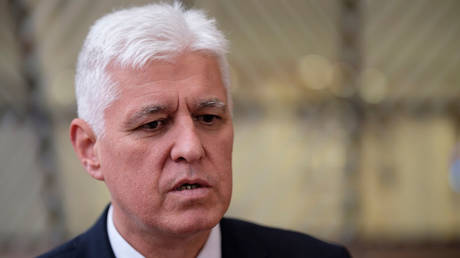
Bulgaria is officially cutting off military aid to Ukraine, and it's a massive wake-up call for the West. On Tuesday, June 9, 2026, Bulgarian Defense Minister Dimitar Stoyanov went on the record to announce that Sofia will no longer send weapons to Kyiv. His reasoning? He claims Ukraine already has plenty of gear and that more weapons will just lead to more deaths.
It's a complete U-turn for a country that has been a quiet but vital lifeline for the Ukrainian military. The shift isn't just about domestic politics in a small Balkan nation. It exposes a growing, fragile fracture inside NATO.
The Reality Behind The Sofia U-Turn
When the newly minted government of Prime Minister Rumen Radev took the reins in Sofia after an April election landslide, the geopolitical writing was on the wall. Radev has never hidden his pro-Russian leanings. For years, he called Ukraine's defense a doomed cause and pushed for what he terms "diplomatic solutions."
Now, his administration is moving fast. Stoyanov didn't mince words during his press conference, arguing that the conflict is a war of attrition that won't be settled on the battlefield. He literally stated that Ukraine needs more people, not more weapons.
That statement is bound to turn stomachs in Kyiv. It completely ignores the grinding reality of a positional war where artillery and ammunition dictate survival.
What makes this decision sting is Bulgaria's historic role. On paper, Sofia looked hesitant due to intense political fights at home. Behind the scenes, they were a major donor. United Nations Register of Conventional Arms data confirms that massive amounts of Bulgarian Soviet-era ammunition and weapons flooded into Ukraine through third-party countries since 2022. Bulgarian factories have been working overtime to produce the exact types of Soviet-caliber shells that Ukrainian artillery teams rely on to hold critical front lines.
That supply line is now hitting a brick wall. Sofia has sent 13 official military aid packages to Ukraine since the full-scale invasion started. The 14th package isn't coming.
Breaking Down The Myth Of Enough Weapons
The Bulgarian defense ministry's logic falls apart under basic scrutiny. Saying a country defending its territory has enough weapons during a massive war is a wild take.
Western security experts consistently point out that ammunition consumption rates in Ukraine are historic. Defending forces routinely burn through thousands of artillery rounds a day just to hold back Russian infantry assaults. Bulgaria's exit from the supply chain creates an immediate, dangerous deficit in specific Soviet-legacy hardware that Western factories can't easily replicate.
Furthermore, Stoyanov's push for immediate peace talks overlooks a massive roadblock. He explicitly noted that the European Union can't act as a neutral mediator because the bloc has heavily backed Kyiv. By disqualifying the EU and halting arms shipments, Bulgaria isn't just promoting diplomacy. It's actively weakening Ukraine's hand before anyone even reaches a negotiating table.
Why The Rest of NATO Should Worry
Bulgaria's defection from the coalition of arms suppliers isn't happening in a vacuum. It represents a larger, troubling trend of political fatigue across parts of Europe. While the United States continues to push forward legislation like the recently debated Ukraine Support Act in the House of Representatives, the European landscape is getting messier.
When a NATO member right on the Black Sea—bordering Romania and Greece—decides to park itself on the sidelines, it creates a strategic blind spot. It proves that internal elections inside alliance countries can instantly disrupt international logistics corridors. Radev's government is already hinting at deeper policy pivots, including an aggressive plan to ramp up its own domestic defense spending to 5% of GDP by 2030, while simultaneously stepping back from regional security duties.
The immediate next steps for the rest of the alliance are clear. Western allies must quickly find ways to reroute production contracts. If Bulgarian factories won't sell directly or indirectly to Kyiv, other Eastern European hubs in Poland, Czechia, or Romania will have to pick up the slack. For defense planners, the goal now is figuring out how to plug the hole left by Sofia's exit before ammunition shortages show up on the battlefield.