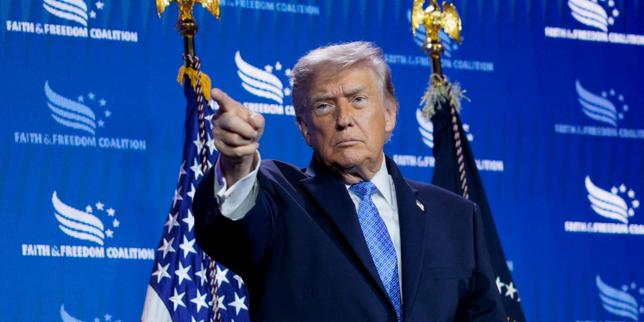
Donald Trump just shattered every historical precedent for presidential wealth creation by pulling in over $1.4 billion from cryptocurrency ventures in 2025 alone. According to a massive 927-page financial disclosure released by the U.S. Office of Government Ethics, these digital assets have rapidly eclipsed the real estate empire that defined his public persona for half a century. While previous commanders-in-chief agonized over blind trusts and the appearance of propriety, the current administration has turned the Oval Office into the ultimate marketing launchpad for highly speculative tokens and digital souvenirs.
The primary mechanism for this unprecedented cash injection relies on two core entities: World Liberty Financial and a licensing deal for the $TRUMP meme coin. The sheer scale of the numbers challenges conventional political finance. This was not a passive investment portfolio quietly tracking the market, but an aggressive, multi-pronged commercial operation that locked in massive personal windfalls while everyday retail buyers were left holding the bag on crashing token values.
Inside the Corporate Structure of Executive Decentralized Finance
The disclosure details exactly how the cash flowed. Nearly $550 million came directly from token sales via World Liberty Financial, a digital currency platform launched with heavy family promotion. A shell company named DT Marks DeFi—utilized by Trump and his three sons—secured an additional 22.5 billion WLFI governance tokens, carrying an estimated paper valuation of $1.3 billion.
But the real cash cow was a entity called Celebration Coins. This outfit paid Trump $635 million in royalties to license his name and likeness for the $TRUMP meme coin.
Investigating the corporate plumbing reveals a stark contrast between executive profits and public losses.
- The Presidential Payout: Trump pocketed hundreds of millions in hard cash and licensing fees that do not fluctuate with the underlying technology.
- The Retail Reality: The $TRUMP meme coin peaked above $74 shortly after its inauguration-week launch. It now trades around $1.68, representing a near-total wipeout for late-stage buyers.
- The Governance Illusion: World Liberty Financial governance tokens have shed roughly 80% of their value since September trading began.
Unlike traditional equity, these governance tokens carry zero ownership stake in a revenue-generating business. They grant buyers nothing more than voting rights on arbitrary corporate policies. Regulators issued stern warnings about the difficulty of valuing such assets, yet capital flooded in regardless, including a massive $75 million token purchase and $200 million souvenir coin buy from Chinese billionaire Justin Sun. Sun settled a separate federal fraud suit with a $10 million fine in February, denying any connection between his business dealings and his regulatory outcomes.
The Policy Machine and the Market
The intersection of state power and personal portfolio is where the ethical gray area turns pitch black. Throughout 2025, the administration systematically dismantled the aggressive regulatory framework of the prior era, explicitly declaring an intention to make America the global capital of digital assets.
The financial disclosure exposes an astonishing level of trading activity. Trump reported more than 21,000 individual stock and asset trades across eight investment accounts during the year, averaging 80 transactions per trading day. The timing of these trades frequently coincided with massive policy shifts.
For instance, a significant purchase of Nvidia shares occurred on August 18. Just one week earlier, the administration had announced that the chipmaker could bypass certain export restrictions to sell its H20 microchips to China, provided a portion of the revenue went to the U.S. Treasury. On that exact same August day, heavy buying occurred in Intel stock, less than a week before the White House announced a historic 10% government stake in the domestic chipmaker.
Real Estate Becomes the Side Hustle
For decades, the Trump brand was synonymous with concrete, steel, and luxury golf courses. Now, those legacy businesses read like a modest side operation. While Mar-a-Lago saw revenues jump 50% to $77 million as foreign dignitaries and corporate executives paid for proximity, and Trump National Doral brought in $121 million, these figures are entirely overshadowed by the low-overhead, high-margin nature of digital asset issuance.
Building a hotel takes years, local zoning approvals, massive debt, and intense labor. Minting a token requires a blockchain, a marketing campaign, and a loyal base of buyers willing to speculate on the value of a name. The 2025 financial disclosures prove that the modern presidency has discovered an entirely new asset class: the monetization of executive influence, executed at internet speed, completely unburdened by traditional financial guardrails.