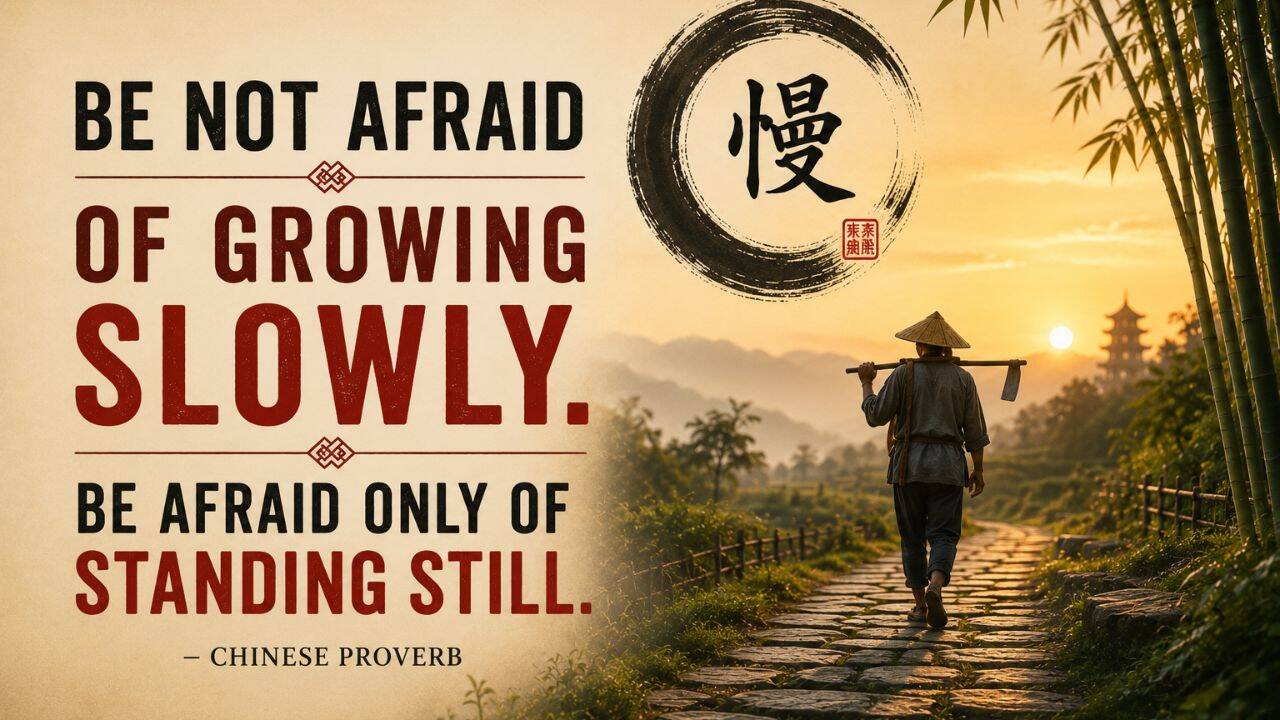
The modern obsession with rapid, explosive success is breaking people. Corporate environments and social media feeds demand instant results, pushing the narrative that if you are not scaling exponentially, you are failing. The ancient proverb, "Be not afraid of growing slowly, be afraid only of standing still," offers the exact antidote to this toxic mindset. True progress relies on continuous incrementalism, the practice of making small, steady gains over time rather than chasing erratic breakthroughs. When individuals and organizations prioritize consistency over sheer speed, they build resilient systems that withstand market shocks and burnout.
The Myth of the Overnight Breakthrough
The business world loves a spectacular rise. We are fed a steady diet of stories detailing tech startups hitting billion-dollar valuations in months or individuals transforming their lives over a single weekend. For a closer look into this area, we suggest: this related article.
These narratives are almost entirely fabricated. They ignore the years of quiet, invisible labor that precede public recognition.
When you look beneath the surface of most sudden successes, you find a long runway of minor adjustments. Consider the trajectory of major enduring enterprises. They rarely rely on a single, massive gamble. Instead, they optimize supply chains by fractions of a percent or refine product features over hundreds of iterations. For broader background on this development, detailed reporting is available on Refinery29.
Chasing the big break creates a dangerous psychological trap. It leads to erratic bursts of intense effort followed by deep periods of exhaustion and stagnation. You burn through your energy reserves trying to leap across a chasm, only to fall short because you lacked the baseline strength built through daily practice.
The Mechanics of Compounding Gains
The math behind slow growth is undeniable. Small improvements accumulate at a compounding rate, meaning that a tiny positive shift maintained consistently yields massive long-term variance.
- The Velocity Trap: High speed without direction results in wasted energy. You move fast, but you loop back to the start because your foundation is weak.
- The Stability Premium: Slow progression allows for real-time course correction. You spot errors before they become catastrophic structural failures.
- Skill Integration: Deep competence requires cognitive consolidation. Your brain and body need time to absorb new habits before they become automatic behaviors.
Why Standing Still Is the Actual Threat
There is a vast difference between deliberate pacing and total inertia. While slow growth builds momentum, standing still breeds decay.
In nature and in industry, stasis is an illusion. The surrounding environment is constantly shifting, meaning that if you remain completely stationary, you are actually falling behind. Companies that pause their research and development to coast on past successes invariably find themselves obsolete within a few product cycles.
Identifying Functional Stasis
Many people mistake frantic activity for actual movement. You can spend twelve hours a day answering emails, attending meetings, and organizing spreadsheets while remaining fundamentally stagnant. This is functional stasis. It feels like work, but it does not move the needle on your long-term capabilities or objectives.
True incrementalism requires tracking meaningful metrics. It means asking whether you are sharper, more efficient, or more knowledgeable today than you were last week, even by a microscopic margin. If the answer is no, the frantic activity is just a smoke screen masking a lack of genuine progress.
Implementing the Strategy of Sustainable Momentum
Shifting from an explosive-growth mindset to a steady-growth framework requires a deliberate restructuring of your daily routines.
First, strip away goals that depend entirely on external validation or luck. Focus exclusively on process-oriented metrics that sit entirely within your control. Instead of aiming to write a bestselling book, commit to producing three hundred words every morning before breakfast.
Second, build tolerance for monotony. The secret weapon of high achievers is not intense passion, but the ability to execute mundane tasks long after the initial excitement has faded. Excellence is the aggregation of boring habits done exceptionally well.
Expect friction. There will be weeks where the dial barely moves, and the temptation to abandon the slow path in favor of a flashy shortcut will be immense. Resist it. The shortcut is almost always a detour in disguise.
Commit to the baseline. Decide on a minimum level of daily effort that you can maintain even on your worst days, when your energy is depleted and your schedule is chaotic. That microscopic forward movement keeps the machinery of habit from rusting solid.