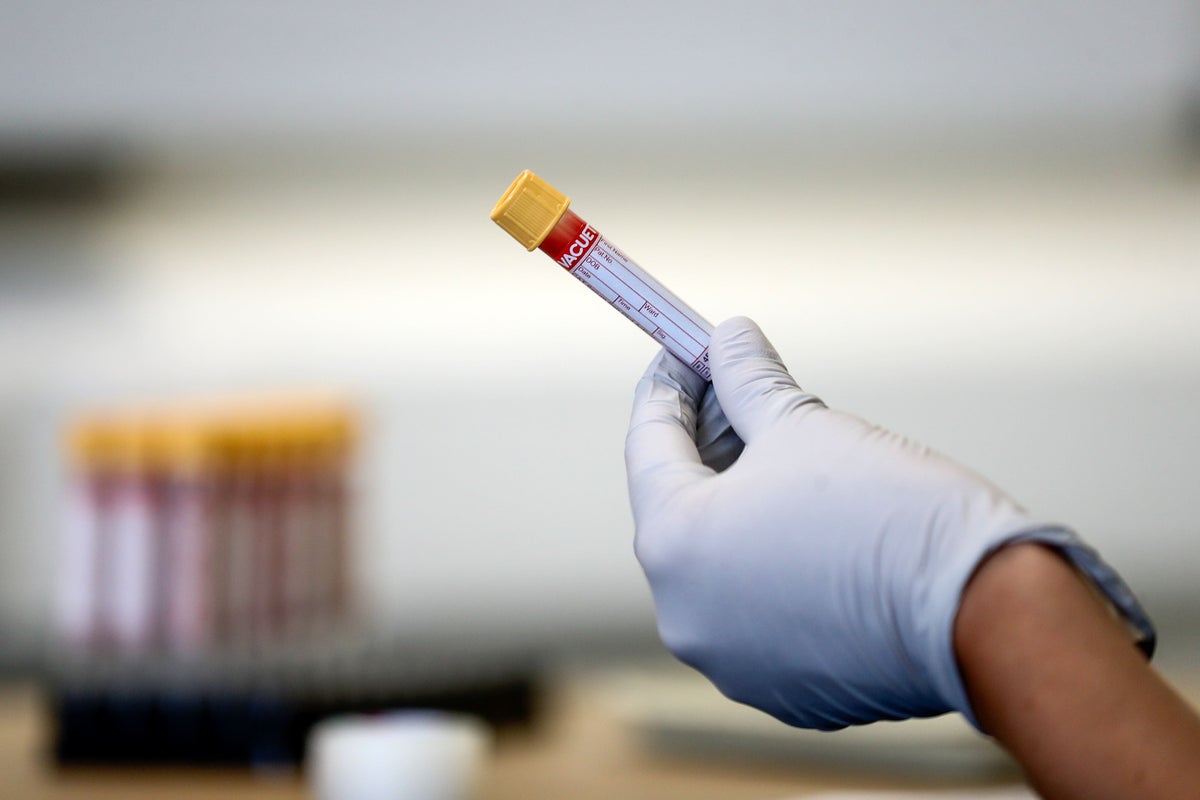
The promise arrives in a press release wrapped in hope. A new rapid Alzheimer test claims to spot cognitive decline in minutes, turning a diagnostic nightmare into a routine outpatient checkbox. It sounds like liberation. Families desperate for answers lean toward the claim like travelers dying of thirst.
Do not sign up for the queue just yet.
Fast diagnostics sound appealing on paper, but rushing into cognitive screening without a clear post-diagnosis roadmap creates more panic than protection. When a clinic offers a biomarker assay or an office-based digital screen that spits out a risk score before you pay for parking, you need to ask who benefits from the velocity. The technology is advancing, but human biology and psychological readiness are lagging far behind.
Let us look at what these rapid assessments actually measure, where the science stands, and why chasing an immediate answer might wreck your peace of mind before it saves your memory.
The Mechanics Behind the Speed
To understand the sudden rush of ultra-fast cognitive evaluations, you have to look at the chemistry. For decades, confirming Alzheimer disease meant waiting for an autopsy or navigating an expensive labyrinth of PET scans and lumbar punctures. These methods are slow, invasive, and logistically punishing.
Enter blood-based biomarkers. Researchers have honed assays that detect plasma phosphorylated tau, specifically p-tau217 and p-tau181, along with amyloid-beta ratios. These proteins leak into the bloodstream as neurons undergo pathological changes. Because blood draws are cheap and ubiquitous, companies figured out how to bundle these assays into point-of-care kits or pair them with automated digital cognitive tests that track eye movements, speech pauses, or finger-tapping speeds.
The companies making these tools market them as simple blood draws. They compare them to checking cholesterol. That comparison is medically reckless.
Cholesterol is a quantifiable risk factor with clear pharmacological interventions that reliably alter outcomes. An elevated p-tau level in your blood does not tell you when you will develop dementia, how fast the pathology will progress, or whether your symptoms stem from Alzheimer pathology, vascular damage, chronic sleep deprivation, or a severe vitamin deficiency. It tells you that abnormal proteins are present in your system. That is an observation, not a verdict.
The Psychological Toll of Premature Certainty
Medicine has an obsession with early detection. Catch it early, the logic goes, and you can stop it. That rule works wonderfully for localized cancers where a surgeon's scalpel can excise a tumor before metastasis. It breaks down entirely when applied to a neurodegenerative condition for which we have no cure.
Imagine sitting in a neurologist's office on a Tuesday morning. You took a rapid test online or at a commercial wellness clinic because you forgot where you parked your car twice last week. The digital screen or the finger-prick blood test flags you as high risk for Alzheimer pathology.
What happens next?
You leave the office with a probability score. You do not leave with a cure. You do not leave with an effective therapy that stops the underlying neuronal death. You leave with an existential anchor weighing down every waking hour. Clinical experience shows that labeling someone with pre-clinical or early Alzheimer markers triggers severe anxiety, depression, and in some documented cases, acute suicidal ideation.
When a diagnostic test outpaces therapeutic options, it ceases to be healthcare and becomes a psychological burden. Patients trade the vague, manageable worry of normal aging for the crushing certainty of a slow decline, often years before functional impairment actually begins.
The False Positive Trap
Diagnostics are never perfect. They trade sensitivity for specificity, constantly walking a tightrope between missing a sick person and panicking a healthy one.
In broad population screening, false positives are an absolute statistical certainty. If you deploy a rapid test with ninety percent accuracy across a population where the base rate of early Alzheimer disease is low, a significant percentage of the positive results will be statistical ghosts.
Consider a hypothetical example. Suppose a company rolls out a ten-minute blood screening tool in primary care clinics across the country. One thousand people take it. Among them, fifty actually have early-stage Alzheimer pathology. The test catches forty-five of them. But because of a five percent false positive rate, the test also flags nearly fifty healthy individuals who simply have elevated baseline proteins for entirely unrelated reasons, such as kidney dysfunction or normal physiological aging.
Those fifty healthy people are now funneled into the specialist referral pipeline. They wait months for a confirmatory amyloid PET scan or spinal tap. They lose sleep, alter retirement plans, and strain relationships. All because a rapid, mass-market screening tool prioritized speed over precision.
The Insurance and Employment Nightmare
Data does not exist in a vacuum. Once a biomarker result enters your electronic health record, it stops being private information between you and your physician.
Insurance underwriters are exceptionally good at calculating risk. As rapid biomarker tests become integrated into standard medical billing codes, the paper trail of your cognitive health will expand. If you test positive for elevated p-tau years before showing any clinical symptoms of memory loss, how will disability insurance providers treat your application? What about long-term care insurance, which is already notoriously difficult and expensive to secure?
We are sleepwalking into an era of biometric redlining. Companies selling rapid diagnostic tools rarely mention the downstream regulatory and financial consequences of putting a neurological risk score into a database. They get their payment for the kit; you inherit the actuarial penalty.
What Real Prevention Looks Like
If rapid testing is not the silver bullet, what should you do with your cognitive health?
The unglamorous truth is that managing cognitive longevity relies on behavioral interventions that no pharmaceutical company can bottle and sell for profit. Clinical data repeatedly points to systemic vascular health as the primary driver of cognitive preservation.
Your brain consumes roughly twenty percent of your body's energy. It depends entirely on a pristine microvascular network to deliver oxygen and clear metabolic waste. High blood pressure in your forties and fifties damages these delicate vessels, setting the stage for cognitive decline decades later. Managing hypertension, treating sleep apnea, maintaining rigorous physical exercise routines, and addressing hearing loss are vastly more effective at preserving brain function than knowing your p-tau level at age fifty.
Yet, lifestyle modifications do not generate venture capital returns. A blood test kit does.
The Commercial Incentive
Follow the money. The rapid diagnostic boom is fueled by venture capital seeking the next blockbuster medical device. Diagnostic firms need scalable products that can be deployed outside specialized memory clinics. By bypassing neurologists and selling directly to primary care providers or, worse, directly to consumers via wellness portals, these companies unlock massive market volume.
They sell peace of mind to the worried well. They monetize human fear of cognitive loss.
When a company tells you that you can test your brain health in the time it takes to drink a cup of coffee, ask yourself what problem they are actually solving. Are they helping patients live better lives, or are they feeding a pipeline of diagnostic billing codes?
Navigating the Noise
If you or a loved one are experiencing genuine cognitive changes—forgetting how to navigate familiar neighborhoods, struggling to manage household finances, or repeating questions within minutes—do not look for a rapid commercial screening kit.
Seek out a comprehensive evaluation from a qualified geriatrician, neuropsychologist, or memory disorder specialist. True diagnosis requires a holistic review of medical history, informant interviews about daily functioning, formal neuropsychological testing, and targeted imaging when appropriate. It is slow, deliberate, and nuanced. It respects the gravity of what is at stake.
Do not let the promise of a quick answer trick you into buying a problem you cannot fix. Real health is built in the slow, unglamorous work of daily choices, not in a ten-minute test designed to sell certainty in a bottle.