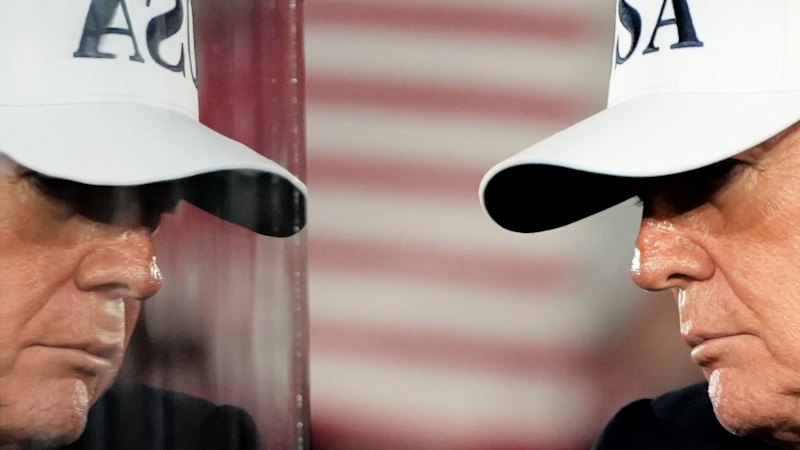
The debate over executive authority and accountability has reached a tipping point as courts, prosecutors, and constitutional scholars clash over the limits of presidential power. Donald Trump’s long-standing strategy of challenging judicial oversight faced its most significant legal reckoning when federal and state courts dismantled sweeping claims of absolute immunity. At its core, the confrontation goes far beyond one individual. It tests whether the legal system can enforce statutory boundaries on an executive who actively tests every constitutional seam, or whether systemic delays will permanently redefine the boundaries of presidential misconduct.
The Strategy of Permanent Friction
For five decades, Donald Trump operated under a simple tactical doctrine learned in the real estate trenches of New York. Push legal boundaries until the opponent runs out of money, time, or political willpower. When transferred to the White House and the post-presidential arena, this tactic transformed standard constitutional debates into a prolonged endurance test for federal courts.
Standard legal defenses seek rapid resolution or favorable settlements. Trump’s defense machinery operates on a fundamentally different principle. Delay is not merely a procedural side effect; it is the primary objective. By filing expansive motions claiming total immunity from criminal prosecution for acts committed while in office, his legal team forced every appellate court in the jurisdiction to rule on basic, foundational principles of constitutional law that most scholars previously considered settled.
The system was not built for this pace. Federal courts operate on the presumption of good-faith litigation, where interlocutory appeals are reserved for rare, unresolved constitutional questions. When every motion becomes a multi-month detour to the Supreme Court, the legal process itself becomes vulnerable to statutory expiration dates and political calendars.
The Constitutional Mechanics of Executive Authority
To understand the current legal friction, one must strip away the partisan rhetoric and examine the underlying mechanics of Article II of the U.S. Constitution. The executive branch possesses vast, discretionary authority, particularly regarding foreign policy, federal law enforcement appointments, and presidential pardons.
However, historical precedent from United States v. Nixon through Clinton v. Jones established a clear boundary. Discretionary policy choices are protected, but private actions and alleged criminal subversion of electoral processes fall outside official duties.
The critical legal breakdown occurs when official acts overlap with personal political survival. When a sitting president pressures justice department officials, state election administrators, or legislative leaders, the line between executing federal law and pursuing personal interest blurs. Courts were forced to determine whether an act retains immunity simply because it involved an official communication channel, or whether the underlying intent and statutory boundaries strips that protection away.
The Institutional Failure of Delayed Oversight
The Department of Justice and the federal judiciary share structural vulnerabilities that this legal saga laid bare. Attorney General Merrick Garland’s initial approach favored a slow, bottom-up investigation, starting with low-level rioters before examining higher-level decision-makers. That cautious strategy cost two critical years.
By the time Special Counsel Jack Smith took over the investigation, the clock was already ticking toward an election cycle. This hesitation revealed a fundamental flaw in the federal law enforcement apparatus. The institutional fear of appearing politically motivated ended up creating the exact environment of political urgency it tried to avoid.
+-----------------------------------------------------------------------+
|                   CHRONOLOGY OF LEGAL FRICTION                        |
+-----------------------------------------------------------------------+
|  2021: Initial DOJ focus on low-level perpetrators; delay in top-down |
|        executive investigation.                                       |
|                                                                       |
|  2022: Appointment of Special Counsel Jack Smith to accelerate        |
|        investigations into official acts and classified records.      |
|                                                                       |
|  2023: Broad claims of absolute presidential immunity filed across    |
|        multiple jurisdictions.                                        |
|                                                                       |
|  2024: Supreme Court intervention creates strict evidentiary thresholds |
|        for separating official from unofficial acts.                  |
+-----------------------------------------------------------------------+
The Supreme Court Rules on Immunity
When the Supreme Court finally issued its landmark ruling on executive immunity, it did not grant a blank check, nor did it allow unfettered prosecution. Instead, it carved the presidency into three distinct legal zones.
- Core Constitutional Powers: Actions where the president possesses exclusive authority under Article II, such as the pardon power or commanding the military, receive absolute immunity from criminal prosecution.
- Official Acts Outside Core Powers: Actions taken within the outer perimeter of presidential responsibility carry a presumption of immunity. Prosecutors must prove that applying criminal statutes to these acts presents no danger of intruding on the executive branch's authority.
- Unofficial Acts: Personal, political, or campaign-related conduct carries zero immunity. Prosecutors can pursue these charges without constitutional barrier.
This tripartite framework created an immense procedural hurdle. Trial courts cannot simply present evidence to a jury. They must first conduct extensive evidentiary hearings to filter out any testimony or documentation touching upon official duties.
                    +-----------------------------+
                    | Presidential Conduct Test   |
                    +--------------+--------------+
                                   |
            +----------------------+----------------------+
            |                                             |
            v                                             v
  [ Official Conduct ]                          [ Unofficial Conduct ]
            |                                             |
     +------+------+                                      v
     |             |                                No Immunity
     v             v                               (Prosecution
  Absolute    Presumptive                          Can Proceed)
 Immunity      Immunity
 (Core Art. II)  (Can be overcome by prosecution)
The evidentiary restriction is the real kicker. Under the Supreme Court's mandate, even if an act is deemed unofficial, prosecutors are strictly barred from using official executive communications as evidence to prove motive. That single restriction stripped key witness testimony from prosecutors' toolkits, fundamentally altering the math of complex federal trials.
The Mechanics of Systemic Failure
The real crisis exposed by these proceedings is not simply one executive testing the law. It is the systemic inability of the legal architecture to deliver timely resolution.
Justice delayed is not just justice denied in the abstract. In cases involving executive power, delayed justice converts unresolved legal questions into political leverage. When a court takes nine months to decide whether a former president can face trial for acts committed while in office, the calendar itself becomes a weapon of defense.
Consider the contrast between federal and state approaches. While federal prosecutors navigated intricate appeals over executive privilege and statutory interpretation, state cases in Georgia and Manhattan faced their own structural traps. The Manhattan prosecution relied on an untested legal theory combining state records violations with federal election laws, resulting in a swift verdict that immediately became tangled in post-trial immunity challenges. Meanwhile, the Georgia racketeering case ground down under procedural disputes, disqualified personnel, and endless evidentiary appeals.
None of this reflects a high-functioning legal mechanism. It reflects an overburdened judicial system trying to process unprecedented constitutional breaches using rules designed for standard corporate fraud or organized crime.
Counter-Arguments and the Executive Power Perspective
Defenders of broad executive immunity advance an argument that deserves serious examination, even from those who oppose Trump’s actions. The core defense rests on institutional stability.
If a president faces potential criminal prosecution by political rivals the moment they leave office, executive decision-making becomes paralyzed. A president negotiating a foreign treaty, authorizing a drone strike, or launching an aggressive regulatory enforcement action might constantly calculate personal criminal liability under local or federal statutes.
From this perspective, absolute immunity is not about protecting the individual. It is about protecting the office from malicious prosecution by local district attorneys or vindictive successor administrations.
Yet this defense breaks down when applied to acts that directly target the peaceful transfer of power. If an incumbent executive can use official channels to nullify an election loss under the umbrella of official duties, the Constitution contains a self-destruct mechanism. Immunity designed to protect the presidency ends up enabling the destruction of the constitutional order that created the presidency in the first place.
The Permanent Shift in Presidential Power
Regardless of individual trial outcomes, the constitutional landscape has fundamentally altered. Future executives now possess a clear roadmap for stretching federal authority.
They know that broad claims of executive privilege will buy years of litigation delay. They know that communications with senior government officials cannot easily be introduced as evidence, even in criminal trials. They know that by framing political strategy as official policy oversight, they can build a formidable shield against statutory accountability.
The legal system operates on precedent and incentives. By demonstrating that the judicial process can be bogged down through procedural motions until statutory or political deadlines intervene, the recent decade of litigation provided a masterclass in dodging legal accountability.
The myth that the American judicial system automatically self-corrects when faced with executive overreach has been shattered. The courts move in months and years; modern executive power moves in seconds and hours. Until statutory frameworks provide expedited judicial review for cases involving presidential power and constitutional integrity, the executive branch will continue to operate with functional impunity, leaving the rule of law to catch up long after the damage is done.