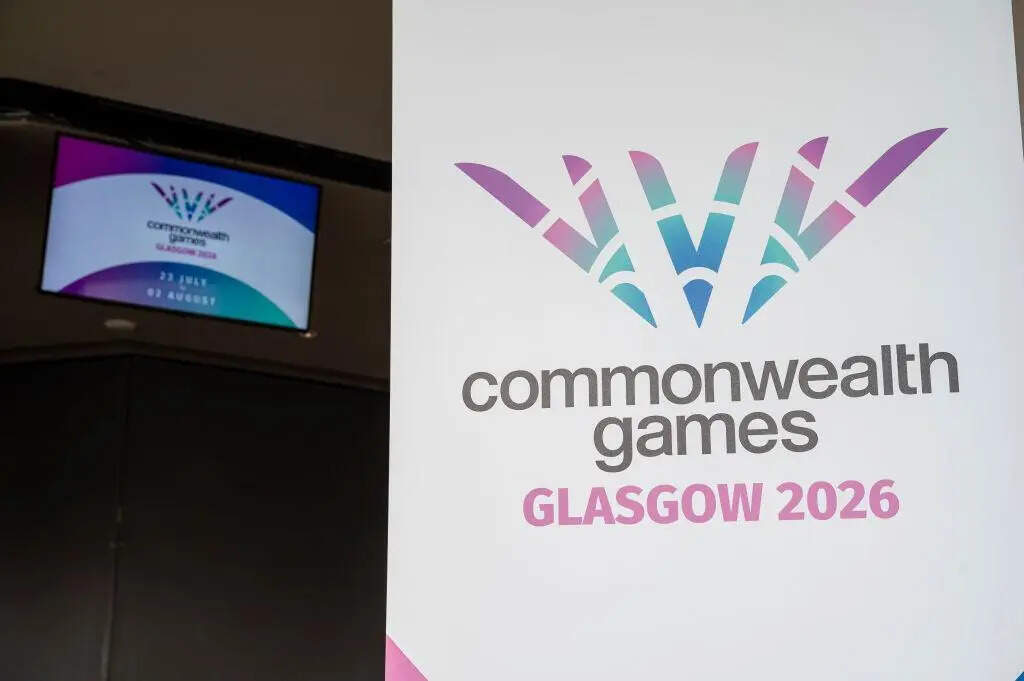
The BBC has officially surrendered its 72-year broadcast grip on the Commonwealth Games, with Channel 5 stepping in to secure the highlights package for the Glasgow 2026 event. This is not a simple scheduling conflict or a minor corporate reshuffle. It is a seismic shift in sports broadcasting that signals the end of free-to-air sports coverage as British audiences once knew it. While the public focus rests on Glasgow stepping in to save the multisport event from total collapse, the real story lies in the fundamental breakdown of the financial ecosystem that previously tied public service broadcasters to historic sporting institutions.
For generations, the Commonwealth Games served as a summer cornerstone for BBC Sport. But the reality of modern media economics has forced a retreat. The Corporation can no longer justify spending millions of pounds of license-fee revenue on an event that has faced severe identity crises, hosting withdrawals, and dwindling global relevance. Channel 5, owned by Paramount, recognized an opening to acquire a legacy sporting brand at a fraction of its historical valuation.
To understand how this happened, you have to look past the official press releases and examine the cold, mathematical reality facing the broadcasting industry today.
The Financial Realities Overwhelming Public Service Broadcasting
Public service broadcasters are trapped in a financial vice. The BBC license fee has faced successive freezes and sub-inflationary adjustments, forcing the corporation to find hundreds of millions of pounds in savings. When budgets shrink, elite sports rights are invariably the first items on the chopping block.
The cost of top-tier sports rights has inflated exponentially over the past two decades. Football, rugby, and premium tennis championships demand astronomical sums because they guarantee live, highly engaged audiences that advertisers or subscription platforms crave. In this hyper-competitive environment, smaller or struggling sporting events get squeezed out. The Commonwealth Games, once a crown jewel, gradually transitioned into an expensive luxury that the BBC’s balance sheet could no longer support.
This is a calculated retreat. By stepping away from the live broadcast rights of Glasgow 2026, the BBC frees up significant capital to defend its core sports portfolio, such as Wimbledon, the Match of the Day highlights package, and the Olympic Games. It is a strategy of survival through triage.
Channel 5 and the New Economics of Commercial Terrestrial Sport
Channel 5 securing the highlights deal represents a massive tactical shift for a commercial broadcaster traditionally known for documentaries, factual entertainment, and imported dramas. For Paramount, this move is not about competing directly with Sky Sports or TNT Sports for live, multi-million-pound contracts. It is about acquiring premium, high-turnout content with minimal financial exposure.
Highlights packages offer an exceptionally high return on investment. Live sports production is a logistical nightmare that requires hundreds of staff, massive outside broadcast trucks, complex satellite links, and immense contingency budgets. A highlights format eliminates the vast majority of these overheads. Channel 5 receives edited feeds, packages them with studio presentation, and broadcasts them during prime-time slots.
This model relies on a simple premise. A significant portion of the viewing public no longer has the time or desire to sit through eight hours of daytime heats in athletics or swimming. They want a curated, fast-paced narrative of the day’s medal moments delivered in an accessible one-hour window. Channel 5 can monetize these peak audiences through traditional television advertising and sponsorship deals, turning a profit on an event that was becoming a financial drain for a public broadcaster.
The Declining Leverage of the Commonwealth Brand
The Commonwealth Games Federation has watched its leverage vanish over the last decade. The event has struggled desperately to find willing hosts. Durban was stripped of the 2022 games before Birmingham stepped in. Victoria, Australia, abruptly cancelled its plans to host the 2026 iteration due to skyrocketing projected costs, leaving the entire institution in existential limbo until Glasgow agreed to a scaled-back, financially austere version.
When an event is fighting for its literal survival, its television rights lose substantial value. Broadcasters know when an organization is desperate for airtime. The Commonwealth Games Federation needed a major British television deal far more than the BBC needed the content. Without widespread television coverage in the host nation, domestic sponsors walk away, government funding dries up, and the event slips into cultural irrelevance. Channel 5 held all the cards during negotiations, securing a legacy sporting asset on highly favorable commercial terms.
The Scaled Back Reality of Glasgow 2026
The Glasgow 2026 event will look radically different from the lavish spectacles witnessed in Birmingham or Gold Coast. The event has been stripped down to just ten sports, concentrated into a handful of existing venues within a tight geographic footprint. There will be no massive athlete villages built from scratch, no expensive new stadium constructions, and minimal public subsidy from the Scottish or UK governments.
This minimalist approach directly impacts the broadcasting product. Fewer sports mean fewer broadcast hours to fill. A massive, multi-channel live operation like the BBC used to deploy across BBC One, BBC Two, and the iPlayer Red Button becomes entirely redundant when the event itself has been downsized by half.
The reduction in scale created the perfect conditions for a highlights-only deal. If there are only ten sports competing across a compressed timeframe, the narrative of the games becomes much easier to track, summarize, and present in a nightly commercial broadcast format.
Why the Listed Events Legislation Failed to Protect the Status Quo
In the United Kingdom, the "Listed Events" regime ensures that certain sporting events of national interest must be available on free-to-air television. This legislation protects events like the Olympic Games, the FIFA World Cup, the Grand National, and the FA Cup Final.
While the Commonwealth Games historically enjoyed protection under these guidelines, the rules only stipulate that the rights must be offered to free-to-air broadcasters on fair terms. They cannot force a public broadcaster to bid for them if the price or the logistical cost does not align with corporate strategy. Because Channel 5 is a free-to-air terrestrial channel accessible to virtually every household in the UK, the legal requirement for public availability is technically satisfied.
The system did not anticipate a reality where public service broadcasters would simply walk away from legacy events due to structural underfunding. The legislation keeps sports on free television, but it cannot guarantee the depth, quality, or live status of the coverage if the commercial reality dictating production costs becomes unsustainable.
The Long Term Cultural Cost of Fragmented Sports Coverage
The migration of the Commonwealth Games away from the BBC’s live ecosystem carries profound implications for the wider sporting landscape in the UK. For decades, the BBC acted as an incubator for public interest in Olympic and Commonwealth disciplines. Sports like gymnastics, track cycling, and swimming enjoyed massive, unsolicited exposure simply because they were broadcast live into millions of living rooms on a lazy Tuesday afternoon.
Commercial highlights television operates on a different logic. It focuses heavily on established stars, guaranteed medal moments, and sports with existing high profiles. The obscure, niche disciplines that often provided the most compelling human stories of the Commonwealth Games risk being relegated to the cutting-room floor to fit a tight, commercial broadcast hour punctuated by advertising breaks.
Governing bodies of smaller sports are privately terrified of this trend. A young athlete does not get inspired to take up a sport by watching a three-second clip of a medal ceremony. They get inspired by watching the raw drama of a live competition unfold in real-time, witnessing the struggle, the qualification rounds, and the eventual triumph. When live coverage disappears behind paywalls or gets compressed into late-night highlight packages, the pipeline of future talent suffers a quantifiable decline.
The Blueprint for the Future of Sports Media
The BBC’s exit from this historic partnership is a template for the immediate future of sports media rights. We are entering an era of absolute pragmatism. The sentimentality that previously governed sports broadcasting—where networks maintained relationships with sporting bodies for decades out of a sense of tradition—is completely dead.
Broadcasters will continue to ruthlessly dissect sporting properties to extract value from specific segments while discarding the rest. Public service networks will double down on absolute tier-one events that define national moments, while commercial networks and streaming platforms will pick apart the mid-tier events using highlights, digital clips, and targeted live windows to feed specific audience demographics.
The Commonwealth Games has survived its immediate existential crisis by returning to Glasgow, but its status as a premier global sporting event has been permanently altered. The transition of its media rights to a commercial highlights package is not an isolated incident; it is a clear warning sign to every other legacy sporting institution that visibility must now be bought with commercial utility, not historical prestige.