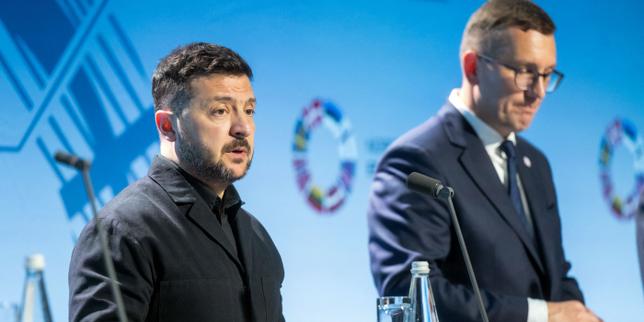
Volodymyr Zelensky recently celebrated the formal resumption of negotiations for Ukraine’s accession to the European Union, framing it as a historic triumph that anchors the war-torn nation firmly within the Western orbit. The celebratory rhetoric from Kyiv and Brussels suggests a smooth, inevitable march toward integration. The reality on the ground is far more cynical. Behind the photo-ops and diplomatic handshakes lies a grueling, multi-decade bureaucratic marathon that may stall long before Ukraine ever achieves full membership. Brussels is leveraging the promise of accession to maintain leverage over Kyiv, while European capitals quietly shudder at the staggering financial and geopolitical price tag of actually letting Ukraine in.
The Illusion of the Express Lane
Diplomacy moves at the speed of glacier ice. While EU officials have granted Ukraine "fast-track" candidate status to signal political solidarity amid Russian aggression, the actual mechanism of joining the bloc cannot be bypassed. The process requires unanimous approval from all 27 member states at dozens of individual stages, meaning a single domestic political shift in Budapest, Warsaw, or Vienna can freeze the entire apparatus for years.
History provides a grim blueprint. Turkey was granted candidate status in 1999 and remains permanently stranded in the waiting room. North Macedonia changed its very name to appease member states, only to face fresh vetoes from other neighbors.
Ukraine must adopt tens of thousands of pages of EU regulations, known as the acquis communautaire, covering everything from food safety standards to data privacy laws. Doing this during peacetime is an administrative nightmare. Attempting it while fighting an existential war of attrition against an occupying superpower is unprecedented.
The Institutional Vacuum
Western European diplomats privately acknowledge that Ukraine's pre-war governance issues have not vanished. The country has made strides in anti-corruption efforts, establishing independent agencies like the National Anti-Corruption Bureau (NABU). Yet, structural judicial corruption remains deeply entrenched.
The EU operates fundamentally as a single market bound by mutual trust in each other’s legal systems. If a French company cannot trust a Ukrainian court to fairly enforce a contract, the economic architecture collapses. Brussels will not risk the integrity of the single market for wartime sentimentality.
The Math That Terrifies Brussels
Beneath the moral declarations of European unity lies a brutal balance sheet. The EU operates largely as a wealth-redistribution mechanism, where richer Western nations subsidize poorer Eastern and Southern members through the Common Agricultural Policy (CAP) and Cohesion Funds.
Introducing Ukraine into this equation completely breaks the current financial model.
- The Agricultural Shockwave: Ukraine possesses some of the most fertile black soil on earth and boasts a massive, hyper-efficient agribusiness sector. Under current CAP rules, billions of euros in subsidies would be diverted away from French, Polish, and Spanish farmers directly to Kyiv. This reality already triggered blockades by Polish truckers and farmers at the Ukrainian border, offering a bitter preview of the political warfare to come.
- The Cohesion Fund Drain: Cohesion funds are designed to elevate regions where the GDP per capita is below the EU average. Because of the devastation wrought by the war, Ukraine would instantly qualify as the poorest member state. Internal EU memos estimate that admitting Ukraine under current rules would turn several net-recipient nations into net-contributors overnight.
+--------------------------------------------------------------+
| Projected Reallocation of EU Funds Post-Ukraine Accession    |
+--------------------------------------------------------------+
| Current Recipient Nations  --->  Become Net Contributors     |
| French/Spanish Farmers    --->  Lose Significant CAP Subsidies|
| Ukrainian Agribusiness    --->  Absorbs Lion's Share of Funds|
+--------------------------------------------------------------+
To accommodate Ukraine, the EU would have to completely reinvent its budget structure, a process that requires total unanimity and invariably triggers vicious domestic political backlash within Western electorates.
The Security Paradox
The most profound obstacle to Ukrainian membership is the very thing driving it: the war with Russia. The EU Treaty contains Article 42.7, a mutual defense clause that obligates member states to aid a fellow member facing armed aggression by all means in their power.
Admitting a country with disputed, actively contested borders would instantly drag the European Union into a direct military conflict with a nuclear-armed Russian Federation.
The Security Council Strategy
Some Eurocrats point to the "Cyprus precedent" as a potential solution. Cyprus was admitted to the EU in 2004 despite the island being de facto divided, with the northern third occupied by Turkish forces. This comparison fails under scrutiny. Turkey is a NATO ally, not an aggressive nuclear state actively waging a scorched-earth campaign across the continent.
European capitals like Berlin and Paris are quietly terrified of expanding the EU's security umbrella to a nation locked in a perpetual border conflict. Without a definitive, internationally recognized peace treaty—or at least a frozen conflict line backed by ironclad external security guarantees—Ukraine’s EU membership remains a geopolitical impossibility.
Accession as a Tool of Coercion
If the obstacles are so insurmountable, why are the negotiations resuming now? The answer lies in political leverage.
Brussels is using the accession process as a carrot to force deep structural reforms inside Ukraine that would otherwise be politically unpalatable for Zelensky's government. These include the deregulation of key industries, the privatization of state-owned enterprises, and the curtailment of oligarchic influence over the media and economy.
For Zelensky, the resumption of talks is a vital domestic PR tool. It validates the immense sacrifices of the Ukrainian population, offering a tangible vision of a European future. It keeps public morale high. But it also creates a dangerous expectation gap.
When the wartime euphoria fades and the tedious reality of technical chapters, veterinary standards, and budgetary fights takes over, the Ukrainian public may realize that the goalposts are constantly being moved.
The Looming Reform Crisis Within the Bloc
The EU cannot expand to 28 or more members without reforming its own internal decision-making processes. Currently, key areas like foreign policy, taxation, and budget allocation require the unanimous consent of all member states. This veto power has already allowed single nations, like Hungary, to repeatedly hold the entire bloc hostage over aid packages to Kyiv.
Imagine an EU with Ukraine, Moldova, and the Western Balkan states, all wielding individual veto powers. The institution would descend into total paralysis.
Germany and France are pushing for a transition to Qualified Majority Voting (QMV) in foreign affairs before any new members are admitted. Smaller member states are fiercely resisting this move, fearing they will be steamrolled by the Berlin-Paris axis. Ukraine's path to Europe is therefore held hostage not just by its own internal progress, but by a civil war over the future structure of power within Brussels itself.
The accession process is not an elevator to Western prosperity; it is a obstacle course designed to delay entry until the applicant conforms perfectly to the desires of the existing club. For Ukraine, that journey has barely begun.